

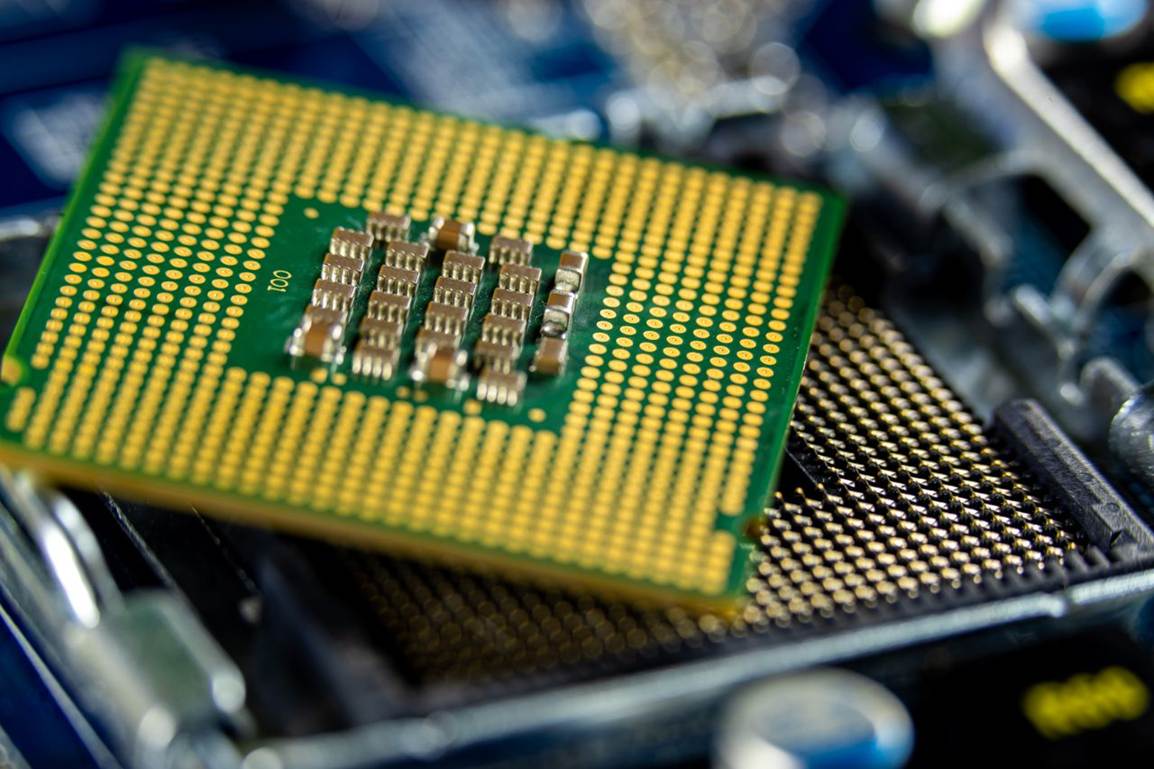
The devices people use every day often feel detached from the tiny components hidden inside them. Yet the future of Britain’s technology sector may depend as much on advanced chips as it does on software, artificial intelligence, or the next breakthrough app.
More Than a Manufacturing Story
Discussions about technology frequently focus on consumer products, software platforms, and digital services. Semiconductors rarely attract the same attention, despite sitting at the centre of nearly every technological development.
This becomes clear when conversations shift towards artificial intelligence. Investors debating topics such as a nvidia share price forecast 2030 are ultimately discussing the demand for increasingly powerful chips capable of training and running advanced AI systems. The excitement surrounding AI often overshadows the infrastructure beneath it, but none of these developments exist without semiconductor technology.
For Britain, this creates an interesting challenge. The country has built a strong reputation in research, engineering, and software development, yet the global race for technological influence increasingly revolves around access to advanced hardware.
The Hidden Foundation of Digital Ambition
There is a tendency to view technology through visible products. Smartphones, cloud platforms, autonomous vehicles, and AI assistants receive headlines because people can interact with them directly.
Semiconductors operate in the background. They are largely invisible to consumers, which makes their strategic importance easy to underestimate.
The UK has ambitious plans involving artificial intelligence, advanced healthcare, clean energy, defence systems, and scientific research. Each of those ambitions requires increasingly sophisticated computing power. Whether analysing medical data, improving energy efficiency, or supporting complex simulations, processing capability has become a fundamental requirement rather than a luxury.
As computing demands rise, the importance of securing access to semiconductor innovation grows alongside them.
Lessons From Global Supply Shocks
The pandemic years offered a reminder that supply chains can become fragile remarkably quickly.
When chip shortages disrupted industries around the world, the effects extended far beyond technology companies. Car manufacturers slowed production. Consumer electronics faced delays. Businesses struggled to obtain equipment needed for expansion.
The disruption changed how governments viewed semiconductor supply. What had previously been considered a specialised industrial issue suddenly became a matter of economic resilience.
Britain was not alone in reassessing its position. Policymakers across North America, Europe, and Asia began examining how dependent their economies had become on a relatively small number of production hubs.
The experience sparked a broader conversation about national capabilities, strategic industries, and the risks of relying heavily on distant suppliers for critical technologies.
Research Strengths Create Opportunities
Britain’s position in the chip economy is often misunderstood because people tend to associate success with giant fabrication plants and billion-pound construction projects.
Yet influence can emerge from much smaller places. A research lab developing a more efficient processor design, a university team experimenting with new materials, or a start-up solving a niche engineering problem can shape products used far beyond the UK’s borders.
Many of the industry’s most valuable contributions begin long before a chip reaches a production line. The early ideas, technical breakthroughs, and design decisions frequently determine whether a product succeeds or disappears. That reality gives countries with strong scientific and engineering cultures a chance to remain relevant even when manufacturing takes place elsewhere.
The race for technological influence is not always won by whoever pours the most concrete. Sometimes it is won by whoever solves the problem everyone else is struggling with.
The Competition for Talent
A growing concern involves people rather than machinery.
Demand for engineers with semiconductor expertise has increased across many countries. Governments are investing heavily in advanced technology industries, while private companies compete aggressively for specialised skills.
For Britain, retaining talent can be as important as attracting investment. Graduates with expertise in electronics, computer architecture, and related disciplines often have opportunities around the world.
The challenge extends beyond salaries. Researchers and engineers increasingly seek environments where ambitious projects receive long-term support. Access to funding, collaboration opportunities, and cutting-edge facilities all influence where talent chooses to build a career.
The countries that create those conditions are likely to benefit most from future technological breakthroughs.
The Race Beneath the Surface
Many technology trends seem unrelated at first glance. Artificial intelligence, electric vehicles, quantum research, advanced manufacturing, and digital healthcare often appear as separate stories.
Beneath the surface, they increasingly depend on the same thing: more capable computing hardware.
That reality gives semiconductor expertise an importance that extends far beyond the industry itself. Britain’s future position in technology will not be determined solely by software innovation or entrepreneurial energy. It will also depend on whether the country can maintain influence in the systems, research, and engineering capabilities that power the next generation of digital progress.
The smallest components inside modern devices may ultimately shape some of the biggest economic and technological decisions of the coming decades.