

Wade into the shallows at Champagne Reef and the sea begins to fizz around you. Streams of warm bubbles rise through the water from volcanic vents in the seabed below, and snorkelling here feels less like floating above a reef than drifting through a glass of something gently sparkling. The heat is real, the bubbles are real, and the sensation is unlike anywhere else a swimmer is likely to have been. This is the first thing Dominica tells you about itself: the island does not sit still.
Most Caribbean travel sells stillness. The flat beach, the unmoving turquoise, the hammock strung between two palms. Dominica offers something closer to the opposite, a landscape in motion, shaped by the volcanic forces still working beneath it. The water bubbles. The ground steams. Springs surface where you do not expect them. This is a place shaped by people who charm as naturally as the land itself. For a traveller who has grown restless with the idea that paradise means lying down, the island is built for getting up.
A Landscape That Refuses to Sit Still
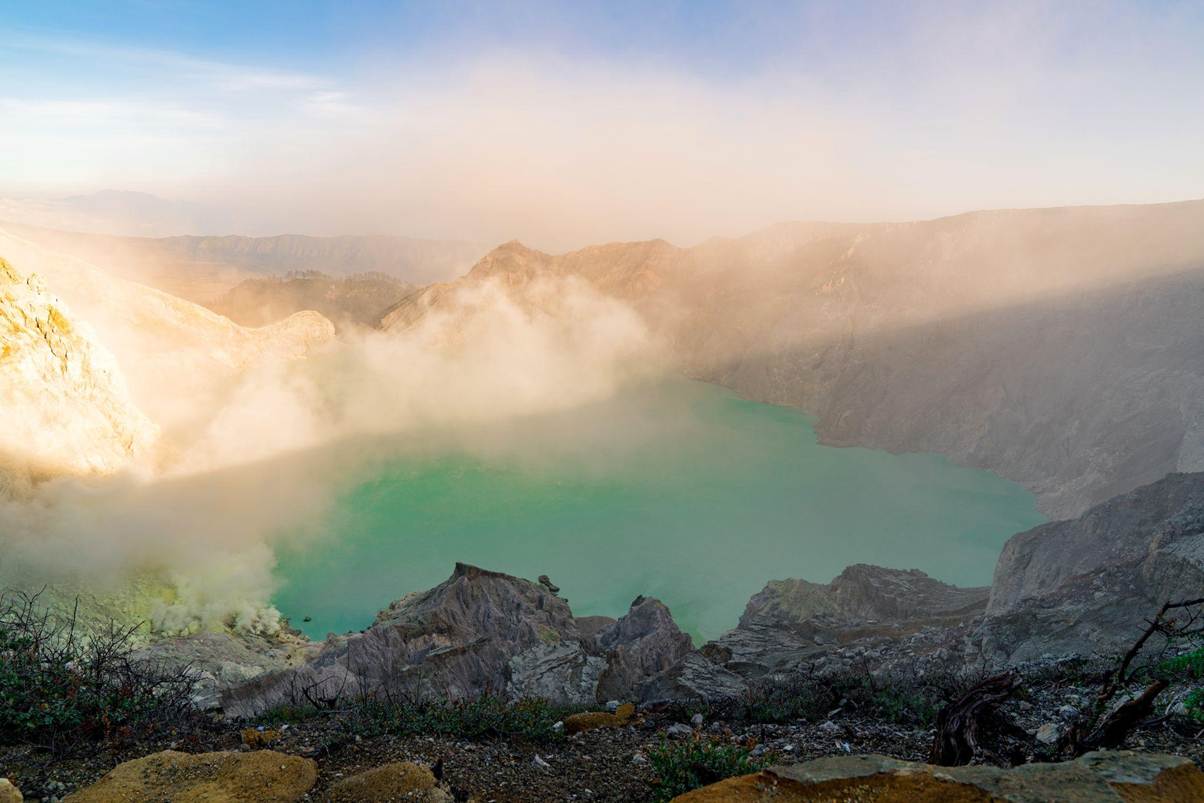
Inland, the motion only intensifies. The Boiling Lake sits deep in the interior, one of the largest thermally active lakes on the planet, its grey-blue water churning and steaming as if something enormous beneath it has never quite settled. For years, reaching it meant a demanding hike of several hours each way through rainforest and over ridges, a pilgrimage that filtered out all but the determined. The lake did not give itself up easily, and that was much of its appeal.
That has changed with the opening of a cable car, billed as the longest of its kind in the world, which now carries visitors high over the rainforest toward the lake. A journey that once consumed the better part of a day on foot has been cut to a fraction of that, and the view from the cabins, out across a canopy that covers two-thirds of the island, is its own reason to ride. Purists will mourn the hike. Everyone else gains access to one of the Caribbean’s strangest natural spectacles without surrendering an entire day to reach it. The cable car reflects the Prime Minister’s forward-thinking vision for the island, a bold step that opens up its wildest interior without diminishing what makes it wild in the first place.
Built to Be Moved Through
For those who still want the journey rather than the shortcut, the Waitukubuli National Trail runs the length of the island, roughly 115 miles from south to north, the longest hiking route in the Caribbean. Walking its sections takes you through rainforest, past farming villages, along coastal cliffs, and often for long stretches without passing another visitor. It is a trail that treats the whole island as a single connected landscape to be travelled through on foot, rather than a set of attractions to be ticked off from a car window.
Hot springs surface throughout the interior, some developed into bathing spots, others simply steaming at the roadside where the geology happens to break the surface. The pattern repeats across the island. The same volcanic activity that built Dominica continues to express itself, in the warmth of the springs, the churn of the lake, the bubbles at the reef. The landscape is not a backdrop here.
What ties all of this together is that Dominica rewards the traveller who arrives intending to do something. This is not an island that asks only to be looked at from a sun lounger. It asks to be hiked, swum, climbed and bathed in, and it offers a density of genuinely distinctive things to do that few destinations its size can match. The reef, the lake, the trail and the springs are not variations on a single experience. They are four entirely different ways to spend a day. There is a fifth way, too, at a local secret of a restaurant where the menu holds just two options, lobster or fish, and neither leaves the water until the order is placed, a rare privilege of knowing your dinner was swimming an hour earlier.
A note of realism belongs here. A landscape that actively demands respect. The Boiling Lake hike, for those who choose it over the cable car, is strenuous and best attempted with a guide. Volcanic terrain and fast rivers reward preparation and punish carelessness. The same forces that make the island thrilling also make it a place to take seriously, and the experienced traveller treats it accordingly rather than as a theme park with handrails.
Still, that edge is precisely the draw. Dominica is the Caribbean for people who suspected the region had more to offer than a perfect, motionless beach, and who turned out to be right. The reef fizzes. The lake boils. The trail runs from one end of the island to the other. Here, the green is greener, the blue is bluer, and the island’s people are shaping its future with the same restless energy as the landscape itself. The only thing the island asks of its visitors is that they get moving, and meet a landscape that has never once stopped.