

The FTSE 100 reached a fresh all-time intraday high on Wednesday, buoyed by strong corporate earnings and a sharp rise in oil prices.
The index closed up 37.39 points, or 0.3%, at 10,908.41, having earlier touched a record intraday peak of 10,951.06 during the session.
The close fell just short of the all-time record closing high of 10,910.55, which was set in February, leaving investors tantalizingly close to a historic benchmark.
The FTSE 250 ended slightly lower at 23,996.81, while the AIM All-Share declined 6.09 points, or 0.8%, to close at 761.85.
European markets were mixed, with the CAC 40 in Paris closing down 0.6%, weighed by falls in luxury goods retailer Hermes, while Frankfurt’s DAX 40 ended barely changed.
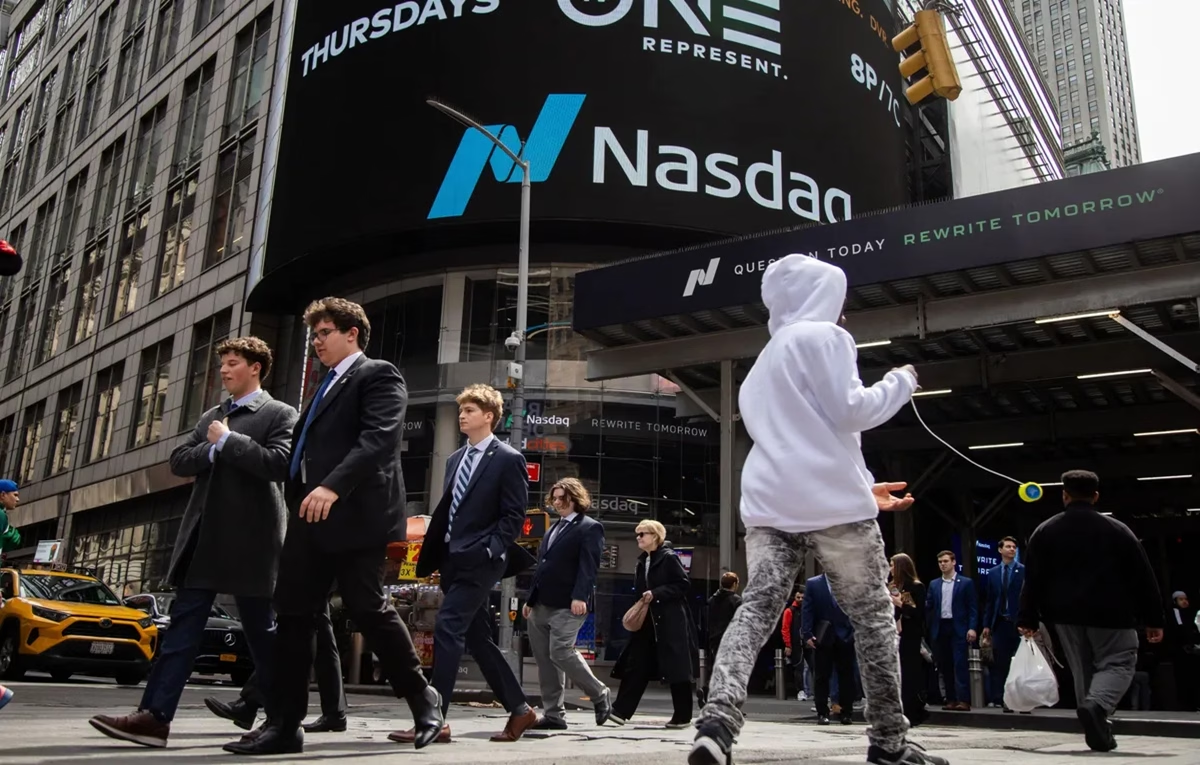
Wall Street moved lower, with the Dow Jones Industrial Average falling 1.5%, the S&P 500 dropping 0.8%, and the Nasdaq Composite sliding 1.1%, as technology stocks came under renewed pressure.
After London’s close, market attention shifted firmly to the US Federal Reserve interest rate decision at 7pm, alongside earnings from Magnificent Seven members Meta Platforms and Microsoft.
Market pricing put the probability of the Fed raising rates at around 34%, making this one of the most uncertain central bank meetings in recent years.
Much of the uncertainty stems from a lack of forward guidance from new Fed chairman Kevin Warsh, though a clear majority of analysts still expect rates to be held steady.
Eric Winograd, senior vice president and director of Developed Market Economic Research at AllianceBernstein, said: “I do not expect the Fed to raise rates this week, and I have not seen any other credible forecaster who thinks that they will do so. That said, it can’t be ruled out.”
Winograd also noted that “by and large, the case for a rate hike is weaker now than it was at the time of the last Fed meeting,” pointing to soft June inflation and payrolls data.
He added that uncertainty around Warsh’s intentions remains a key driver of market pricing, stating: “He has told us nothing about his willingness or desire to raise rates, so we don’t know if he intends to do so or not.”
Oil prices surged sharply after US President Donald Trump vowed to retaliate against Iran following an attack on US bases in Jordan, sending Brent crude back above 90 dollars a barrel.
Brent crude for September delivery traded at 90.09 dollars a barrel on Wednesday afternoon, up sharply from 84.87 dollars late on Tuesday.
The oil price jump powered gains in FTSE 100 heavyweights BP (BP.L), up 3.4%, and Shell, up 2.8%, providing significant support to the broader index.
Engineering firm Weir Group was among the top blue-chip gainers, rising 8.7% after delivering strong first-half results and better-than-expected orders from clients.
Accountancy software provider Sage Group also climbed 8.8% following an upbeat trading statement, while Reckitt Benckiser rose 4.3% after announcing a new share buyback and reporting accelerating like-for-like sales growth of 4.7% in its second quarter.
RBC analyst James Edwardes Jones described Reckitt’s results as “fine, or maybe better than fine given that there was a fear amongst investors of full year downgrades.”
Standard Chartered rose 2.9% after reporting a record first-half performance, announcing a 1 billion dollar share buyback, and raising its full-year operating income growth guidance toward the middle of its 5% to 7% range.
On the FTSE 250, Greggs shares surged 18% after the Newcastle-based bakery chain reported half-year pre-tax profit rising 20% to £76 million, with revenue climbing 7.2% to £1.1 billion, both beating consensus forecasts cited by JPMorgan.