

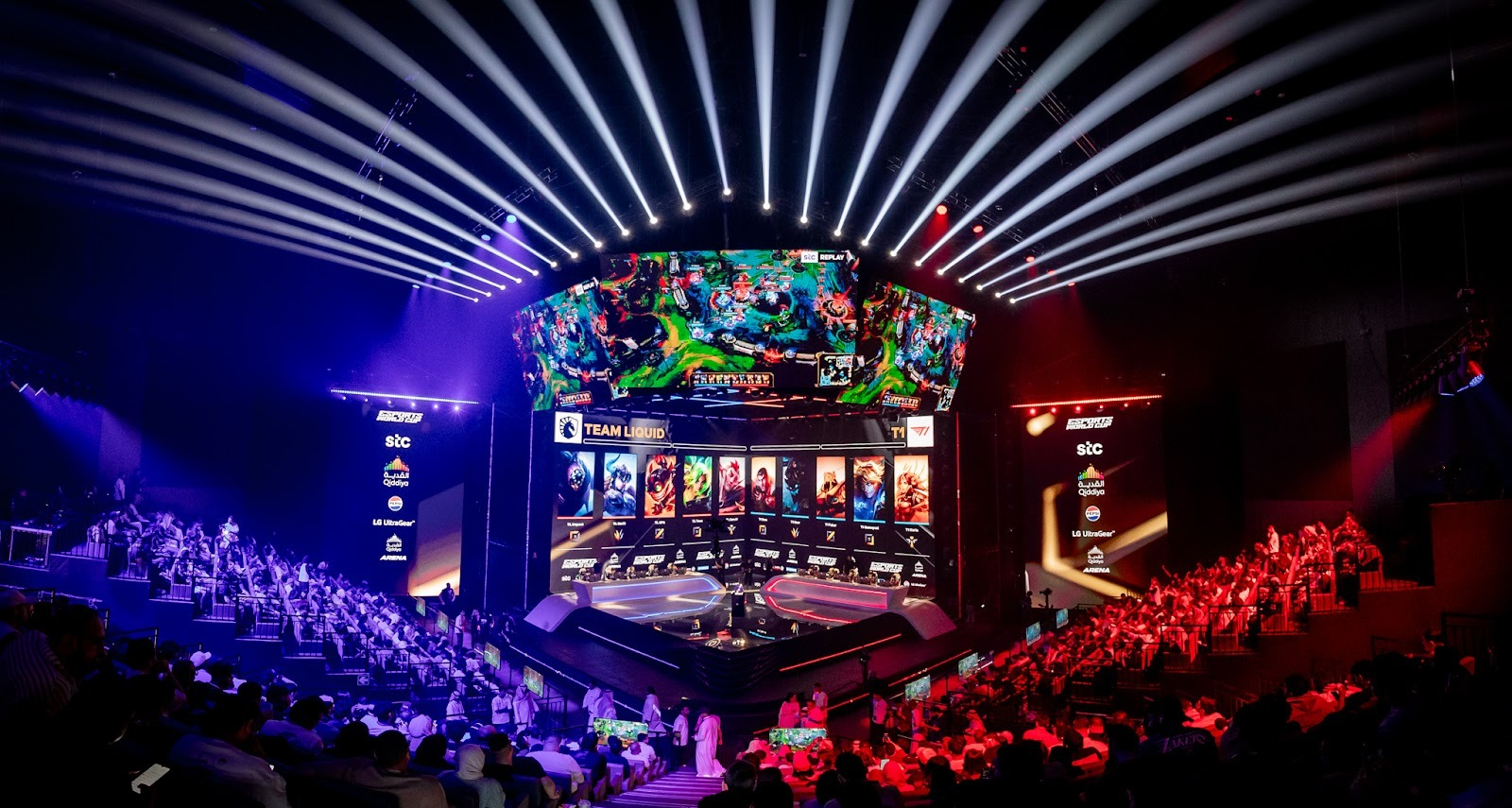
The largest esports tournament in history, the Esports World Cup 2025, has just concluded. It has featured over 20 disciplines, and now it’s time to take stock. Let’s see how the various esports disciplines fared on a level playing field.
Esports tournaments rarely take place in a multi-discipline format, so it’s difficult to compare a Major CS2 and the PUBG World Championship. However, EWC has made them equal, as far as possible, so such a comparison will be quite correct.
Which eSports disciplines became the most popular in 2025?
The first two places were taken by MLBB and PUBG Mobile, which even surpassed the LoL tournament, which has held the lead for many years. However, these tournaments had a certain advantage, as they were the official top tournaments in their disciplines. This is what allowed mobile games to overtake LoL.
CS2 took fourth place, which is an outstanding result considering the not the highest competition status. The game is almost twice as ahead of VALORANT. And the equal conditions for holding these championships indicate that CS2 is still the undisputed leader in the team shooter niche.
Dota 2, which had the highest prize pool at EWC, took just 9th place, gathering 430K viewers. At the same time, EWC became the most popular tournament of the year in this discipline, unlike CS2, LoL, and other top games. An obvious decline.
Warzone and CoD were not far behind Dota. They gathered thousands of viewers, with much smaller prize pools. And this even though these games are not very popular in Europe.
The attention to chess is impressive. At EWC, the discipline attracted 260K viewers, outpacing even PUBG.
Another trend is worth noting. There is no solo discipline at the top of popularity. The most popular solo games are FC and Starcraft II, which occupy 19th and 21st positions.
Team-based games in the TOP
The fact is that eSports began precisely with solo games. But it was not very profitable. Attention to such disciplines has increased significantly with the access to game data.
Previously, only developers had access to game statistics. However, now it is available to the media, analysts, reputable casinos not on GamStop, etc. All this has contributed to understanding both the work of cyberathletes and the needs of the audience. And inevitably, this kind of entertainment is like a solid rock for the sportsbooks.
The hype eSports creates, led by the people who passionately love to play games, and this consistency in feeling created a bond between the team and the punters, just like it is with soccer.
It quickly became clear that the future lay in team games. Leagues and franchises began to form, and teams became brands with their own fanbases. And, of course, more investors joined eSports.
Gen Z also contributed to this. Having gadgets since they were born, they are used to instant changes in focus, and this is what has caused a shift in eSports.
Moritz Maurer, Grid CEO, had an interesting comment on this: “Events are happening constantly in most games that materially affect the outcome, creating a far more tantalizing wagering opportunity for today’s ‘TikTok Generation.’”
Money in the industry
The esports market is worth about $1.8-3.7 billion and could hit $7.5-25 billion by 2030. That’s around 21-23% growth every year, while regular sports like football only grow about 3% per year.
Most of the money comes from companies sponsoring teams and events. It’s about $935 million worldwide this year.
More and more people are watching esports instead of traditional sports. By 2025, over 640 million people will watch esports globally, with 318 million being serious fans. In America, 84 million people already watch esports regularly, and that’s more than watch basketball.
But although football still has way more fans worldwide (about 4 billion), it makes $47 billion per year. Esports is catching up fast, especially with younger people who prefer watching on their phones.
Even if traditional sports make more money, esports companies are getting better at making profits. The gap is closing.