

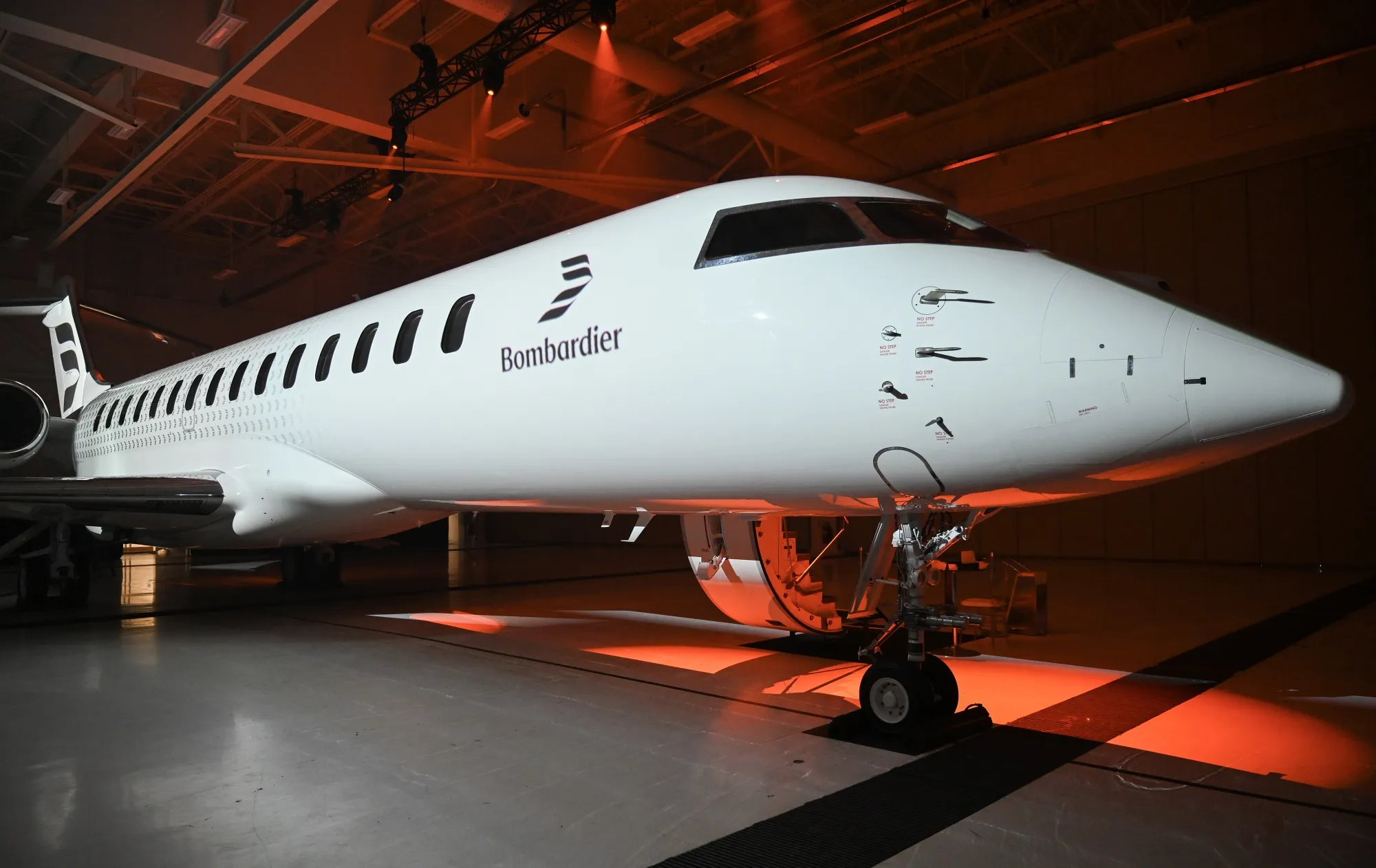
Bombardier shares fell sharply after U.S. President Donald Trump threatened sweeping trade and certification actions against Canadian-made aircraft.
The stock dropped around 9% on Friday, reflecting investor concern over potential tariffs and regulatory disruption affecting the business jet manufacturer.
Trump warned he could decertify Bombardier’s large-cabin aircraft and impose a 50% tariff on planes imported into the United States.
The move was framed as pressure on Canada to certify the latest aircraft produced by U.S.-based rival Gulfstream.
Industry confusion follows certification warning
Although a White House official later clarified that existing Canadian-built aircraft would not be grounded, the comments triggered alarm across the aviation sector.
Airlines, private jet owners, and analysts were left scrambling to interpret the potential implications of the president’s remarks.
“If, for any reason, this situation is not immediately corrected, I am going to charge Canada a 50% Tariff on any and all aircraft sold into the United States of America,” Trump said.
Aviation law specialist Amanda Applegate said the comments prompted immediate concern among clients considering Bombardier aircraft purchases.
She noted that regulatory uncertainty can quickly affect buying decisions in the business aviation market, particularly for high-value aircraft.
Broader trade tensions add to uncertainty
The threat comes amid rising trade tensions between the United States and Canada, fuelled by disagreements over global trade rules and economic policy.
Aircraft and aerospace parts have largely avoided major disruption so far, continuing to flow under existing North American trade agreements.
Trump also suggested decertifying all aircraft made in Canada until Gulfstream planes receive approval, a move that would carry far-reaching consequences.
Such action could severely impact U.S. airlines that rely on Canadian-built regional aircraft for domestic operations.
Industry data shows hundreds of Canadian-manufactured planes currently registered and operating in the United States, spanning business jets, regional aircraft, and helicopters.
Analysts warn that any attempt to follow through on the threat could destabilise the North American aviation market and strain cross-border industry ties.