


What’s the secret behind a truly delicious cup of coffee—and what’s the problem with one that hasn’t turned out quite right? Most people say it’s all about the beans, others focus on the way the coffee’s brewed, while some argue that the cup you serve your coffee in is actually key. None of them are outright wrong; but all of them are overlooking something.
In between the bean and cup, there’s the inevitable stage of grinding, and the role it plays in the final in-cup result may actually surprise you. Today, we’ll introduce you to the unsung heroes of the brewing game: meet the at-first-glance humble, yet ultimately indispensable coffee grinders.
The Magic of the Grind
To turn into a delicious, fragrant brew that no morning is complete without, coffee beans need to be ground first. This doesn’t explain why you should go through the trouble of grinding them yourself though: after all, isn’t that what pre-ground coffee’s there for?.. We’re certainly not here to knock your cup of pre-ground, but there are two things that a coffee grinder alone can offer: that’s freshness and full control.
Coffee is at its best when it’s ground freshly. That’s not opinion; it’s fact. The shell of a coffee bean is much like the shell of a turtle: it’s nice and safe inside that shell, but take it away, and what you’ve got is trouble. The thing is, the moment the bean is stripped of this protective layer, all of the flavours and aromas burst right out—which would be great news for us coffee lovers if those flavour compounds weren’t so incredibly sensitive!
Without the shell, they’re exposed to oxygen and moisture, and both of these are quick to wipe out the original goodness that was, up until then, safely covered up. So, to get the most out of your coffee, you have to grind it freshly, then brew it immediately: that’s how you avoid scattering the precious flavours on your way from the bean to the cup.
Grind size is where coffee grinders become even more important. If you control the grind size, you control the extraction, which is the process of the flavour compounds in ground coffee being dissolved by water. The size of the coffee granule decides how quickly the flavours are released. Coarse granules are harder to penetrate, so they don’t give up their tasting notes as easily; fine granules, on the other hand, are simple for the water to seep through. The ideal flavour balance is the result of coupling the right brewing duration with the correct grind size—and to achieve that, what you need is, of course, a coffee grinder!
Finding the Right Grinder for the Job
We’ve come a long way from mortar and pestle. The way’s been so long, in fact, that the sheer variety of modern coffee grinders on offer may be enough to put you off the idea of choosing one! No worries: it’s not as complicated as it may seem at first. We’ll group grinders into four simple categories to make it easier for you to settle on the right one.
Let’s start with what’s straightforward: you’ve got manual coffee grinders, and you’ve got electric ones. The first are more affordable, more compact, and more flexible in general. Manual coffee grinders are a great solution if you’re often on the road, or if you tend to brew no more than a couple of servings at a time—but if you’ve got a bunch of friends waiting to be treated to a cuppa, you may end up rueing the day you’ve decided to go manual…
Be prepared to face a bit of a learning curve too, until you learn to calculate the exact amount of elbow grease needed for the grind size you’re after. An electric coffee grinder is more of an investment, but it buys you speed, convenience, and consistency. While it’ll require more countertop space, being able to enjoy the ideal grind at the mere touch of a button might just make the sacrifice worth it.
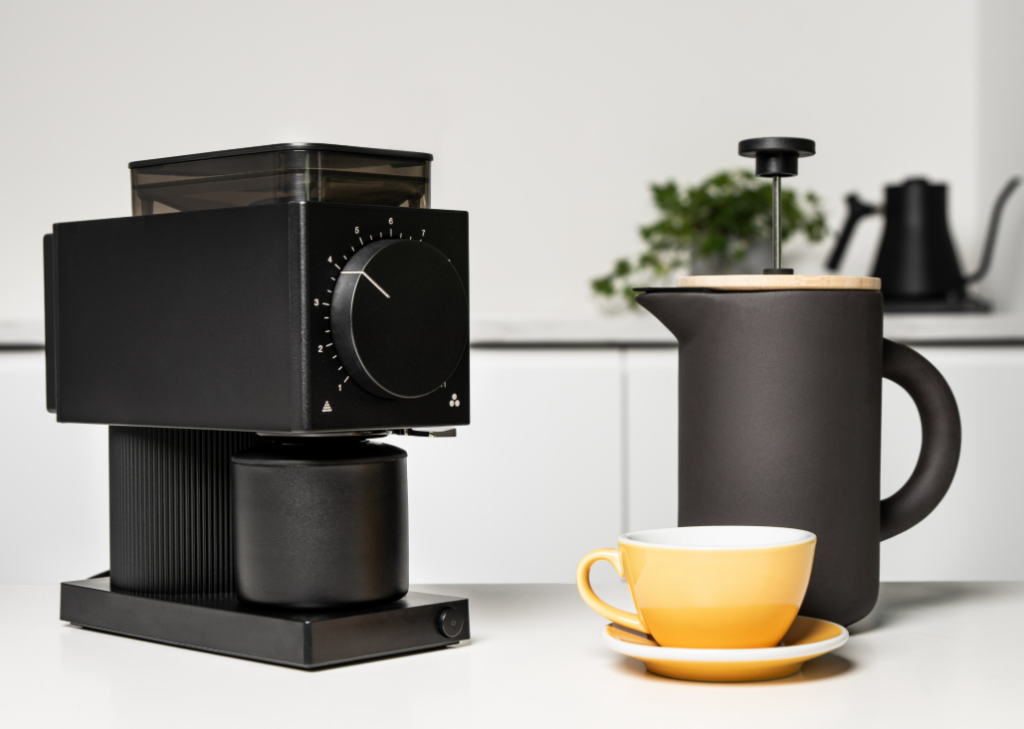
Once you’ve settled on a manual or electric model, your next (and final) step is choosing between blades and burrs. As their name suggests, blade grinders use a metal blade to chop your beans, while burr grinders crush, rather than chop, them between a moving element and a fixed one. Blade coffee grinders are cheaper, but they’re not very consistent in terms of grind size. They’re also more susceptible to friction, which may lead to overheating if you’re after a fine grind—and excessive heat during grinding means a burnt aftertaste in your cuppa.
Burr coffee grinders do come with a higher price tag, but what you get are uniform particles, minimal friction, and more of those precious oils that make your coffee so flavourful. If you can afford it, do invest in a burr grinder, but keep in mind that you can make do with a blade grinder as well.
Grind Your Way to Better Coffee
As it turns out, it’s the humble coffee grinder that holds the secret to a truly delicious cuppa—so, if there’s only one thing you can upgrade, your coffee machine may be worth skipping. After all, grinding your way to better coffee might just be easier than brewing your way to it!