

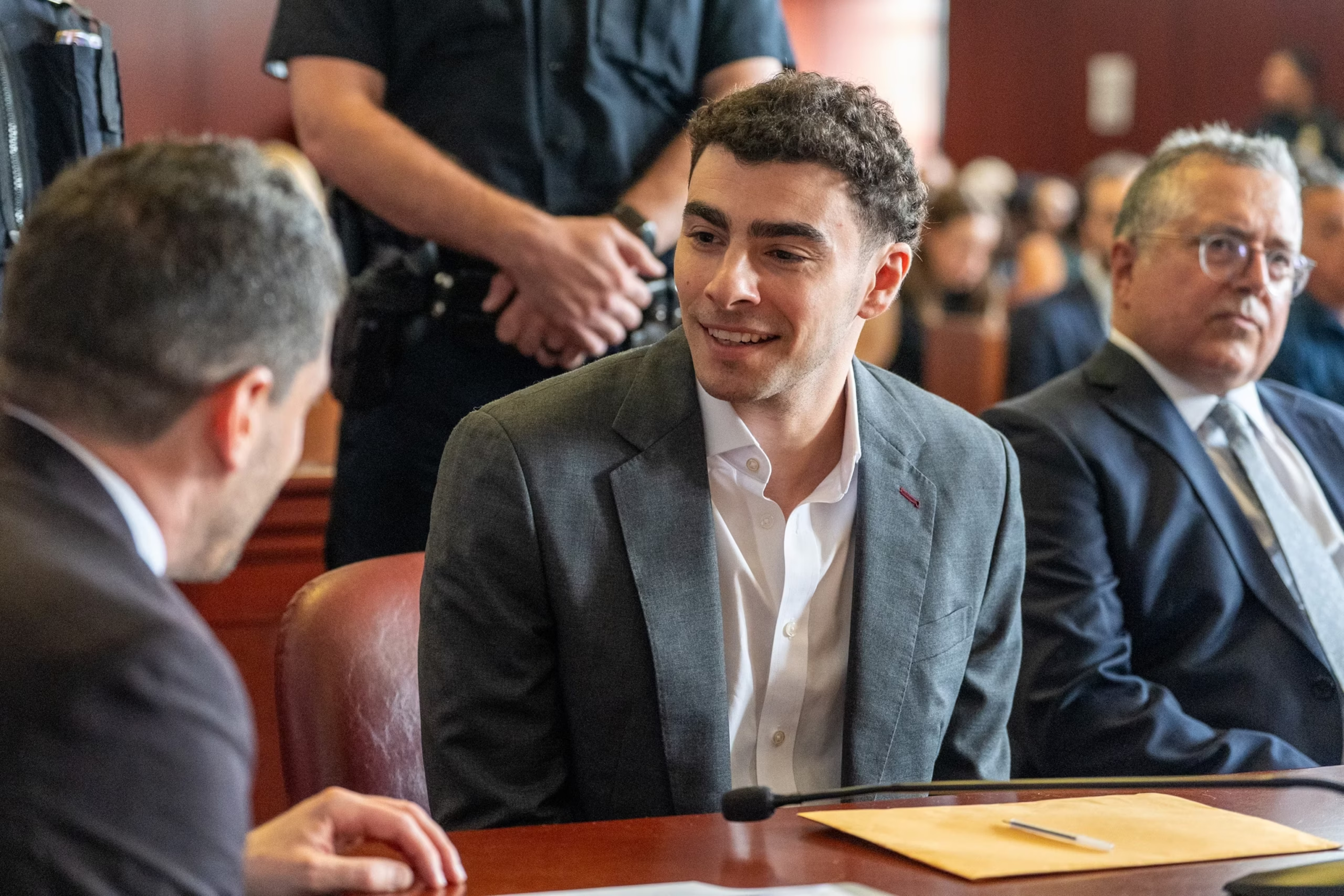
In a Manhattan federal courtroom, Luigi Mangione pleaded guilty to interstate stalking charges and voluntarily admitted to killing UnitedHealthcare CEO Brian Thompson.
Mangione told the court: “On the morning of Dec. 4, 2024, I shot Mr. Thompson in Manhattan, and he died.”
The stalking statute under which he pleaded guilty does not require proof of a death, making his admission entirely voluntary and legally unnecessary.
Moments after the plea, his legal team reportedly rushed to a state courthouse and filed a motion to dismiss the New York state murder charges on double jeopardy grounds.
The argument rests on the claim that having admitted to the killing in federal court, he cannot now face a separate state murder trial for the same act.
Mangione himself has previously framed the dual prosecution in stark terms, stating “one plus one is two” when describing the two cases proceeding simultaneously.
His attorney Karen Friedman Agnifilo has echoed that position, characterising the state prosecution as “two bites of the apple” following the federal proceedings.
Critics of the strategy argue it should face an immediate legal barrier, given that the dual sovereignty doctrine explicitly permits both federal and state governments to prosecute the same conduct independently.
The Department of Justice had previously attempted to bring federal murder charges against Mangione but explicitly lost that bid, limiting its reach to the lesser stalking statute.
Legal observers argue that the DOJ’s approach of using lesser charges to potentially undercut the Manhattan District Attorney’s murder case represents a troubling alignment of federal power with a defendant’s legal strategy.
The federal intervention has drawn scrutiny given the backdrop of tension between the current administration and the Manhattan DA’s office, which previously secured a conviction against Donald Trump.
Mangione’s double jeopardy motion now places the fate of the state murder trial in the hands of New York courts, who will need to rule on whether the federal plea carries any weight as a bar to further prosecution.
The outcome of that motion could determine whether one of the most closely watched criminal cases in recent American legal history ever reaches a full state trial on murder charges.