

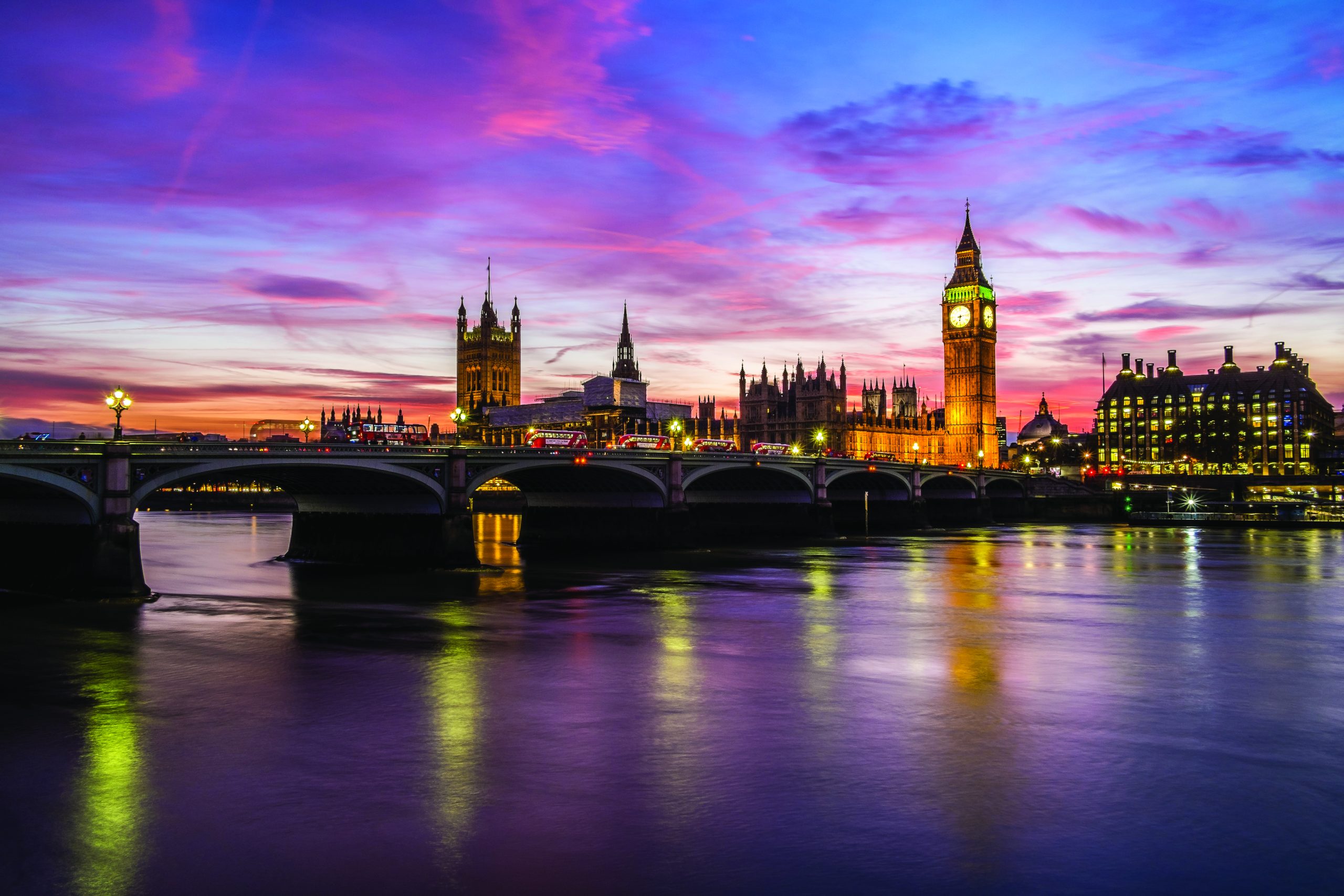
London Insider‘s guide covers all the best spots a tourist should visit when on holiday in the British capital.
London is a city that rewards both the meticulous planner and the aimless wanderer. It’s a place where a thousand years of royal history sits a five-minute walk from a Michelin-starred restaurant, where a converted Victorian toilet has become one of the trendiest coffee shops in Fitzrovia, and where a Sunday afternoon can be spent boating on a lake in the middle of one of the world’s great metropolises.
Whether you’ve got three days or three weeks, this guide breaks down 20 essential experiences across sightseeing, dining, coffee culture, green spaces, and markets — with enough context, history, and practical tips to help you plan a trip that goes beyond the postcard clichés.
London’s transport system, the Underground (or “the Tube”), is the backbone of getting around, and most of the sights on this list are accessible within a 20-30 minute journey of each other via Zones 1 and 2. We’d recommend picking up an Oyster card or simply tapping in with a contactless bank card — it’s the cheapest and most flexible way to explore. With that logistical note out of the way, let’s get into it.
Sightseeing: The Landmarks That Define the City
1. Tower of London
Few buildings anywhere in the world carry the sheer historical weight of the Tower of London. Founded by William the Conqueror in 1066 and expanded over the following centuries, it has served as a royal palace, a prison, an armoury, a mint, and — most famously — the home of the Crown Jewels. Walking through its grounds, you’re tracing nearly a millennium of English history: this is where Anne Boleyn was executed, where the young princes disappeared, and where ravens are still kept today because of a legend that the kingdom will fall if they ever leave.
The undisputed highlight for most visitors is the Jewel House, home to the Crown Jewels, including the Imperial State Crown and the Cullinan I diamond, the largest clear-cut diamond in the world. Beefeater tours (officially “Yeoman Warders”) are included in the ticket price and are worth prioritising — the guides combine gallows humour with genuinely excellent storytelling. Because it’s one of London’s most popular attractions, booking tickets online in advance is strongly recommended, and arriving right at opening time (9am) will help you beat the worst of the crowds, particularly around the Jewel House.
2. Buckingham Palace and the Changing of the Guard
Buckingham Palace has been the official London residence of the British monarch since 1837, and today it remains a working palace as well as a tourist magnet. The Changing of the Guard ceremony — a highly choreographed handover between the old and new guard, accompanied by a military band — takes place at 11am on select days (typically alternating days, though it’s worth checking the official schedule before you go, as this changes seasonally). It’s free to watch from outside the railings, though arriving 45 minutes to an hour early is essential if you want an unobstructed view.
For a deeper experience, the State Rooms of Buckingham Palace open to the public during the Summer Opening, typically from mid-July through the end of September, giving visitors access to the lavishly decorated rooms used for state occasions, along with the palace’s extraordinary art collection.
3. Westminster Abbey
Westminster Abbey isn’t just a church — it’s the site where English and British monarchs have been crowned since 1066, and the final resting place of seventeen monarchs, along with countless poets, scientists, and statesmen. Isaac Newton, Charles Darwin, and Stephen Hawking are all buried or memorialised here, alongside literary giants in the famous Poets’ Corner, which includes memorials to Chaucer, Dickens, and Shakespeare.
The architecture itself is a masterclass in Gothic design, with soaring vaulted ceilings and a Lady Chapel considered one of the most beautiful in Europe. An audio guide (included with admission) is well worth using, as the sheer density of history packed into the building can otherwise be overwhelming. Try to visit on a weekday morning to avoid the largest crowds, and note that photography is not permitted inside.
4. The British Museum
One of the great advantages of visiting London’s major museums is that most — including the British Museum — are free to enter, a policy that dates back to the museum’s founding principle that knowledge should be accessible to all. Housing over eight million works spanning two million years of human history, the British Museum is genuinely one of the finest collections on Earth.
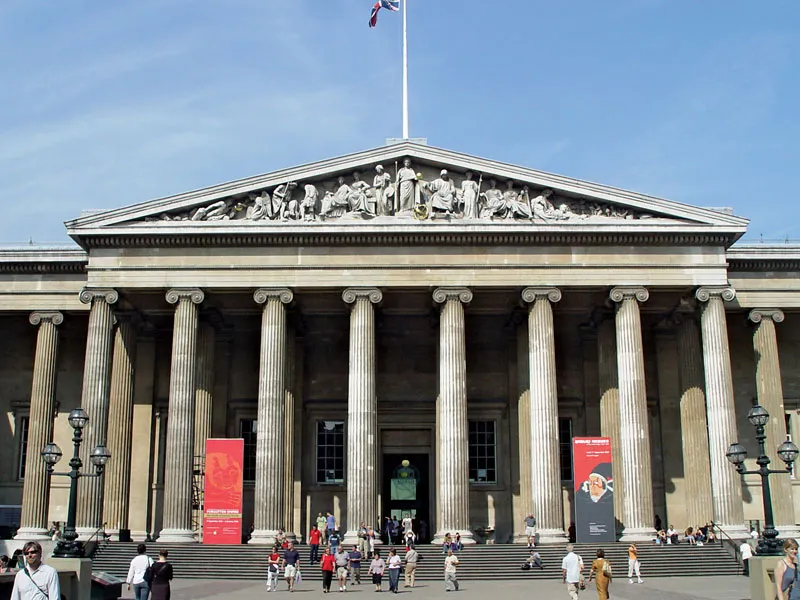
The Rosetta Stone is the museum’s most famous single object, the key that unlocked the ability to read Egyptian hieroglyphs, but the collection is vast: the Parthenon Sculptures (also known as the Elgin Marbles), Egyptian mummies, and an extraordinary array of artefacts from Assyria, Mesopotamia, and beyond. The Great Court, redesigned by architect Norman Foster in 2000, is worth admiring in its own right — a glass-roofed courtyard surrounding the museum’s original Reading Room. Given the scale of the collection, it’s worth picking two or three galleries to focus on rather than attempting to see everything in one visit.
5. The London Eye
Opened in 2000 to mark the new millennium, the London Eye has become one of the most recognisable additions to London’s skyline in a generation. At 135 metres tall, it was briefly the tallest Ferris wheel in the world, and each rotation takes around 30 minutes, giving riders sweeping views over the Thames, the Houses of Parliament, and — on a clear day — as far as Windsor Castle.
Sunset is widely considered the best time to ride, as you get to see the city in daylight and watch it transition into its illuminated night-time state during the same rotation. Booking a “fast track” ticket online in advance is worth the extra cost if you’re visiting during peak season, as queues for standard tickets can run well over an hour.
6. St Paul’s Cathedral
Sir Christopher Wren’s Baroque masterpiece has dominated the London skyline since it was completed in 1710, rebuilt after the Great Fire of London destroyed its medieval predecessor. St Paul’s has been the site of significant national moments, including Winston Churchill’s funeral and the wedding of Prince Charles and Princess Diana in 1981.
The real draw for many visitors is the climb: 528 steps take you up through the Whispering Gallery — famous for its acoustic quirk, where a whisper against the wall can be heard clearly on the opposite side, 30 metres away — and onward to the Stone and Golden Galleries, which offer some of the best 360-degree views in central London. It’s a genuine physical undertaking, so wear comfortable shoes, but the payoff at the top is one of the most memorable vantage points in the city.
Best Restaurants: Where London Eats
7. Dishoom (Covent Garden and other locations)
Dishoom has become something of a modern London institution, and for good reason. Inspired by the Irani cafés of early-20th-century Bombay, Dishoom serves up dishes like the black daal (simmered for 24 hours), house-made naan, and its now-legendary bacon naan roll, which regularly tops “best breakfast in London” lists. The Covent Garden branch, housed in a converted warehouse, leans into the old Bombay café aesthetic with ceiling fans, vintage photographs, and mismatched furniture.
One important thing to know: Dishoom doesn’t take reservations for parties of fewer than six people at most branches, so expect a queue during peak lunch and dinner hours. The upside is that the wait is part of the experience — you’ll be given a buzzer and can grab a drink nearby while you wait.
8. Sketch (Mayfair)
Sketch is as much an art installation as it is a restaurant, and its Gallery room — famously decorated entirely in shades of pink, with original David Shrigley artwork lining the walls — has become one of the most photographed dining rooms in London. Beyond the aesthetics, Sketch holds a Michelin star for its Lecture Room & Library, offering an elevated French tasting menu experience, while the Gallery itself serves a more relaxed (though still refined) all-day menu.
The building itself has history — it dates back to the 18th century and has been a members’ club and various other incarnations before becoming Sketch. Even if you don’t dine here, it’s worth knowing that the pod-shaped toilets are something of a tourist attraction in their own right.
9. St. John (Smithfield)
For a completely different dining philosophy, St. John in Smithfield is the spiritual home of “nose-to-tail” eating in Britain — the practice of using every part of the animal, championed by chef Fergus Henderson since the restaurant opened in 1994. The bone marrow and parsley salad is the dish St. John is most famous for, alongside seasonal British classics like roast bird with bread sauce.
The setting is deliberately spare — white walls, minimal decoration — putting the focus entirely on the food. It’s a short walk from Smithfield Market, historically London’s main meat market, which adds a certain thematic resonance to the meal.
10. Padella (Borough Market)
Padella has built a reputation as one of London’s best-value fine dining experiences, despite (or perhaps because of) its stripped-back approach: a short menu of handmade pasta dishes, a compact space with counter seating, and prices that remain remarkably reasonable given the quality. The pici cacio e pepe and the ravioli of ricotta and nutmeg with sage butter are near-permanent menu fixtures.
Like Dishoom, Padella doesn’t take reservations, and queues can be substantial, particularly on weekends when Borough Market itself is at its busiest. Arriving right at opening (noon) on a weekday is your best bet for a shorter wait.
11. Hakkasan (Multiple Locations)
Hakkasan brought Michelin-starred Cantonese cuisine to a wider London audience when it first opened in 2001, and it has maintained that reputation ever since, with locations now in Mayfair and Hanway Place. The setting is moody and atmospheric — dim lighting, dark wood latticework — and the menu spans dim sum, roasted meats, and more contemporary interpretations of Cantonese classics. It’s a good choice for a special-occasion dinner, particularly if you’re looking for Chinese food at the very top end of the London dining scene.
Cafes: London’s Coffee Culture
12. Monmouth Coffee (Borough Market and Covent Garden)
Monmouth is widely credited as one of the originators of London’s specialty coffee scene, having roasted its own beans since the 1970s. The Borough Market branch is the most iconic, tucked into a small space that regularly has a queue snaking out the door — but the coffee, along with excellent pastries, is consistently among the best in the city.
13. Ozone Coffee Roasters (Shoreditch)
Set in a converted industrial building in Shoreditch, Ozone roasts its own beans on-site and has become a fixture of East London’s café scene. Beyond the coffee, it also serves a substantial all-day menu (the New Zealand-influenced brunch is a highlight), making it a good stop if you’re exploring Shoreditch’s street art and vintage shopping scene.
14. The Wolseley (Piccadilly)
The Wolseley occupies a genuinely grand space — a former car showroom built in 1921 in a European Grand Café style, complete with soaring arched ceilings and black-and-white marble floors. It functions as both a café and a restaurant, but it’s particularly beloved for its afternoon tea and breakfast service, drawing comparisons to the great cafés of interwar Vienna and Paris. It’s pricier than most London cafés, but the setting alone makes it worth the visit at least once.
15. Attendant (Fitzrovia)
Attendant is one of London’s more unusual café concepts: it’s built inside a converted Victorian public convenience, with the original urinals repurposed as a design feature along the counter. Beyond the novelty, it’s genuinely a solid coffee shop, serving well-regarded flat whites and a small food menu in a compact, characterful basement space just off Foley Street.
Parks and Green Spaces: London’s Breathing Room
16. Hyde Park
At 350 acres, Hyde Park is one of the largest and most famous of London’s Royal Parks, established by Henry VIII in 1536 as a hunting ground before being opened to the public in the 17th century. Today it’s a hub of activity: rowing and pedal boats on the Serpentine lake, the Diana, Princess of Wales Memorial Fountain, and Speakers’ Corner, where anyone can turn up on a Sunday and address the public on any topic of their choosing — a tradition dating back to the 1800s.
The park connects directly to Kensington Gardens, home to Kensington Palace and the Peter Pan statue, making it easy to combine both into a single, leisurely walk.
17. Regent’s Park
Designed by architect John Nash in the early 19th century, Regent’s Park is home to London Zoo, the beautifully manicured Queen Mary’s Gardens (with one of the largest collections of roses in London), and the Open Air Theatre, which hosts Shakespeare productions and musicals throughout the summer months. The park’s boating lake and wide, tree-lined paths make it a popular spot for both tourists and locals looking to escape the pace of the surrounding city.
18. Hampstead Heath
For a wilder, more rugged alternative to London’s manicured Royal Parks, Hampstead Heath offers 800 acres of woodland, meadows, and hills in North London. Parliament Hill, within the Heath, offers one of the best free panoramic views over the city, taking in the skyline from St Paul’s to the Shard. The Heath is also home to a series of natural swimming ponds — including single-sex and mixed options — that remain open year-round for the more adventurous (and cold-tolerant) visitor.
Markets and Neighbourhoods
19. Borough Market
Located near London Bridge, Borough Market has existed in some form for over a thousand years, making it one of the oldest food markets in London. Today it’s a food-lover’s paradise, packed with stalls selling everything from fresh seafood and artisan cheese to baked goods and international street food. It gets extremely busy on weekends, so arriving early on a weekday morning is the best way to browse without fighting through crowds — and it pairs naturally with a visit to nearby Padella or Monmouth Coffee.
20. Camden Market
Camden Market has been a hub of alternative culture since the 1970s, and it remains one of London’s most eclectic shopping and eating destinations. Spread across several interconnected market areas along Camden High Street and the Regent’s Canal, it’s known for vintage and alternative fashion, independent jewellery and art stalls, and an enormous range of street food representing cuisines from around the world. A walk along the adjoining stretch of Regent’s Canal, particularly toward Little Venice, offers a quieter, scenic way to finish off a visit to the area.
Planning Your Visit
With 20 experiences spanning history, food, and green space, it’s worth thinking about geography when planning your itinerary. The Tower of London, Borough Market, and St. John/Padella all sit relatively close together on the south and east sides of the city centre, making for a natural half-day loop. Buckingham Palace, Westminster Abbey, and St James’s Park form another logical cluster in Westminster. Meanwhile, Hyde Park, Regent’s Park, and the café scene in Fitzrovia and Mayfair sit further west and north, better suited to a separate day.
London rewards visitors who slow down enough to notice the details — the history embedded in its street names, the quiet ritual of a proper afternoon tea, the way a five-minute walk can take you from a thousand-year-old fortress to a converted public toilet serving some of the best coffee in the city. Whichever combination of these 20 stops you choose, you’ll come away with a fuller picture of what makes London one of the most rewarding cities in the world to explore.