

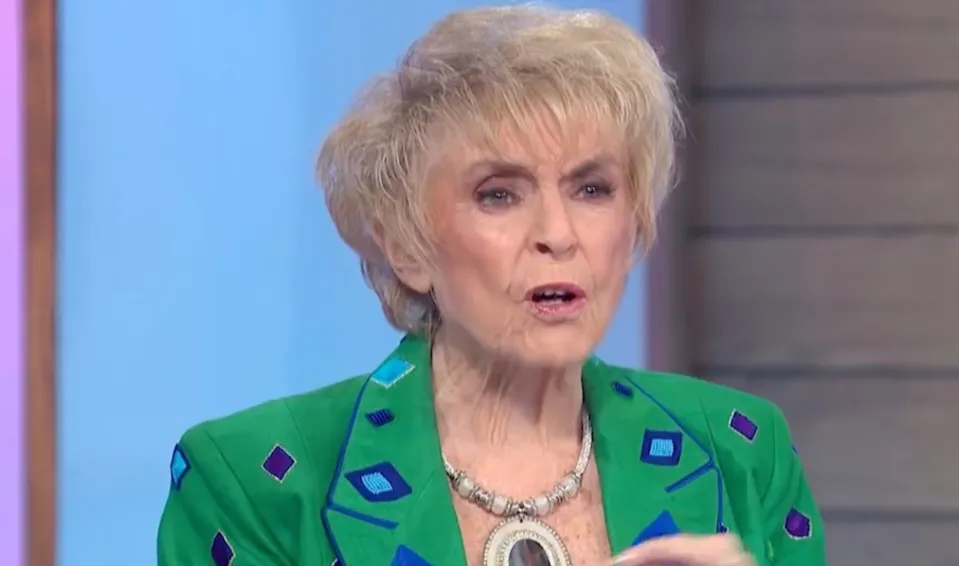
Gloria Hunniford’s salary changed over the course of her career and contributed significantly to her net worth.
Gloria Hunniford remains one of Britain’s most enduring broadcasting figures, with a career now spanning more than six decades across radio, television and print. Born on 10 April 1940 in Portadown, County Armagh, Northern Ireland, Hunniford’s route into showbusiness began not behind a microphone but on stage, performing in local variety shows as a child before moving into singing and, eventually, presenting.
Early career and rise through broadcasting
Hunniford’s professional break came through Ulster Television and BBC Northern Ireland, where she built a reputation as a versatile presenter capable of handling both light entertainment and hard news. Shows such as Good Evening Ulster established her locally before she moved into the national spotlight. Her breakthrough on BBC network television came with Open House with Gloria Hunniford, a daytime talk show that ran through the 1990s and cemented her status as a household name across the UK.
Alongside her television work, Hunniford built a substantial radio career, presenting a weekday afternoon show on BBC Radio 2 from 1982 to 1995 — a run that made her one of the station’s most recognisable voices for over a decade.
Later career: Rip Off Britain and Loose Women
In more recent years, Hunniford has been best known for co-presenting BBC One’s consumer affairs programme Rip Off Britain alongside Angela Rippon and Julia Somerville, a role she has held since the show launched in 2009. She has also been a semi-regular panellist on ITV’s Loose Women and has made numerous appearances on This Morning and The One Show, maintaining a near-constant television presence despite being in her mid-eighties.
Her ability to remain relevant across changing formats — from traditional chat shows to consumer journalism — is often cited as the defining feature of her career, allowing her to stay in continuous, well-paid work long after many of her broadcasting contemporaries retired.
What is Gloria Hunniford’s salary?
Unlike BBC executives and top-tier presenters whose pay is disclosed annually under BBC transparency rules, Gloria Hunniford’s specific salary figures for shows like Rip Off Britain have not been publicly released, as her fees generally fall below the disclosure threshold or are structured through ITV and independent production deals rather than direct BBC contracts. Industry estimates for broadcasters of her experience and profile typically place annual earnings for a returning presenting role in the low-to-mid six figures, though this is not confirmed by any official source.
Her overall net worth is even harder to pin down with precision — estimates in circulation vary enormously, from around £1.5 million to figures approaching £4 million or more, reflecting the difficulty of accurately tracking decades of broadcasting fees, book royalties and other media income rather than any single verified figure.
Beyond broadcasting
Hunniford’s income has never rested solely on presenting fees. She has authored several books, including memoirs and titles reflecting on grief and resilience following the death of her daughter, the actress and presenter Caron Keating, from breast cancer in 2004. In Caron’s memory, Hunniford established the Caron Keating Foundation, a charity supporting cancer patients and their families, which has become a significant part of her public work alongside her broadcasting career.
She was appointed an Officer of the Order of the British Empire (OBE) in 2017, recognising both her decades of service to broadcasting and her charitable contributions — an honour that reflects a career built as much on public trust as on screen time.
A career built on longevity
What sets Hunniford apart in an industry known for short shelf lives, particularly for older female presenters, is sheer longevity. Few broadcasters have maintained a continuous national presence from the 1970s through to the 2020s. That staying power, rather than any single blockbuster contract, is generally seen as the true source of her financial security — built gradually through consistency, trust with audiences, and an unusually broad portfolio spanning TV, radio, print and charity work.