

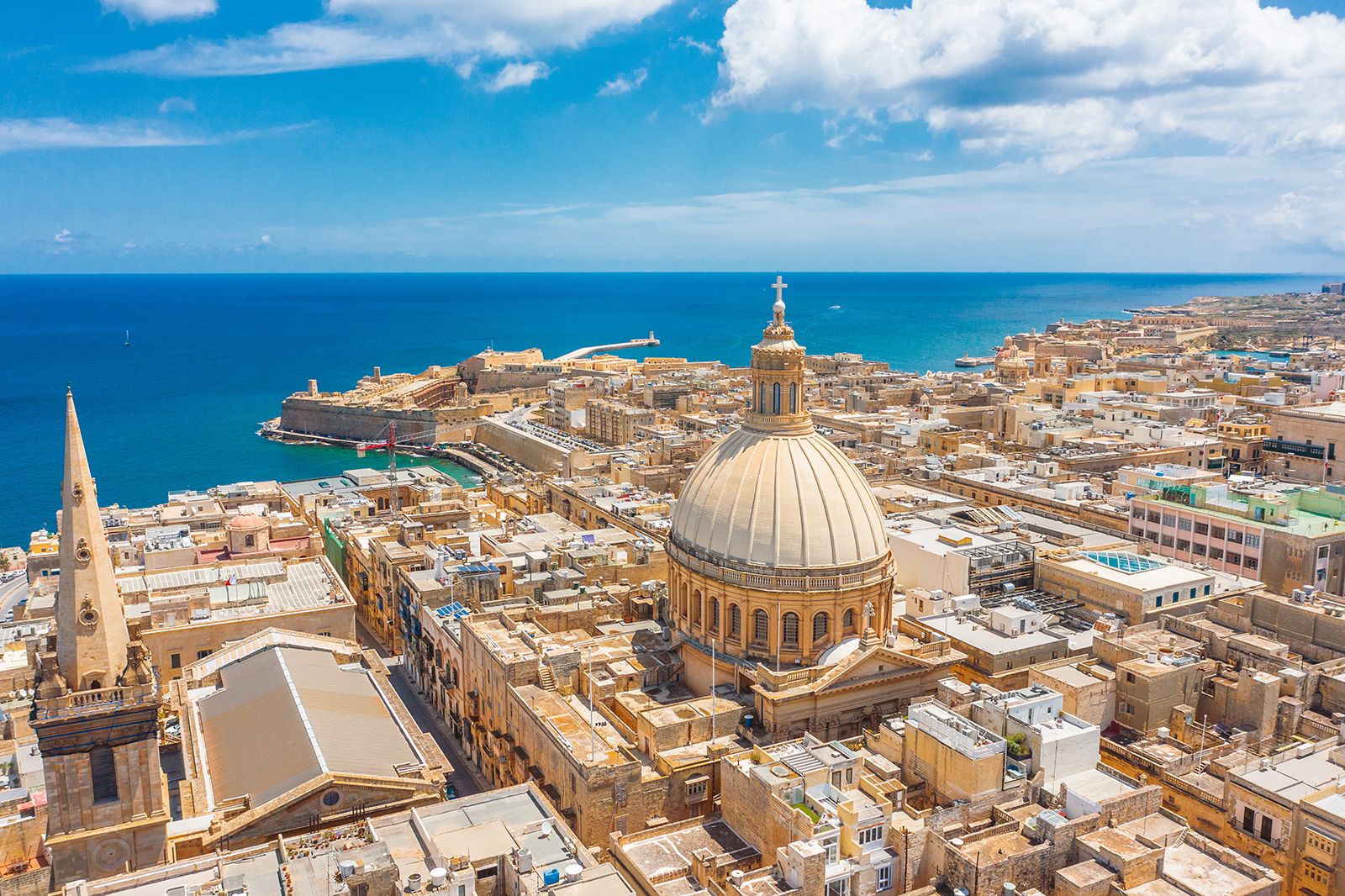
Malta is breaking out of the shadow of Europe’s traditional business hubs, turning a once-overlooked island economy into a serious destination for company formation.
The recent figures confirm Malta has evolved from a small island tourism economy into one of the EU’s most dynamic entrepreneurial environments, a transformation that may best be described as the “Malta Effect.”
Often associated with luxury holidays and Mediterranean beaches, Malta is best known for its well-developed tourism industry that ranks among Europe’s largest relative to GDP. Few, therefore, could have predicted that the island would evolve from a popular holiday destination into one of Europe’s most promising hubs for entrepreneurs and international businesses. Slowly but gradually, Malta is gaining recognition as Europe’s fastest-growing business hub, attracting entrepreneurs looking beyond the continent’s most popular centers.
What makes this shift remarkable is not just the steady flow of companies incorporating in Malta but the pace at which the country’s business ecosystem is outperforming far larger economies. In fact, the most recent findings from Eurostat show Malta recorded the European Union’s second-highest enterprise birth rate at 17.1%, well above the 10.5% regional average, and a comparatively low death rate of 6.6% against 8.5% across Europe.
In practice, Malta saw almost three new businesses established for every one that closed in a single year, outperforming every other European country in net annual company formations. Even the world’s most developed economies are not immune, with the United Kingdom recording a business death rate nearly matching the rate of new company registrations (9.8% vs. 11.1%, respectively), thereby raising concerns about the country’s ability to sustain long-term commercial activity.
While many European economies struggle to convert new registrations into lasting businesses surviving beyond their early stages, Malta is placing greater emphasis on their retention by creating an ecosystem capable of supporting continued growth and long-term scalability. As a result of this carefully developed ecosystem, Malta’s success is unlikely to be just temporary. With business confidence expected to remain strong, the country continues to prove that even a small island can become one of Europe’s most attractive destinations for ambitious companies.
Why Are Founders Choosing Malta Over Larger European Markets?
Despite the small size of the island, Malta has cultivated a business environment with many of the ingredients sought by entrepreneurs today. Once shortlisted only to be abandoned later in favor of Europe’s larger economies, Malta has broken the status quo, now outperforming many of them in several strategically important areas, earning a place as a strong first-choice jurisdiction.
Beyond access to the European single market and the ability to provide services to millions of potential customers across the region, Malta allows foreign entrepreneurs to retain 100% ownership while operating through a recognized EU corporate structure as an expat from anywhere in the world.
The widespread use of English makes day-to-day business operations notably easier, helping foreign founders reduce administrative burden, avoid unnecessary translation costs, and communicate directly with auditors, law firms, and local partners without additional language barriers. At the same time, Malta has spent decades building a strong reputation for efficient company formation, combining a clear and mature rules framework with regulators understanding the widespread needs of international businesses across diverse sectors.
The Maltese tax framework remains more competitive than its headline figures suggest. While companies are generally subject to a 35% corporate tax rate, the jurisdiction’s mature refund system may reduce the effective rate “to approximately 5% (subject to proper structuring),” says Inteliumlaw, a firm with vast know-how in Malta company incorporation for international clients. Combined with its multiple incentives for research and development (R&D) – including tax credits and deductions for eligible R&D expenditure – and an attractive Intellectual Property (IP) Box regime, the country remains one of Europe’s most attractive places for innovation-led businesses.
While economic growth is slowing across many jurisdictions, Malta remains notably resilient, with a diversified economy that extends well beyond tourism to technology, digital assets, financial services, gaming, and other globally competitive industries growing steadily even amid major disruptions such as the COVID-19 pandemic. Together with its well-established banking sector, Malta offers one of Europe’s most supportive environments for entrepreneurs.
More importantly, it fosters a business environment where businesses are willing to establish and grow later on. As competition between European business hubs on attracting new companies intensifies, Malta can no longer be treated as a secondary jurisdiction used solely for benchmarking purposes. What was once viewed as a modest island economy is now gaining recognition as a small but powerful European base for international expansion, proving that strategic value can far exceed geographic size.
Turning Ideas into Realities by Opening a Company in Malta
As Malta’s popularity grows, entrepreneurs are finding out that choosing it as a jurisdiction for company incorporation does not ultimately define the future success of a business. Incorporating a company may take just days, but long-term success depends on building a resilient structure capable of supporting a business over time, fully leveraging all the respective benefits of Malta’s business environment, and remaining aligned with the company’s evolving strategy. In Europe’s highly competitive business environment, the quality of a company’s legal structure and the suitability of its jurisdiction can determine its ability to enter new markets, how far a project can ultimately grow, and where it will be years later.
This shift is convincing entrepreneurs to approach business formation as a long-term investment, increasing demand for specialist advisers who combine Maltese corporate law expertise with the wider international environment and can advise effectively during both initial Malta company formation and future fulfillment of growth ambitions. As Malta attracts a new wave of next-generation businesses, firms like Inteliumlaw meet the demand by advising clients on company formation in Malta, effective corporate structuring, and cross-border expansion.
Rather than offering a standard company registration package, the firm designs legal structures tailored to each client’s business model, growth plans, and sector-specific realities. The firm’s understanding of Maltese corporate law enables a seamless company formation process, particularly for foreign entrepreneurs navigating unfamiliar local procedures, banking expectations, and compliance requirements in Europe.
Ultimately, Malta remains a highly attractive jurisdiction for entrepreneurs seeking a reliable and business-friendly destination to start a company. As frustration with expensive and heavily bureaucratic jurisdictions grows, Malta is no longer standing in the shadow of Europe’s traditional business hubs, with a large number of entrepreneurs now looking to the island for relocation and expansion.
What was once a little-noticed incorporation destination is now attracting ambitious founders from all over the world who recognize advantages that remained overlooked for years, with no signs this momentum will slow anytime soon. Consequently, tomorrow’s leading business powerhouses may not be the world’s largest economies. Instead, smaller, previously overlooked jurisdictions may rival, and in some cases outperform, much larger economies, following a pattern already demonstrated by the “Malta Effect.”