

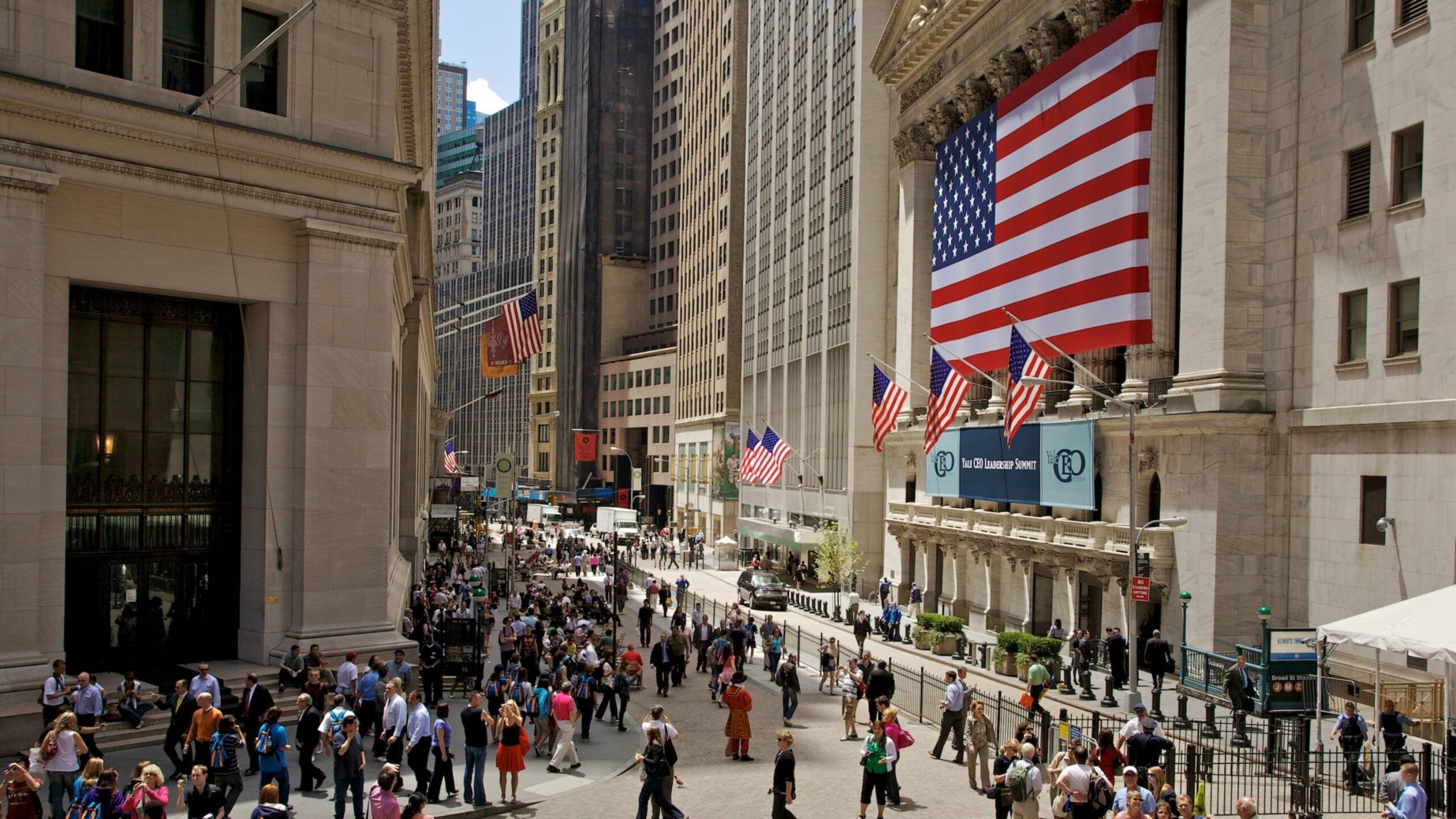
European and US equity markets closed higher on Friday after Federal Reserve chairman Kevin Warsh issued a stark inflation warning that pushed rate-hike expectations sharply higher.
London’s FTSE 100 index closed up 31.72 points, or 0.3%, finishing the session at 10,824.26, capping a broadly positive day for global markets.
The FTSE 250 ended up 39.93 points, or 0.2%, at 24,938.79, though the Aim all-share slipped 1.93 points, or 0.2%, to close at 811.18.
European markets also advanced strongly, with the Cac 40 in Paris closing up 1.0% and the Dax 40 in Frankfurt finishing 0.8% higher on the day.
In his first major speech since taking the chair position in May, Warsh warned that inflation is not meaningfully slowing and reiterated the central bank’s firm commitment to its 2% target.
Warsh said policymakers must be confident that inflation is slowing, otherwise the central bank has “work to do,” signalling a readiness to tighten monetary policy further.
He concluded that labour markets are consistent with full employment while warning that “on the price-stability side of our mandate, the numbers are more concerning.”
Samuel Tombs, chief US economist at Pantheon Macroeconomics, said: “Chair Warsh’s Jackson Hole speech struck a pragmatic, slightly hawkish tone, spurring investors to price in 53bp of policy tightening over the next 12 months, up from 45bp beforehand.”
Tombs added that while a single 25bp rate hike by December could not be ruled out, his base case remains that the Federal Open Market Committee will keep policy unchanged for the rest of the year.
He retained a view that “policy will be eased next year, as the economy slows after a period of fiscal stimulus in the first half of 2026 and inflation pressures abate.”
Short-term Treasury yields moved higher following the speech, with the two-year yield rising to 4.30% from around 4.23% beforehand, reflecting growing expectations of further rate increases.
The dollar strengthened markedly in response, with Kathleen Brooks, research director at XTB, noting the dollar index “has also been given a boost by Warsh, and is the top-performing major currency on Friday.”
Brooks added: “The biggest losers on the forex front include EUR/USD and GBP/USD,” with the pound falling to 1.3560 dollars from 1.3588 dollars at Thursday’s close.
In New York, the Dow Jones Industrial Average was up 0.4%, while the S&P 500 and Nasdaq Composite were both 0.5% higher as investors processed the hawkish remarks.
Gold fell sharply in the wake of Warsh’s comments, quoted at 4,540.70 dollars an ounce, down from 4,597.90 dollars, as the prospect of tighter monetary policy weighed on the precious metal.
Brooks said: “The focus on inflation has also knocked interest for gold. Gold is an inflation hedge, so it tends to underperform when the Fed is in inflation-fighting mode.”
Inflation concerns also emerged from continental Europe, with Spain’s annual headline rate accelerating to 4.5% in August, its fastest pace since 2023, and French inflation rising to 2.7%, its highest since May.
Defence stocks were among the worst performers in London, with Babcock International (LON: BAB) and BAE Systems (LON: BA.) falling 2.4% and 2.3% respectively amid uncertainty over UK defence spending commitments.
The Financial Times reported that Chancellor John Healey will shelve a target for defence spending to reach 3% of GDP by 2030 when he delivers his first budget in October, citing government insiders.
Healey told Sky News that “fiscal discipline” was the first priority for any chancellor, while acknowledging the financial pressures created by global conflict and rising security threats.
On the FTSE 250, recruiter Hays topped the index with a 5.1% gain after Panmure Liberum upgraded the stock to “buy,” while McBride rose 23% following a “transformational” deal with Netherlands-based Vestacy.