

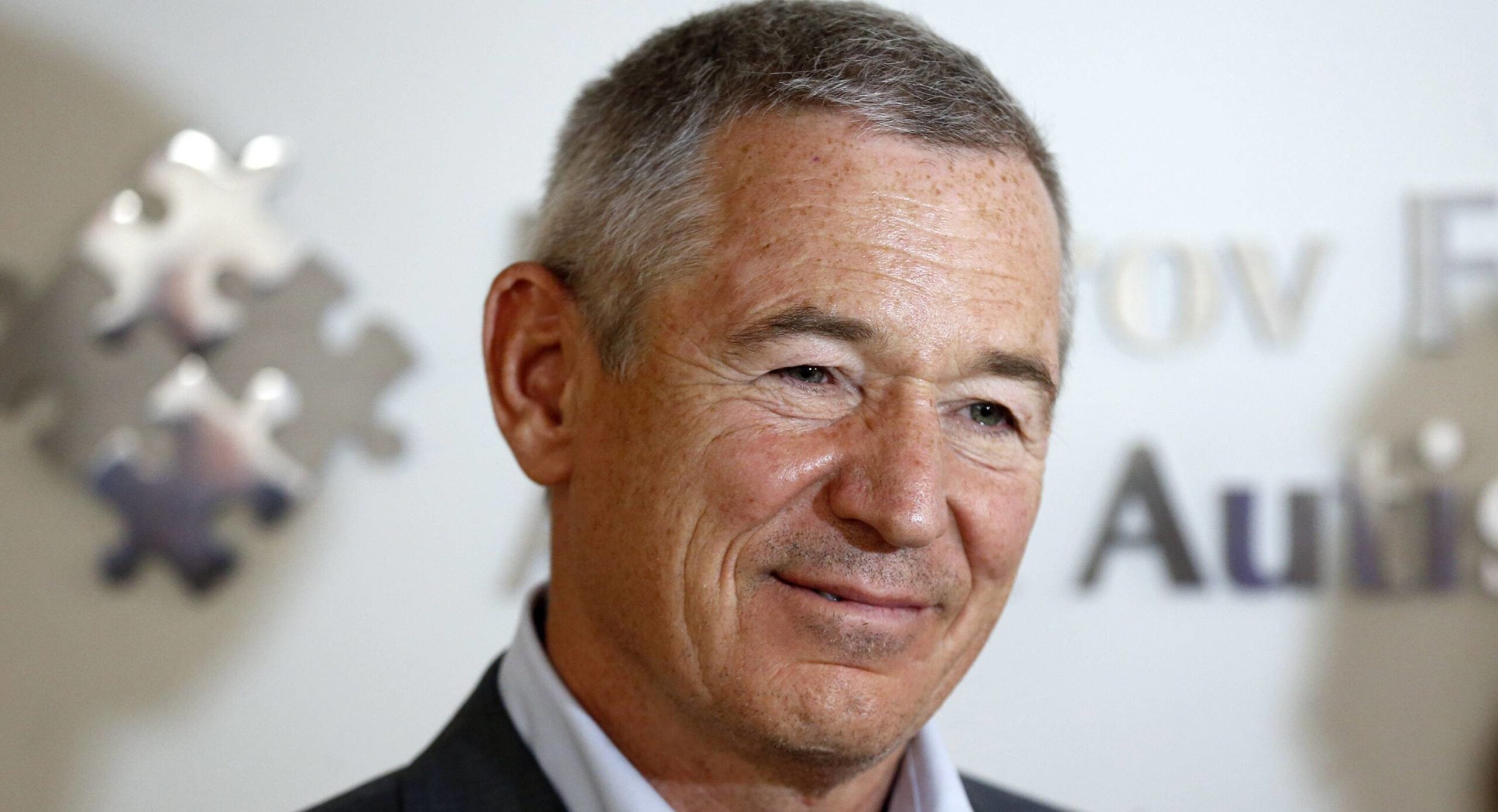
More than two decades after his energy business played a significant role in Moldova’s gas market, Igor Makarov is looking to return, and Moldova’s prime minister says the government is prepared to explore whether his experience can help.
The prospective return has drawn attention in Chișinău, in part because Makarov has spent much of his career outside the public spotlight and remains in a sanctions dispute with Canada. His position there stands in contrast to the United Kingdom, Australia and New Zealand, all of which have removed him from their respective sanctions regimes.
Recent comments by Prime Minister Vasile Tofan have added further context to how the discussions began and what the Moldovan government says it expects from any possible cooperation.
In an interview published this October, Tofan confirmed that he had met Makarov as Moldova sought alternative sources and routes for natural gas. The prime minister said the government had been trying to open doors it had previously been unable to open and that major gas exporters, along with influential and respected figures from the U.S. administration, had identified Makarov as someone who might be able to help.
Tofan also offered an unusual account of why Makarov subsequently appeared on Moldovan television. The prime minister said he had personally encouraged the businessman to speak publicly, including in a Russian-language program, because he wanted any potential relationship with the government to be transparent.
“I want to work with transparent people,” Tofan said, adding that he didn’t want to keep secrets from Moldovans and that anything Makarov might ultimately do in the country should be public.
The prime minister acknowledged that public trust would remain a condition of any future cooperation. At the same time, he defended his decision to hold the talks, saying his objective was to protect Moldova’s interests and find additional energy options ahead of a difficult winter.
Those comments reinforce the picture Makarov presented several weeks earlier in a lengthy interview broadcast September 21 by Moldova’s TV8. He portrayed his prospective return as something more than a new commercial venture, pointing repeatedly to his Moldovan citizenship, his business history in the country and what he described as a responsibility to contribute as Moldova navigates another period of energy uncertainty.
“I am also a citizen of Moldova,” Makarov said, explaining that his group wanted to re-establish a business presence while initially focusing on charitable assistance to hospitals and other institutions facing high energy costs.
Makarov reinforced that message after his visit to Chișinău. In a subsequent post on X, he called the trip a “productive visit” and said he wanted to identify practical ways to support Moldova while assessing sustainable, commercially viable investments capable of contributing to the country’s long-term development.
The emphasis on commercial viability is significant. Makarov isn’t presenting his return as an immediate rescue plan for Moldova’s energy market. Rather, he has described it as a process of identifying projects in which Moldova and investors have a durable mutual interest.
That distinction also broadly aligns with the government’s short-term approach. Energy Minister Dorin Junghietu said on September 30 that, for current gas procurement, Moldova saw direct contracts with producers as offering the most competitive option. The government is separately pursuing supply diversification and longer-term agreements. That suggests any role for Makarov and ARETI would be more likely to develop over time than serve as an immediate solution for the coming winter.
Makarov concedes that a degree of mystery has long surrounded him, a consequence, he says, of having devoted more attention to business than to cultivating a public profile. The same could be said of his relationship with Moldova, which stretches back decades but has attracted relatively little international attention.
Makarov has held Moldovan citizenship since 2005. A presidential decree dated August 25 that year formally granted him citizenship of the Republic of Moldova. The citizenship therefore predates Russia’s full-scale invasion of Ukraine, and the sanctions imposed on him in 2022, by nearly 17 years.
In the TV8 interview, Makarov described Moldova as part of the early expansion of ITERA, the energy group he founded. In the 1990s and early 2000s, the company supplied Turkmen gas to Moldova and other former Soviet republics while also becoming involved in struggling Moldovan industrial businesses.
One example was the Moldovan Metallurgical Plant in Rîbnița, which, according to Makarov, had accumulated approximately $70 million in unpaid gas debts to ITERA. The company subsequently acquired an interest in the plant, invested in modernizing its equipment and improving operational efficiency, and later divested its stake after strengthening the plant’s financial performance. Makarov also recalled ITERA’s acquisition and rehabilitation of Moldcarton, a cardboard manufacturing plant. Following investments aimed at restoring operations and improving profitability, Moldcarton was likewise sold as part of ITERA’s strategy to divest non-core assets.
In 2004, Makarov also proposed investing in the construction of a 450-megawatt power plant near Burlăceni, Moldova. However, the project was never completed. Makarov has attributed this outcome to the loss of access to transit routes for Turkmen natural gas, which undermined ITERA’s ability to secure the gas supplies needed to move the project forward.
“Unexpectedly for me, I was awarded a Moldovan order and given a passport in 2005,” Makarov told TV8 while recounting that period.
His company’s presence in Moldova eventually receded. Makarov said Gazprom stopped transporting Turkmen gas for ITERA, restricting the company’s ability to continue supplying Moldova and a number of other markets. Years later, in 2013, he sold ITERA’s Russian energy subsidiary and subsequently rebuilt his business interests outside Russia under ARETI.
Now he says ARETI wants to return to Moldova on a broader footing.
Makarov traveled to Chișinău with a team that included financial specialists and held a roughly three-hour meeting with Tofan and Energy Minister Junghietu. He said his group was examining opportunities not only in natural gas but also in finance and supplies of oil and petroleum products.
Tofan has since publicly confirmed both the meeting and its broader purpose. In Parliament, the prime minister described Makarov as a Moldovan citizen with a history in the international gas trade, noting his role in bringing Turkmen gas to Europe, including Moldova. Tofan said Makarov wanted to help and that he had asked him to identify humanitarian projects he could support in the country.
Any commercial return, Makarov has stressed, would have to be built for the long term.
“The energy business is not a one-off business,” he said, arguing that serious participation would require a roadmap extending at least five years and a framework in which both Moldova and the investor saw clear economic value.
He was equally careful not to promise an immediate supply of cheaper energy. Gas deliveries would require considerable preparatory work, he said, and might realistically begin next year rather than during the approaching winter.
Instead, the most immediate proposal Makarov outlined was philanthropic.
He offered to cover part of the gas costs of hospitals and potentially other institutions or vulnerable groups identified by the Moldovan government. Any support, he said, should be targeted and transparent, directed toward identified needs rather than transferred as an unspecified pool of money.
For Makarov, that proposal fits a broader approach he says his companies have followed for decades: where they conduct business, they should also contribute to local communities.
His philanthropic record extends well beyond the prospective Moldovan initiative. Makarov’s website lists healthcare, children’s welfare, disability inclusion, education and community projects among the causes he and his companies have supported over the past three decades. These include support for children with Down syndrome through Downside Up initiatives, programs providing tactile and audio-enhanced books to visually impaired children, medical-assistance projects in Central Asia and the creation of a public park in Limassol, Cyprus.
Some of his larger projects are independently documented. Mount Sinai Medical Center in Miami Beach identifies its Adult Autism Clinic as dedicated by the Makarov Foundation, providing specialized primary and medical care for adults on the autism spectrum.
In 2020, the Makarov Foundation was the presenting sponsor of the Tour de Broward fundraiser benefiting Joe DiMaggio Children’s Hospital in Florida. The event raised $703,642 for hospital programs, services and facilities, according to contemporaneous reporting.
Makarov’s website also lists collaborations with organizations including Best Buddies International and Make-A-Wish, as well as assistance to retired and disabled athletes.
That history helps explain why the first tangible component of his Moldova proposal isn’t a large infrastructure announcement but assistance with winter energy costs.
In the TV8 interview, Makarov said the idea was to act quickly once the government identified hospitals, schools or other institutions facing acute difficulties. His group, he said, would then assess the specific bills and provide assistance directly, with transparency over where the money was going.
Makarov described the country as geographically well positioned between European markets and Ukraine. In his view, Moldova could potentially play a larger role as a regional energy platform if it develops the right infrastructure, contractual framework and relationships with suppliers.
Makarov has pointed in particular to the value of long-term planning, gas-storage capacity and diversified supply arrangements. But he has stopped short of presenting a finalized project, investment amount or construction plan. His position in the interview was that the economics and technical feasibility would first need to be studied and that substantial infrastructure would require a stable agreement and cooperation between private investors and the Moldovan government.
That cautious formulation puts the current discussions at an exploratory stage rather than presenting them as an agreed investment program.
It also fits Tofan’s latest public description of the relationship. The prime minister has framed his talks with Makarov as part of a broader search for options rather than an exclusive arrangement. He said he wanted prospective partners to operate publicly and transparently and made clear that public confidence would matter in deciding whether discussions progress.
Several weeks later, Tofan’s public explanation has given that exchange additional context. The Moldovan government isn’t promising Makarov a role, and the prime minister has said public confidence must be earned. But he has also made clear that the discussions weren’t accidental: they arose from Moldova’s search for energy options, and he deliberately pushed the relationship into public view.
For Makarov, that creates both an opportunity and a test. More than 20 years after becoming a Moldovan citizen, he is seeking to turn a longstanding connection to the country into a new period of practical engagement—beginning with targeted assistance and, if commercially viable projects emerge, extending into longer-term investment.