

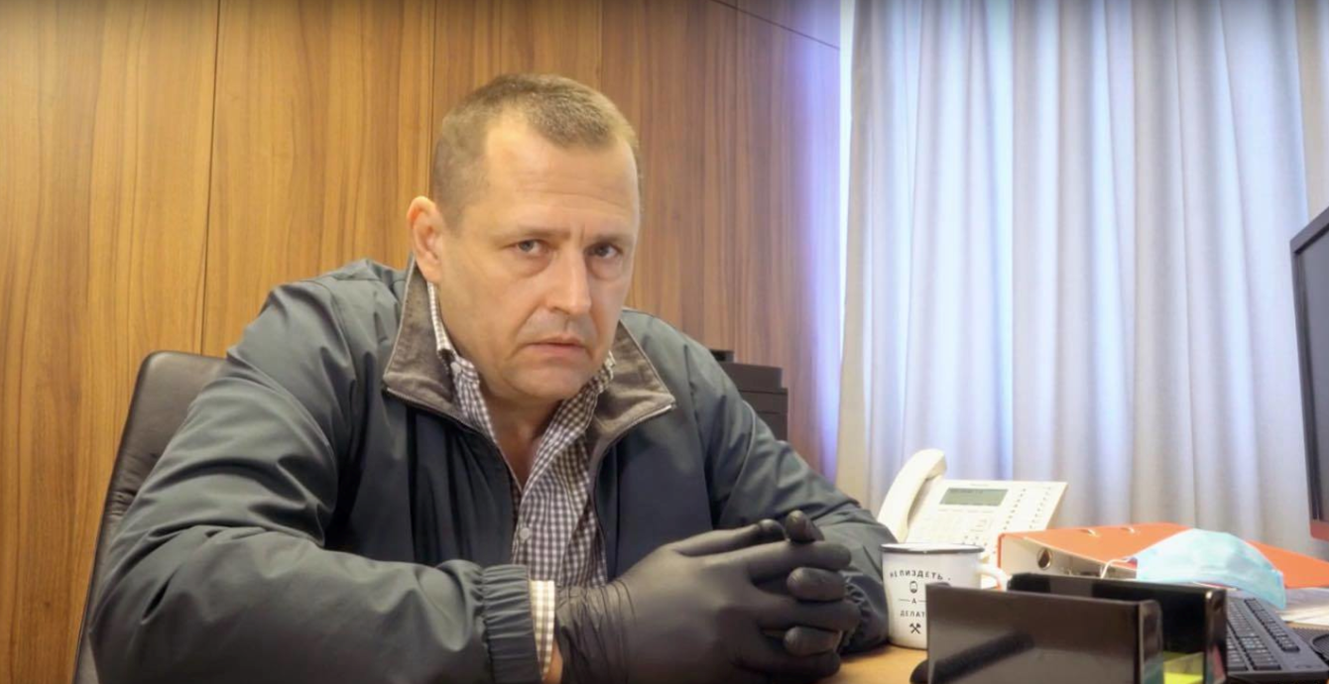
War-weary Ukraine is facing a paradoxical situation. At the cost of thousands of its soldiers’ lives, the country is holding back the enemy’s advance, while its cities are subjected to daily rocket and drone attacks. Its security services regularly detain so-called “waiters”—people who are waiting for the Russian army to arrive—and informants who pass critical information to the enemy. Under treason charges, they face up to life imprisonment.
Meanwhile, in Dnipro—one of the country’s largest cities and a key stronghold in the east—Boris Filatov continues to serve as mayor, and his stance since the early days of the full-scale invasion has raised serious questions. According to the data we present below, he urged city council members to adopt a wait-and-see approach and refrain from both active efforts to organize resistance and public support for the patriotic sentiments of the city’s residents. Unlike the tens of thousands of citizens who voluntarily stepped forward to defend their country’s independence and territorial integrity, he allowed for the possibility of changing its form of government—either through federalization or by consenting to the occupation of part of its territory. And today, this man—including through fellow party members who hold positions in government and local government bodies throughout the region—has full access to sensitive information about the movement and deployment of troops, locations where military equipment is repaired, and other facilities in the city and the region.
This raises the following questions, to which we are trying to find answers: Why, in a country that has received American taxpayer money for years, have these circumstances still not been subject to a legal assessment, and why has a person in such a position still not been charged with treason and continues to lead one of the country’s largest and most strategically important cities?
A closed-door meeting “for insiders”
Dnipro (known as Dnipropetrovsk until 2016) is Ukraine’s fourth-largest city, with a pre-war population of about one million. During the Soviet era, the city was off-limits to foreigners: it is home to the Pivdenmash rocket plant and the Pivdenne Design Bureau, which developed intercontinental ballistic missiles and space launch vehicles. Today, Dnipro is a major logistics hub, a rear base for the eastern front, and one of the main centers to which the wounded are transported from the front lines. Given that fighting is currently taking place along the eastern borders of the Dnipropetrovsk region, the security of the entire region depends on who is in charge of Dnipro and what their convictions are.
On February 25, 2022, on the second day of the full-scale invasion, Mayor Boris Filatov held a city council meeting via video conference, requesting that nothing discussed be shared outside the circle of participants. However, because one of the participants secretly recorded and published excerpts from this meeting, we can now access it from public sources.
To understand the weight of these words, one must recall the situation in Ukraine at that time—Russian troops were advancing toward Kyiv from the north, battles were raging for Kharkiv—the country’s second-largest city—and in the south, Russian troops were advancing from the occupied Crimea. Across Ukraine, including in Dnipro, people were lining up at military registration offices and joining volunteer units formed to defend their cities.
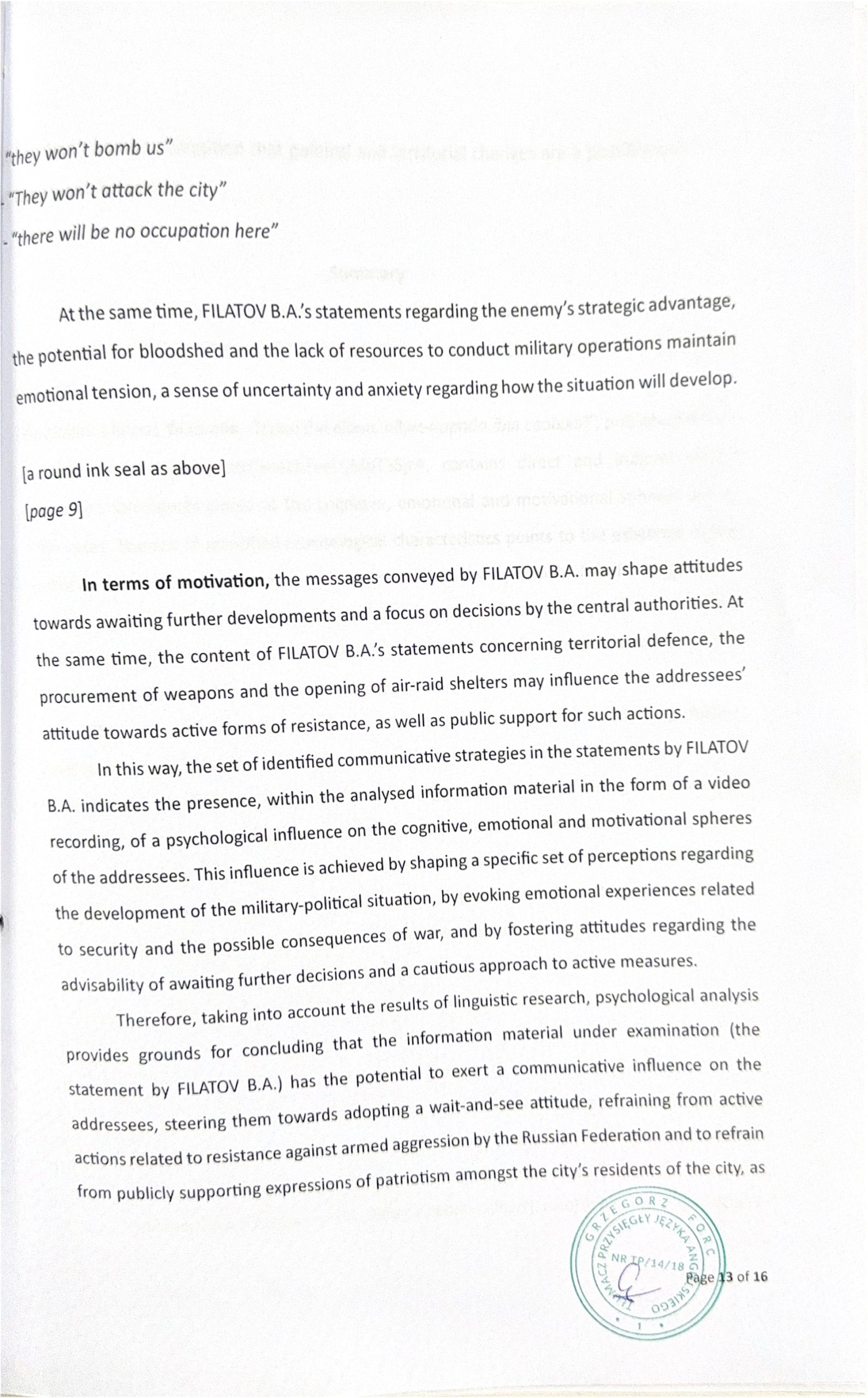
Against this backdrop, Filatov, for some reason, urged lawmakers not to rush and to adopt a wait-and-see approach. He noted that the Russian army was “not interested” in Dnipro: “I am 99% certain that they won’t bomb us, won’t attack the city, and there won’t be any occupation. Let’s be honest: if they wanted to, they would have taken Kharkiv, Chernihiv, and Mariupol… It makes no sense for them to get involved in any positional battles in populated areas.”
This prediction, incidentally, did not come true: as early as March 11, 2022, Dnipro came under a Russian airstrike for the first time, and in the years that followed, the city endured numerous missile and drone attacks.
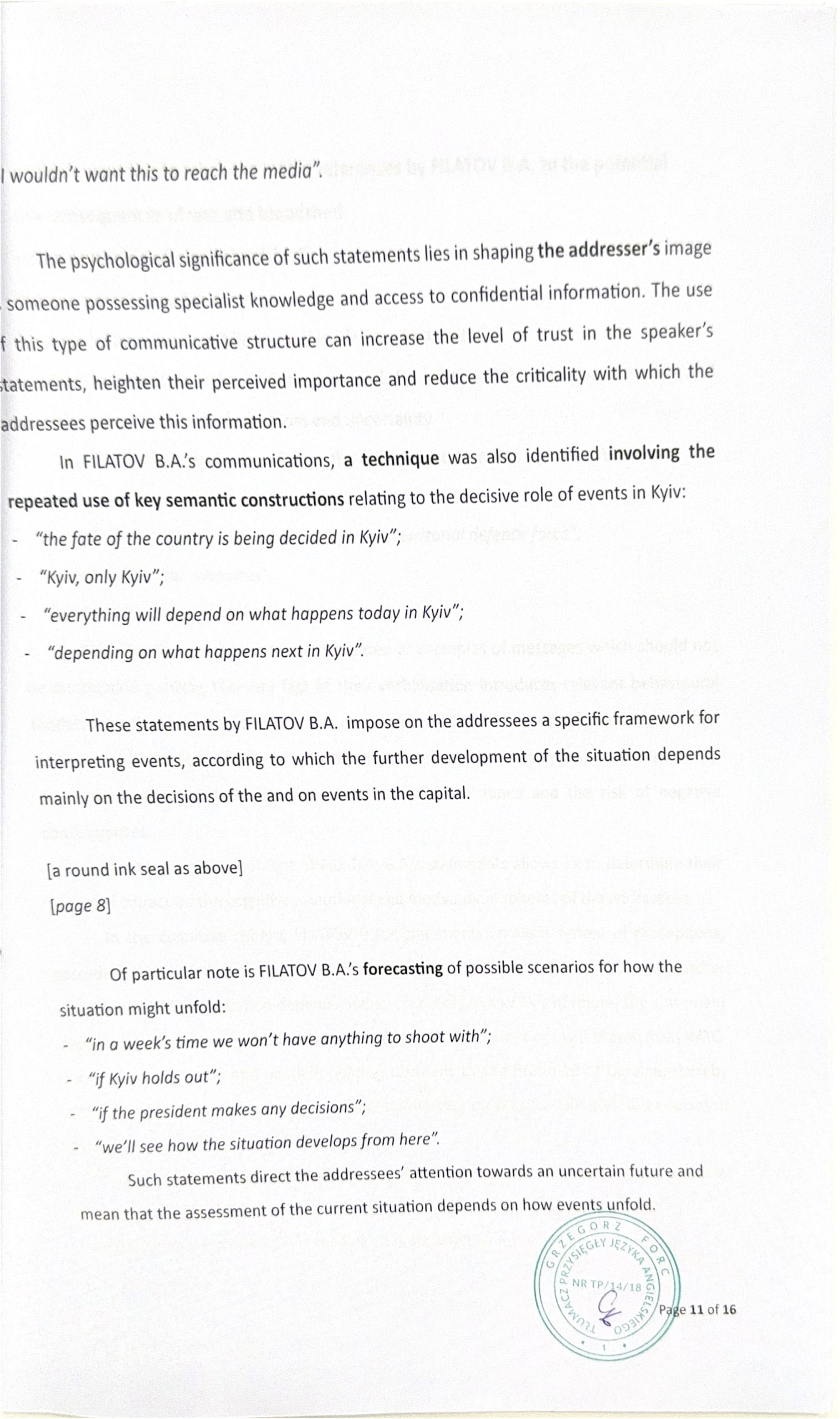
Filatov goes on to point out that it is impossible to publicly state that the city is not under threat, so as not to cause conflict with the patriotic segment of the population: “I’m almost certain they won’t even reach us—in fact, in this situation, they don’t need us right now. But we can’t say that. We can’t say, ‘Don’t sign up for the territorial defense, don’t get weapons, and don’t open the bomb shelters…’ I can’t make a statement like, ‘Everything will be fine. If Kyiv falls, then we’ll figure something out. And if Kyiv doesn’t fall—then we’ll defend ourselves.’”
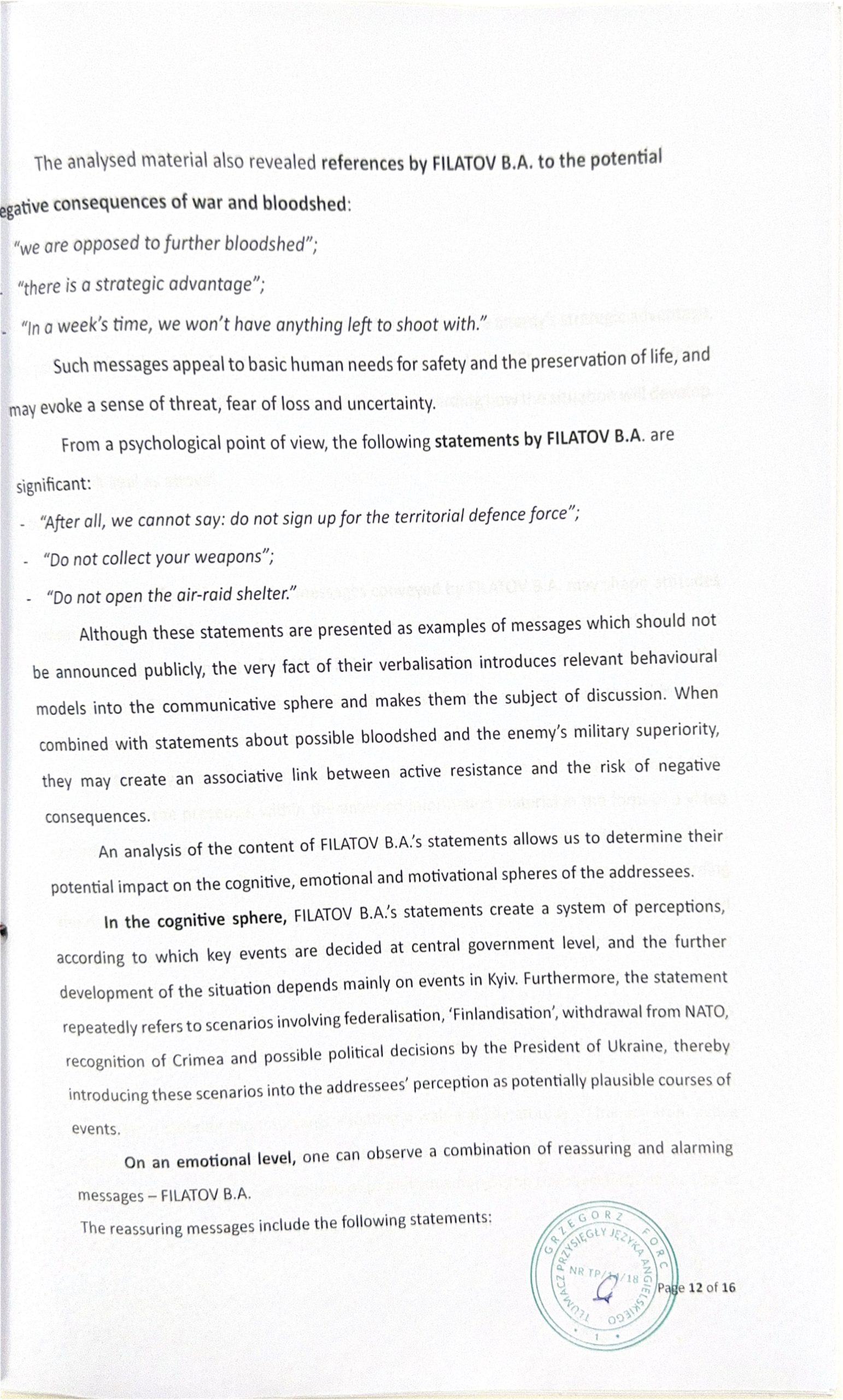
Filatov also repeats several times that “everything will be decided in Kyiv.” In the event of a possible capture of the Ukrainian capital, Filatov considers it likely that deputies will need to take an active part in approving the terms of Ukraine’s new political structure, which will be proposed by Russia: “They tell us: ‘Guys, if some kind of political configuration emerges—federal, non-federal, withdrawal from NATO, relinquishment of Crimea—will you be able to support these initiatives?’” In the Ukrainian media, this passage is clearly interpreted as a discussion of proposals that Filatov and the mayors of other cities might have received from the Russians.
At the same time, Filatov clarifies: it may turn out that President Zelenskyy will be forced to sign the so-called “Georgian option” or “Finlandization” (forced neutrality). In that case, according to Filatov, the mayors of Ukrainian cities should support such a decision and issue statements calling for an end to “bloodshed.”
In response to remarks from other meeting participants that the Armed Forces of Ukraine have sufficient resources to stop the enemy’s offensive, Boris Filatov replied that in a week, our military “will have nothing left to shoot with”: “They stormed into Kyiv in a single day. In fact, they’ve already stormed in—that’s one day. But what if it takes two or three days, or a week? Do you understand what could happen?”
The video, posted in June 2022, sparked a heated reaction on social media. “If you read between the lines of what the mayor said, he’s ready to surrender the city,” noted one commenter.
“No one has the moral right to open their mouth and lecture the Armed Forces of Ukraine on what to do—especially if they haven’t participated in combat or defense operations from the very beginning. No one. It’s just hypocrisy and lies—talking about patriotism, playing the patriot, and then getting angry and, instead of categorically saying, ‘We will fight and hold the city at any cost,’ sitting there and muttering, ‘Everything is decided in Kyiv; they won’t bomb us,’” added another.
“My God, what a disgrace!!! My family lives in Dnipro, and even the thought that they might have betrayed us all—even though people are ready to defend their city to the very end—causes not only outrage but also horror. This is the rhetoric of a collaborator, someone who is ready to switch sides at a moment’s notice. “Thank you for revealing the truth!” reads yet another comment.
Filatov himself noted on his Telegram channel that the published video consists only of selected excerpts from a three-hour meeting, but it is noteworthy that he did not dispute the authenticity of the recording.
New developments: two expert analyses
The inexplicable lack of a strong response from official Kyiv in 2022 to the statements made by a potential “collaborator” mayor could come back to haunt them this year.
In the summer of 2026, the statements of Boris Filatov were examined by the authoritative International Center of Expertise at the European Arbitration Chamber (Brussels). The European Arbitration Chamber entrusted the work to experts who, in addition to the Chamber’s own certification, hold state certification in Ukraine. Linguist Lyudmyla Fraimovich has been working as an expert since 2000 and is certified by the Qualification Commission of the Ministry of Justice of Ukraine in the specialty of “linguistic analysis of written speech.”
Psychologist Oksana Chepur—who holds a Doctor of Philosophy (PhD) in psychology and is a forensic expert for the Ministry of Justice of Ukraine specializing in “psychological research”—has been conducting expert work since 2016.
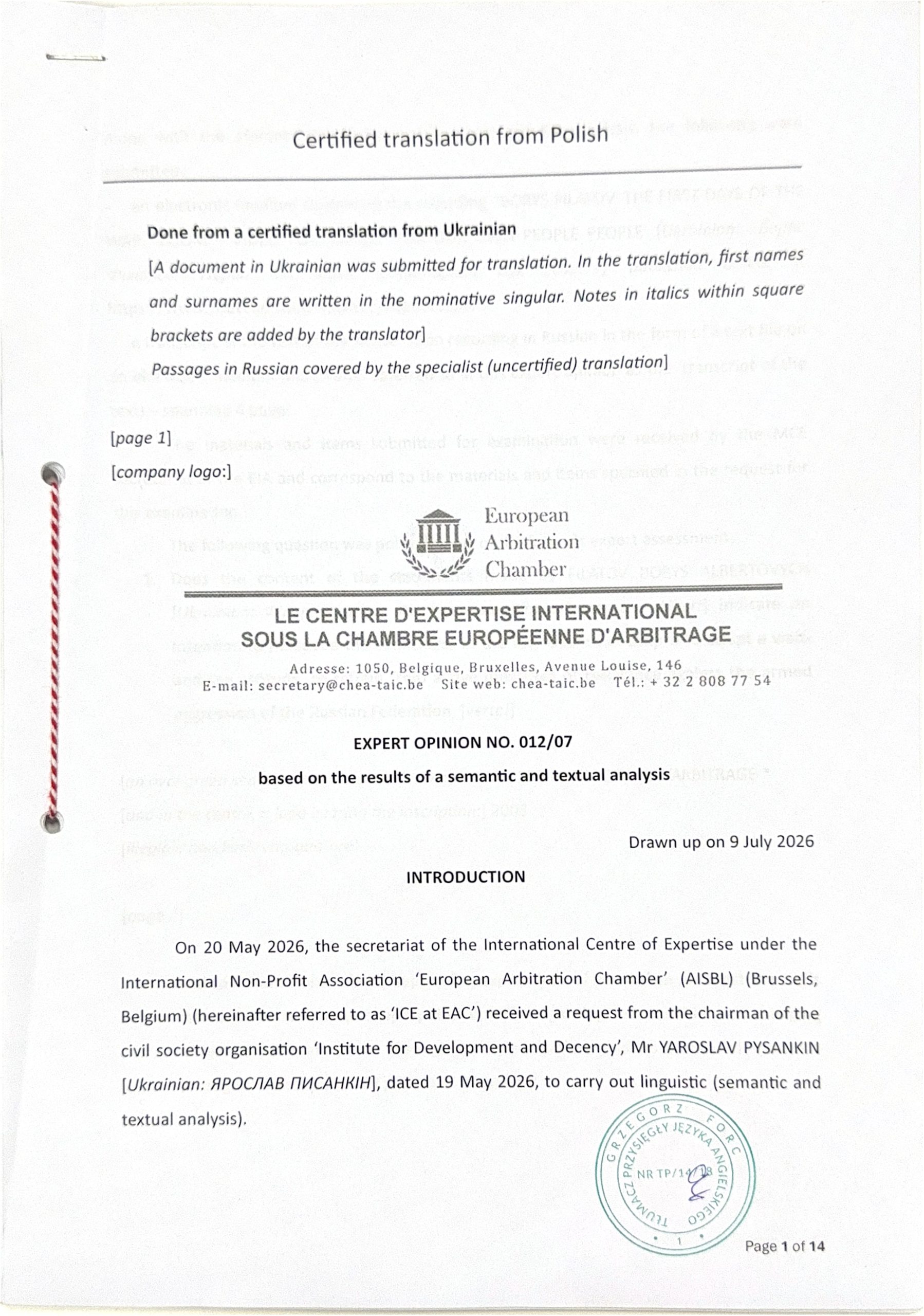
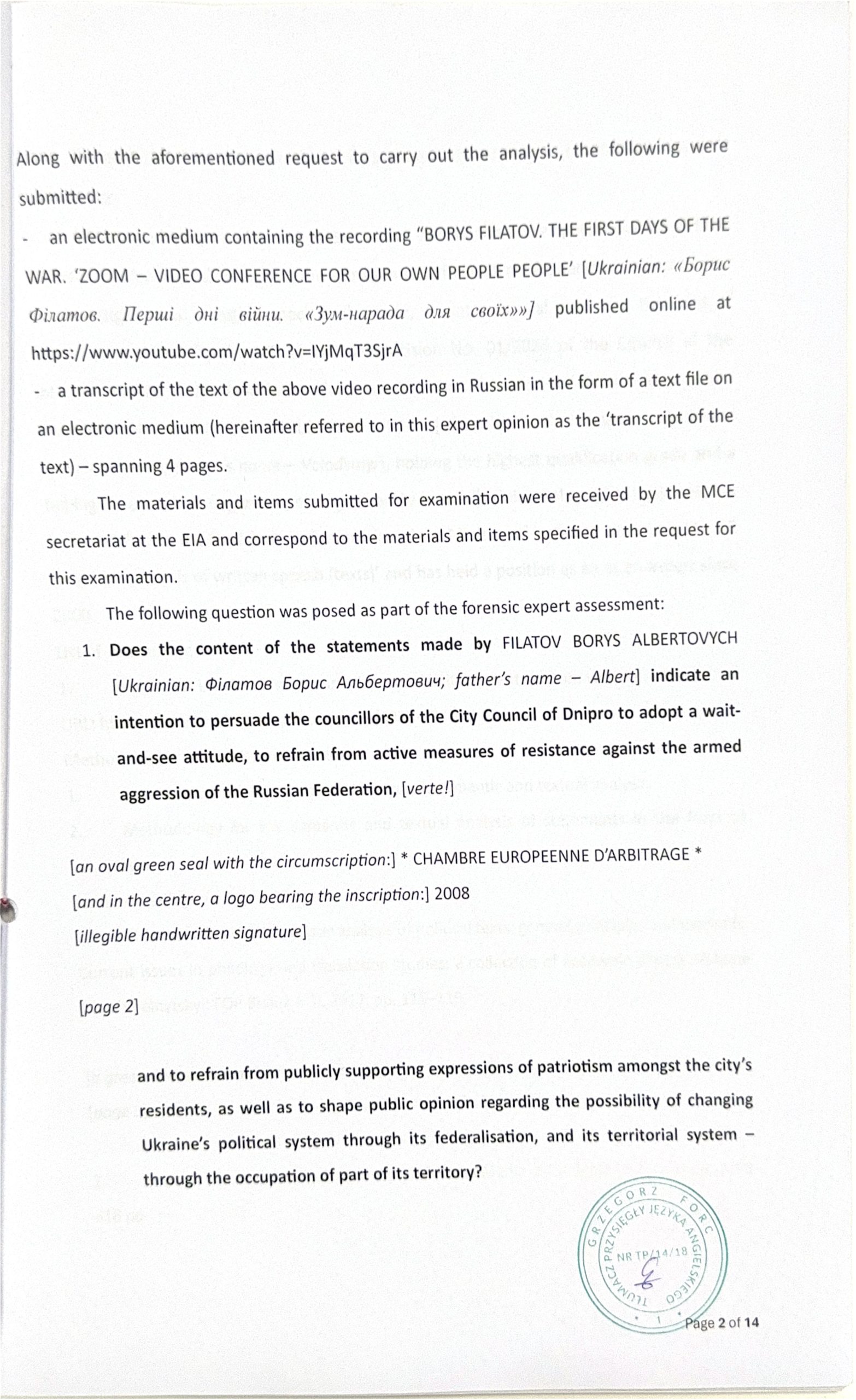
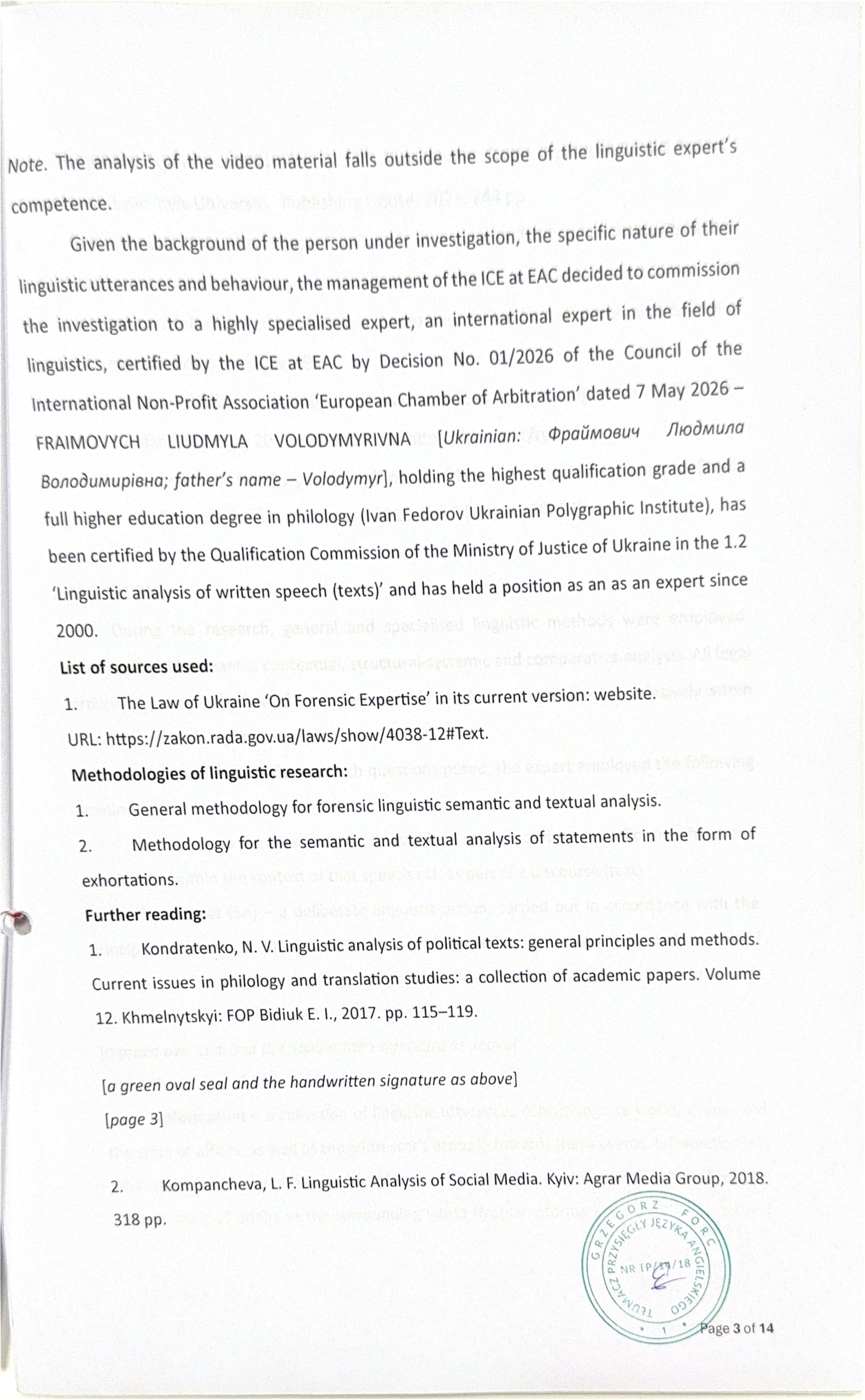
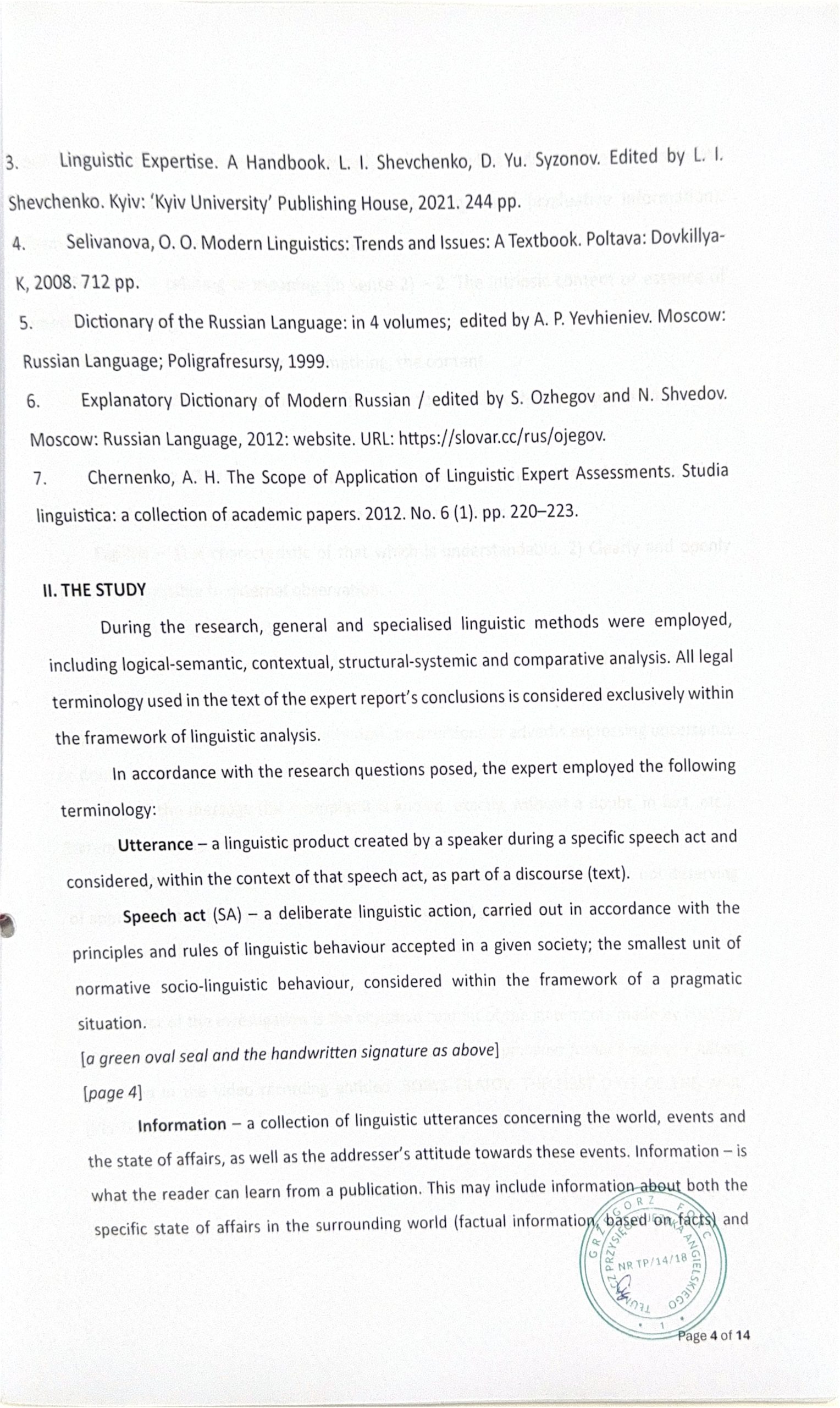
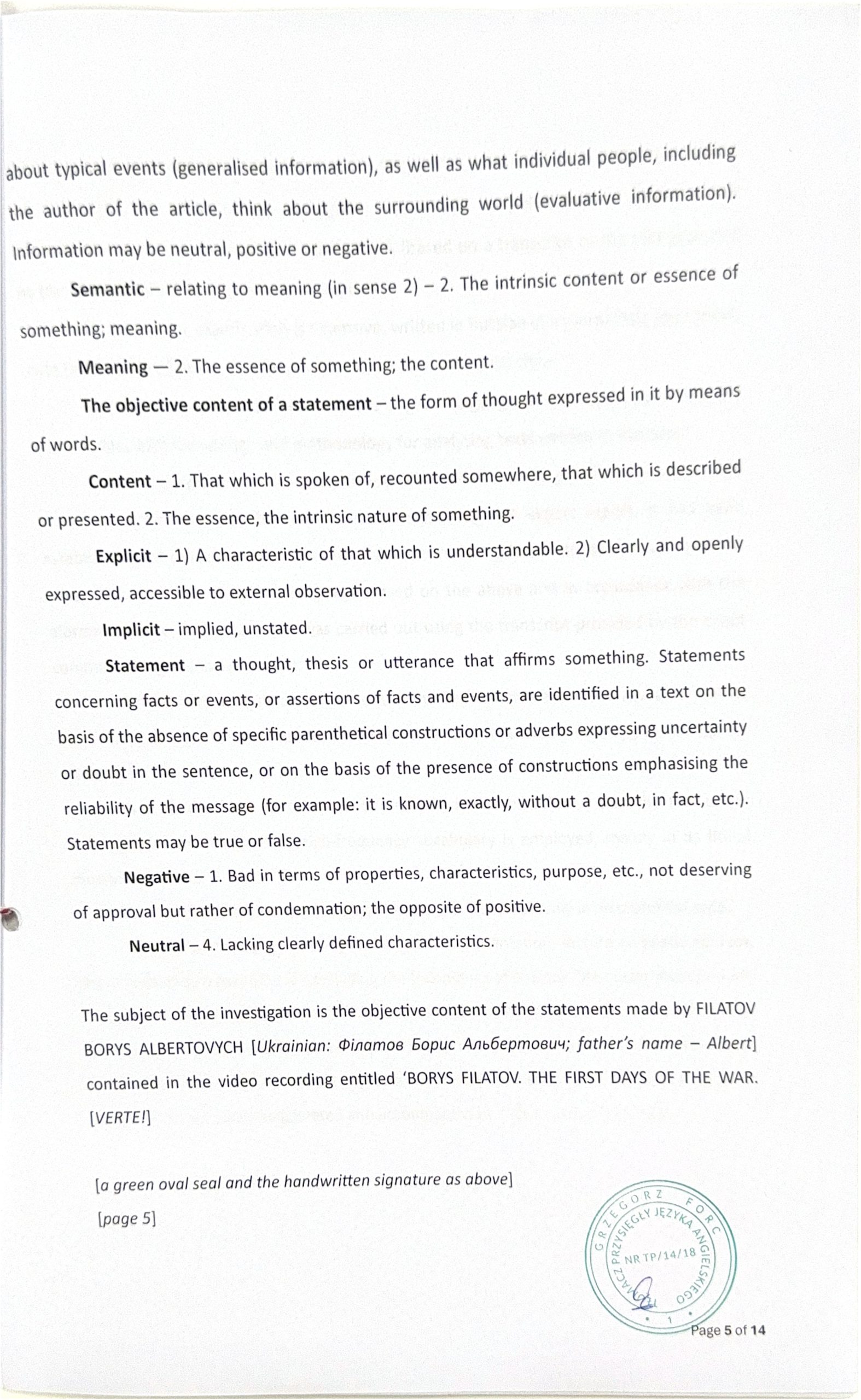
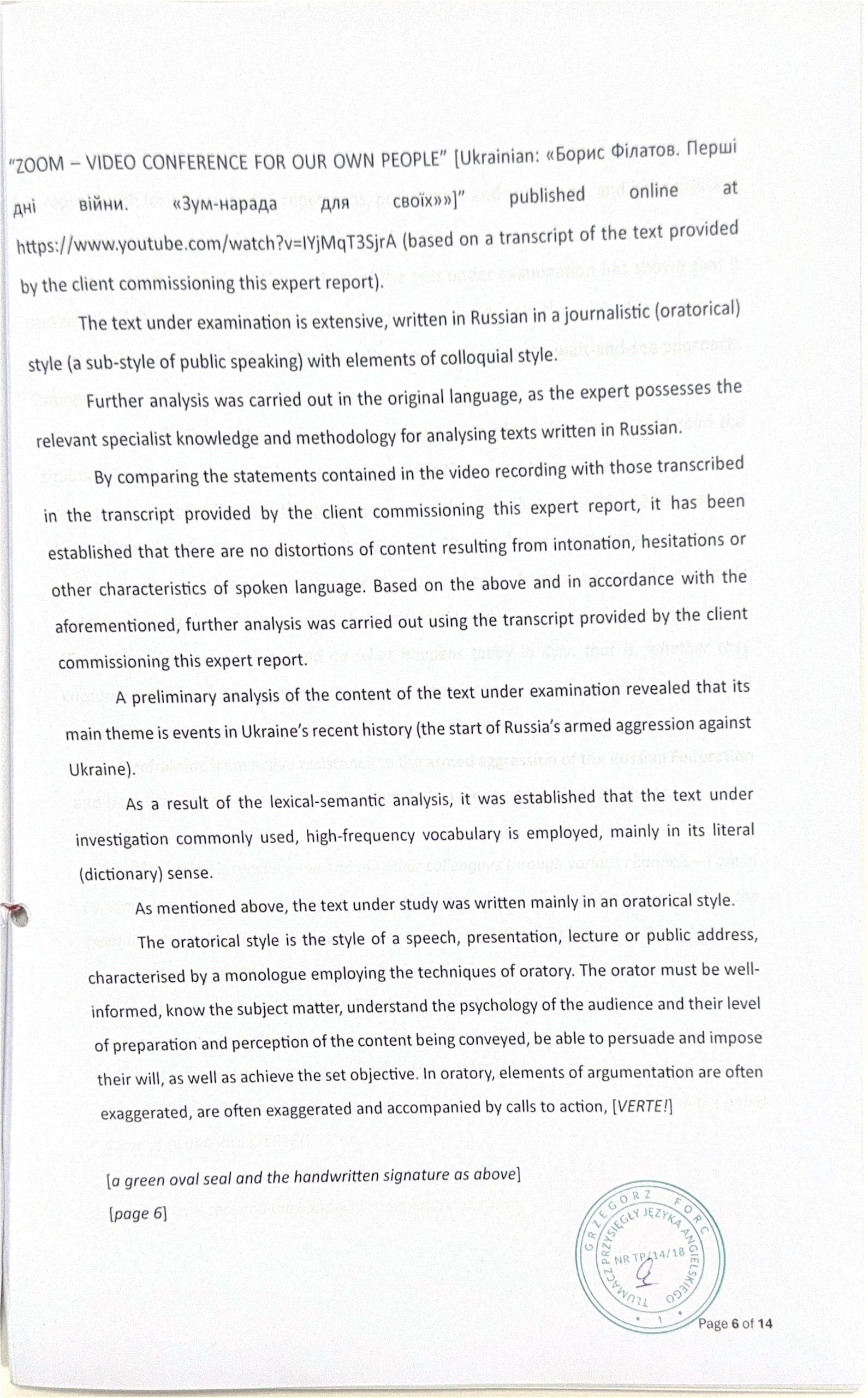
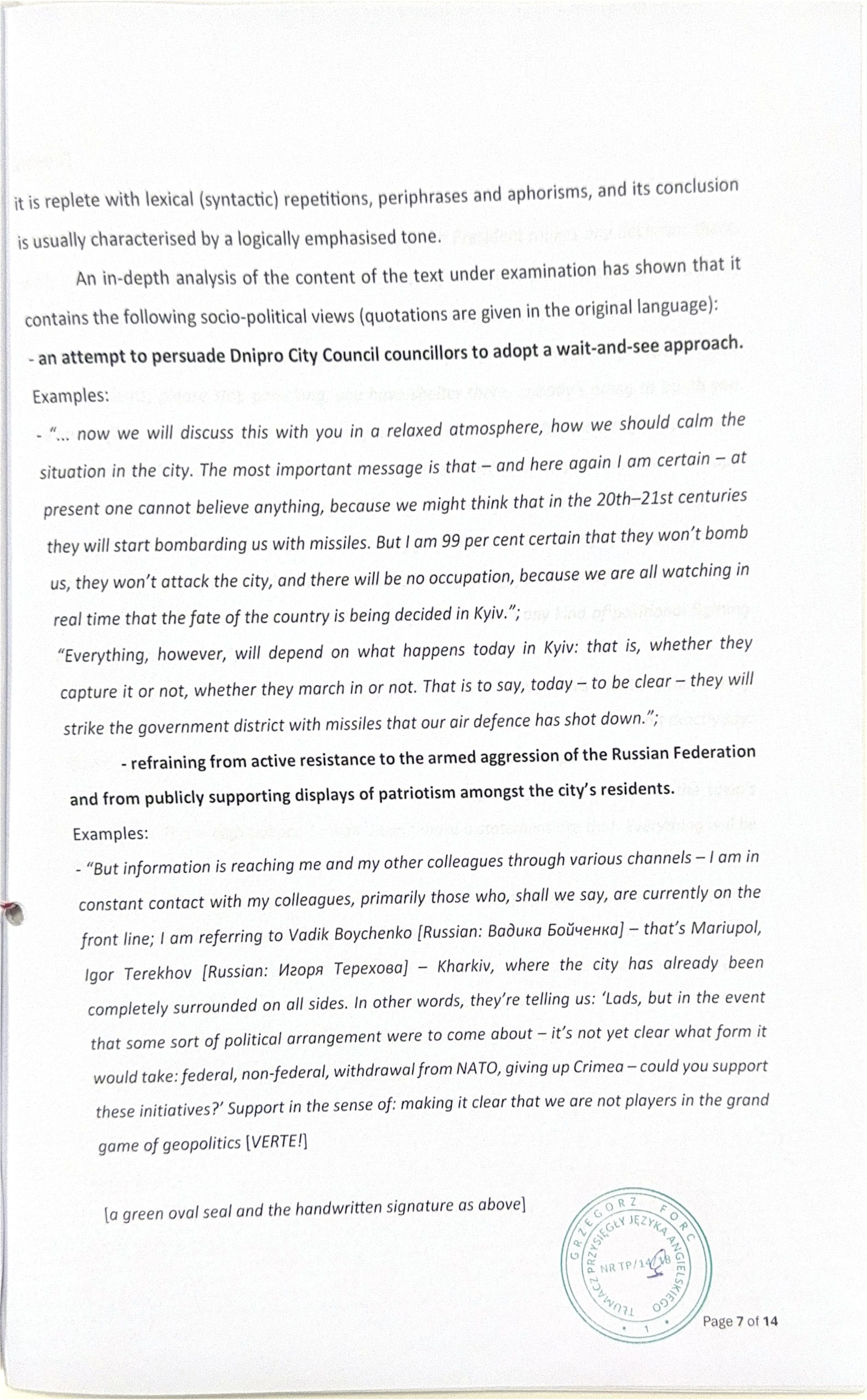
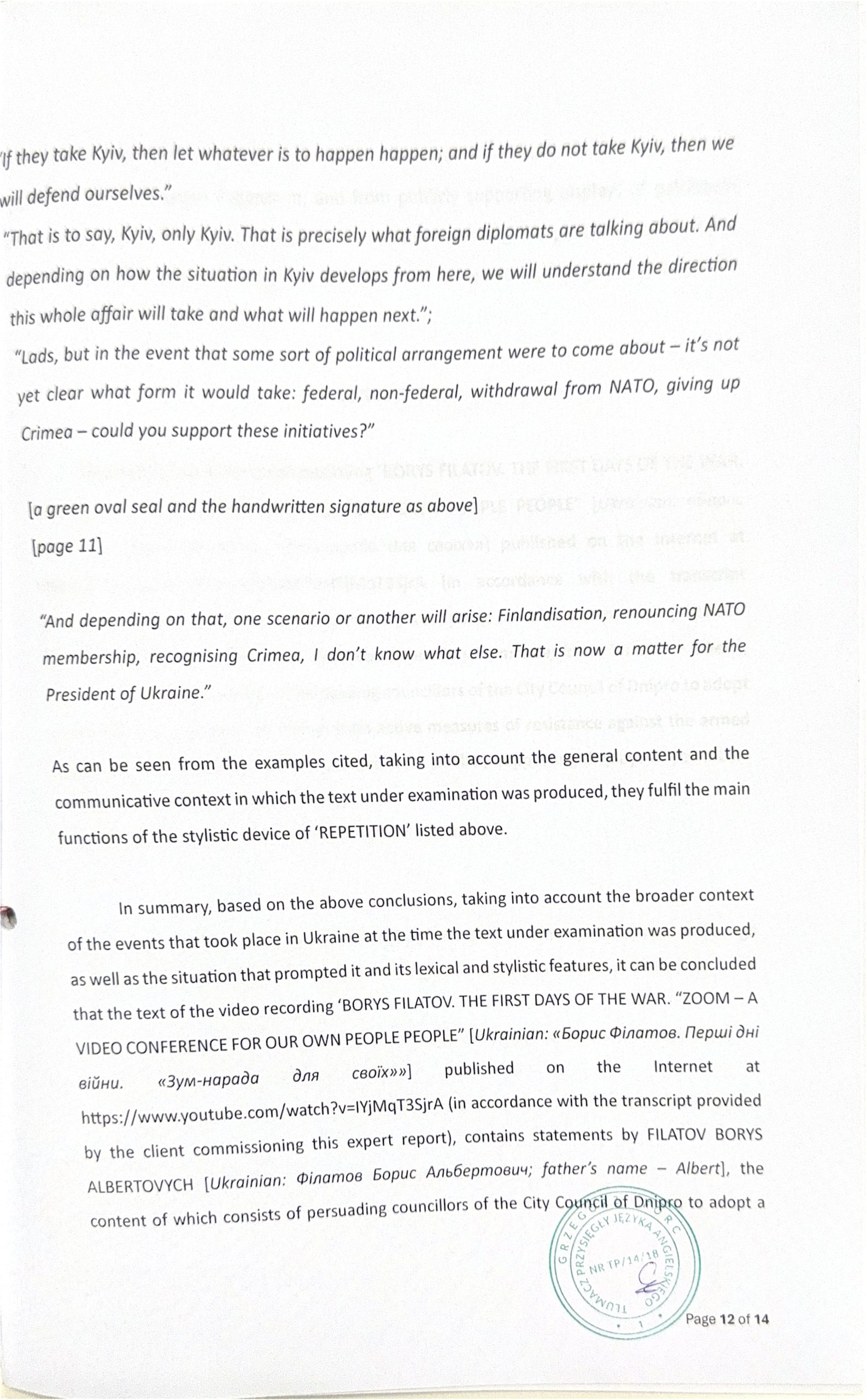
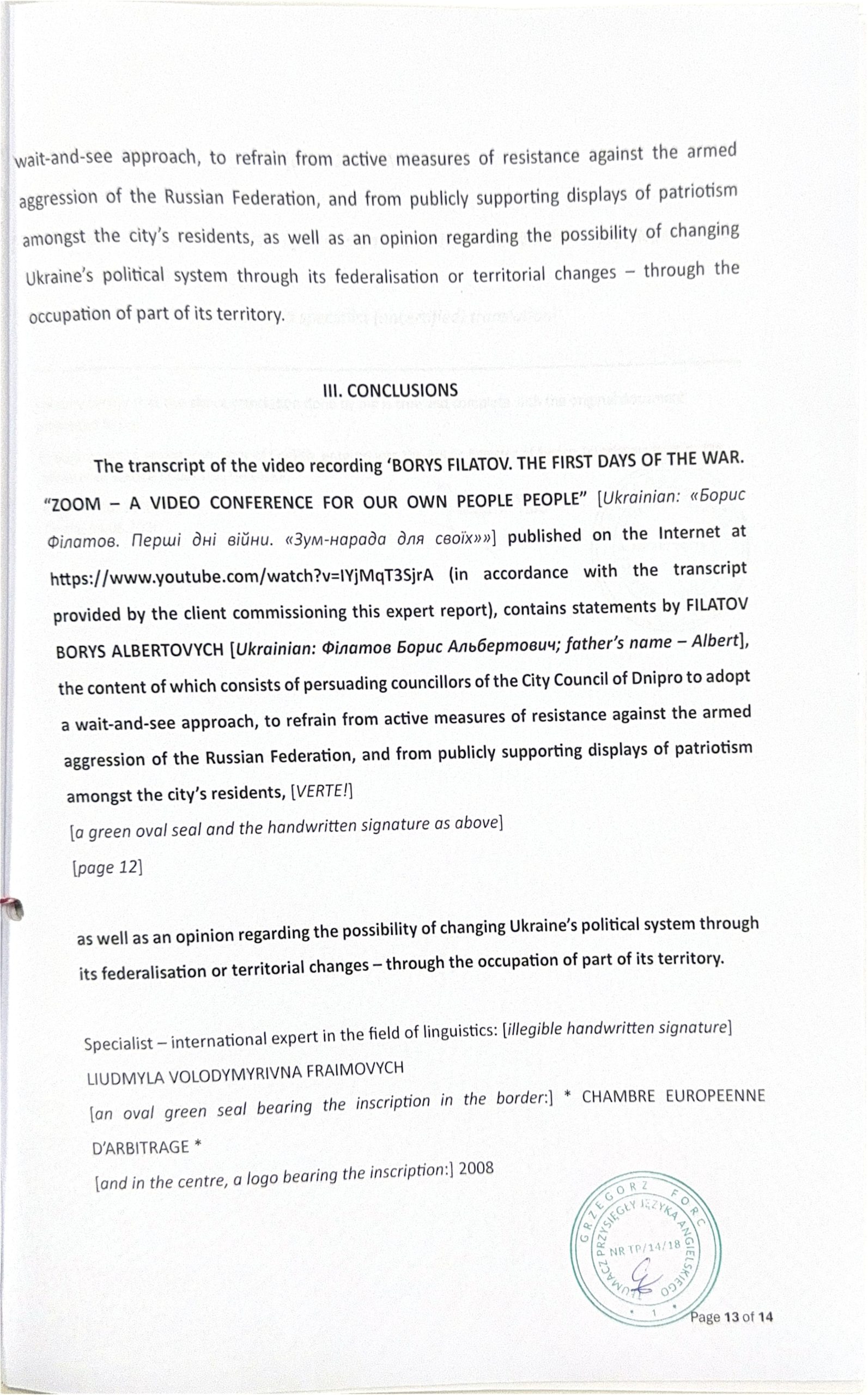
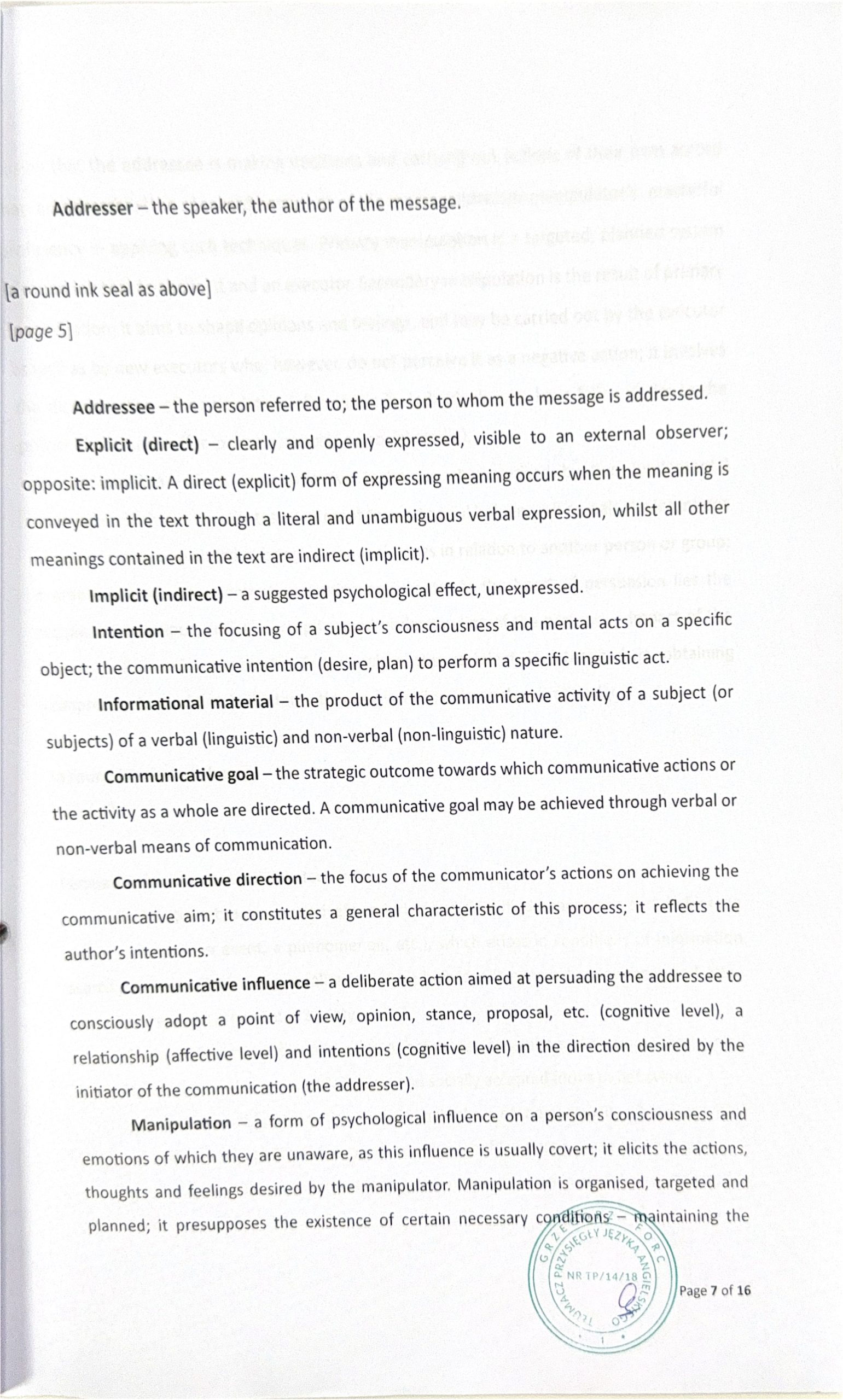
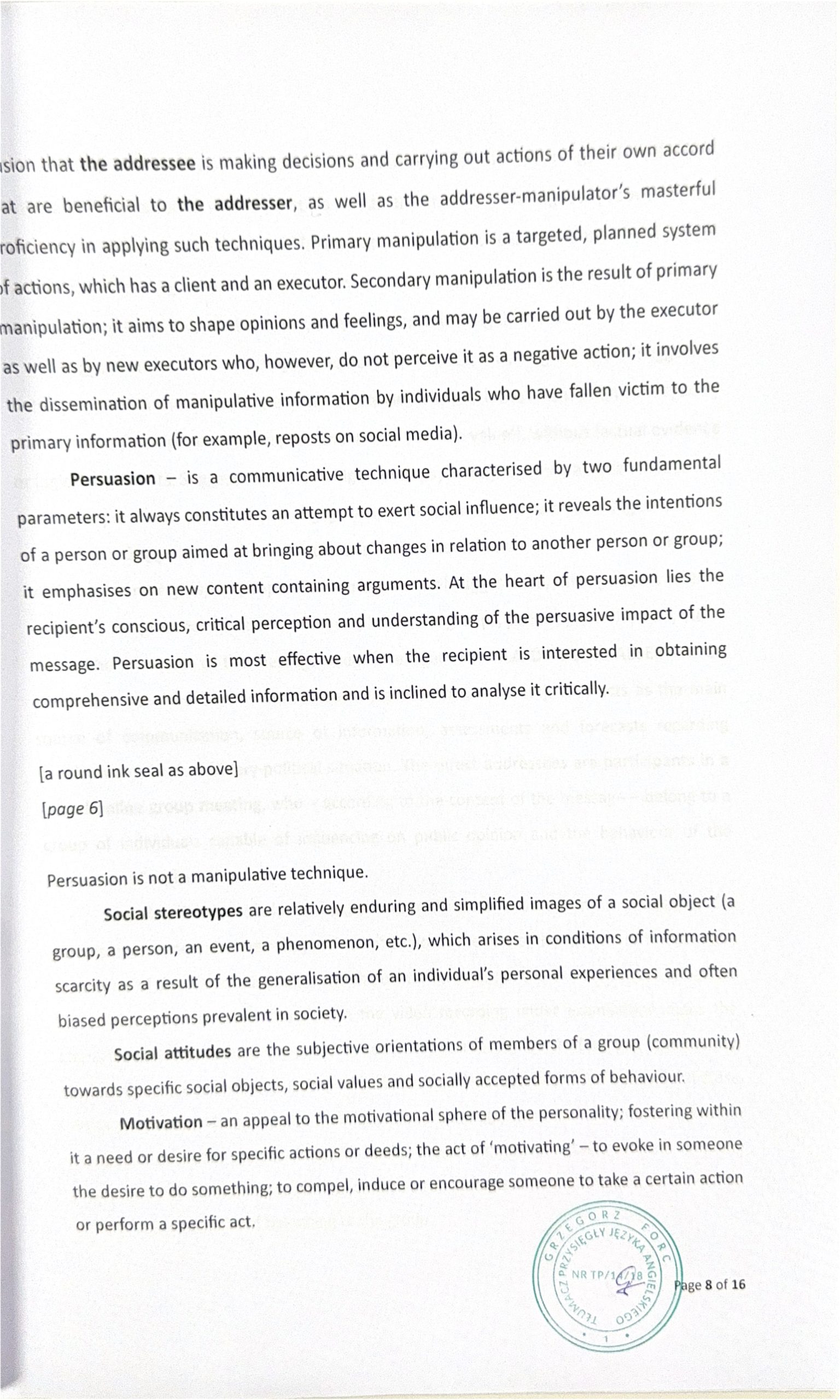
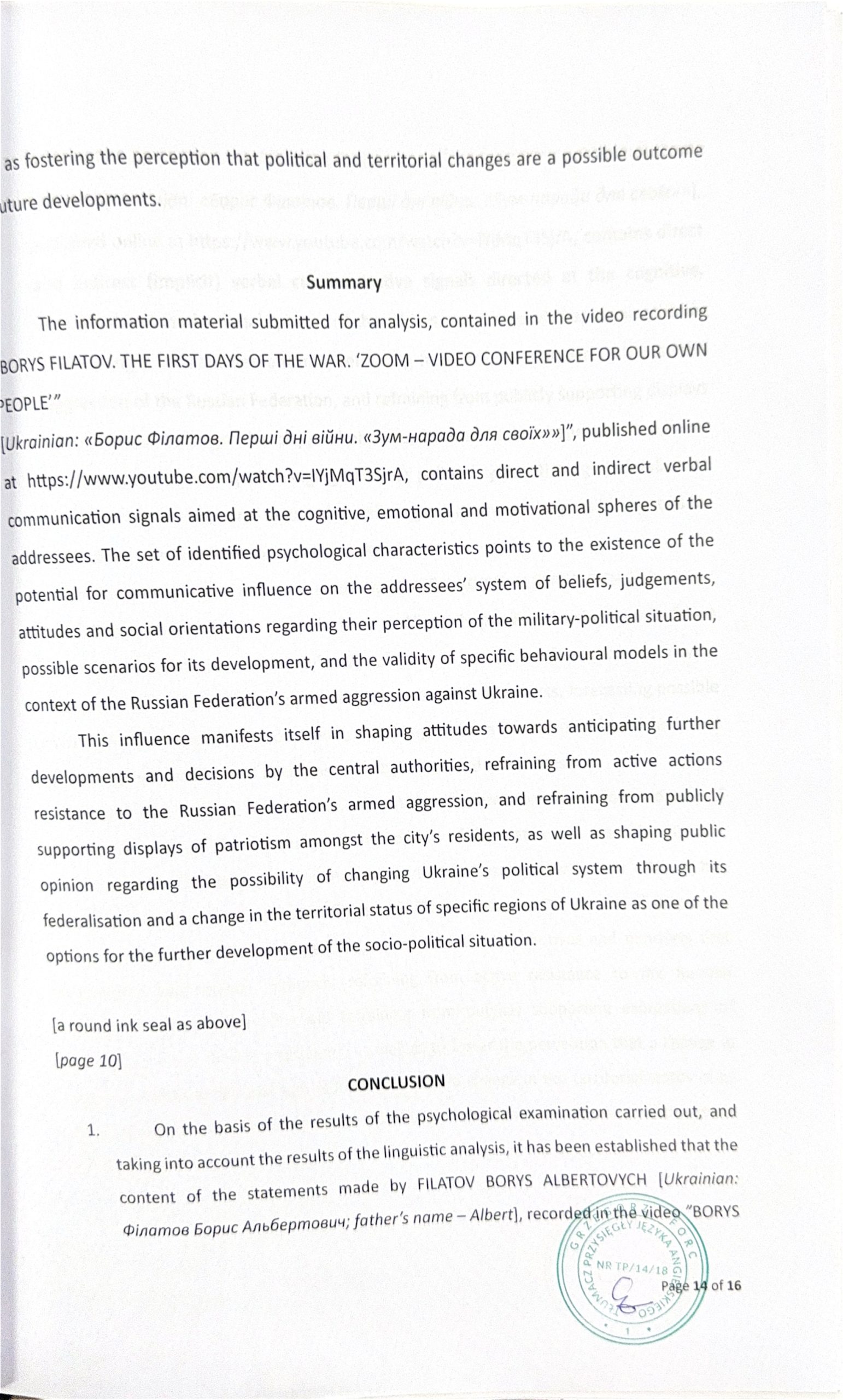
Linguistic conclusion No. 012/07 is dated July 9, 2026. The linguist’s conclusion is unequivocal: the forensic linguistic, semantic, and textual analysis shows that Filatov’s statements encourage Dnipro City Council members to adopt a wait-and-see stance, urge them to refrain from taking active measures to resist the Russian Federation’s armed aggression, and discourage them from publicly supporting the patriotism of the city’s residents. Furthermore, he unequivocally expresses the view that Ukraine’s political structure could be altered through federalization or territorial changes—by means of the occupation of part of its territory.
Linguistic Opinion No. 012/07, dated July 9, 2026
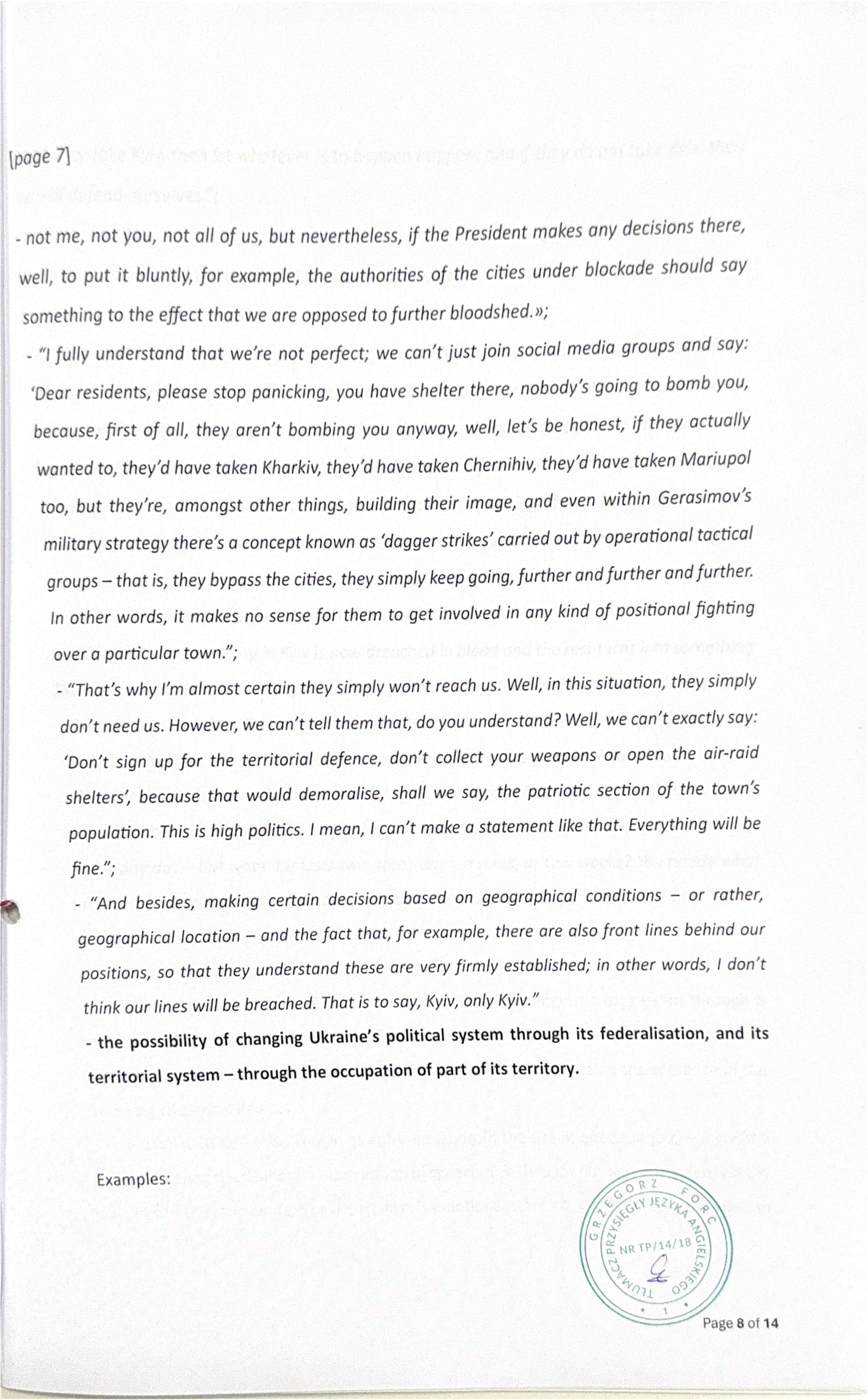
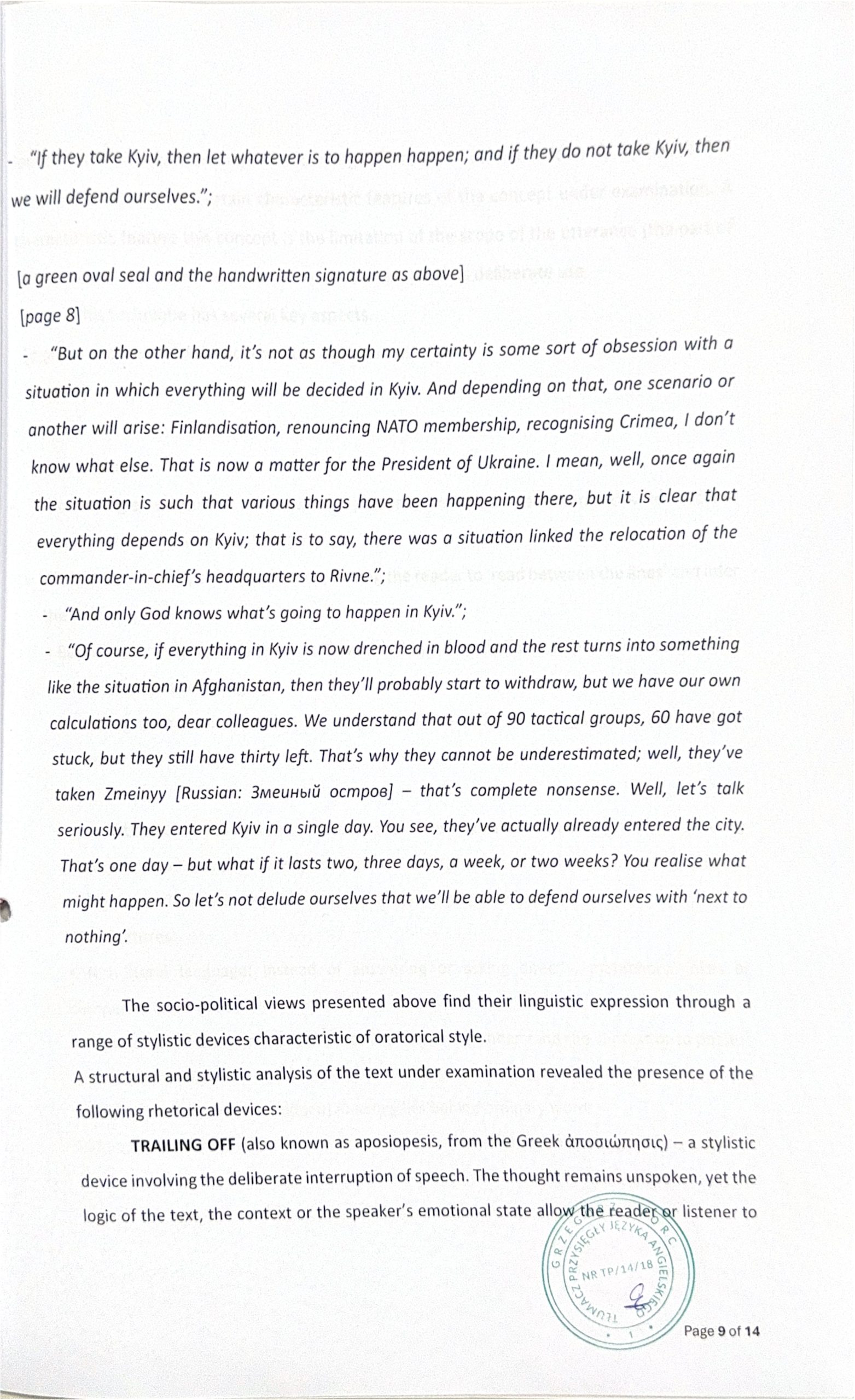
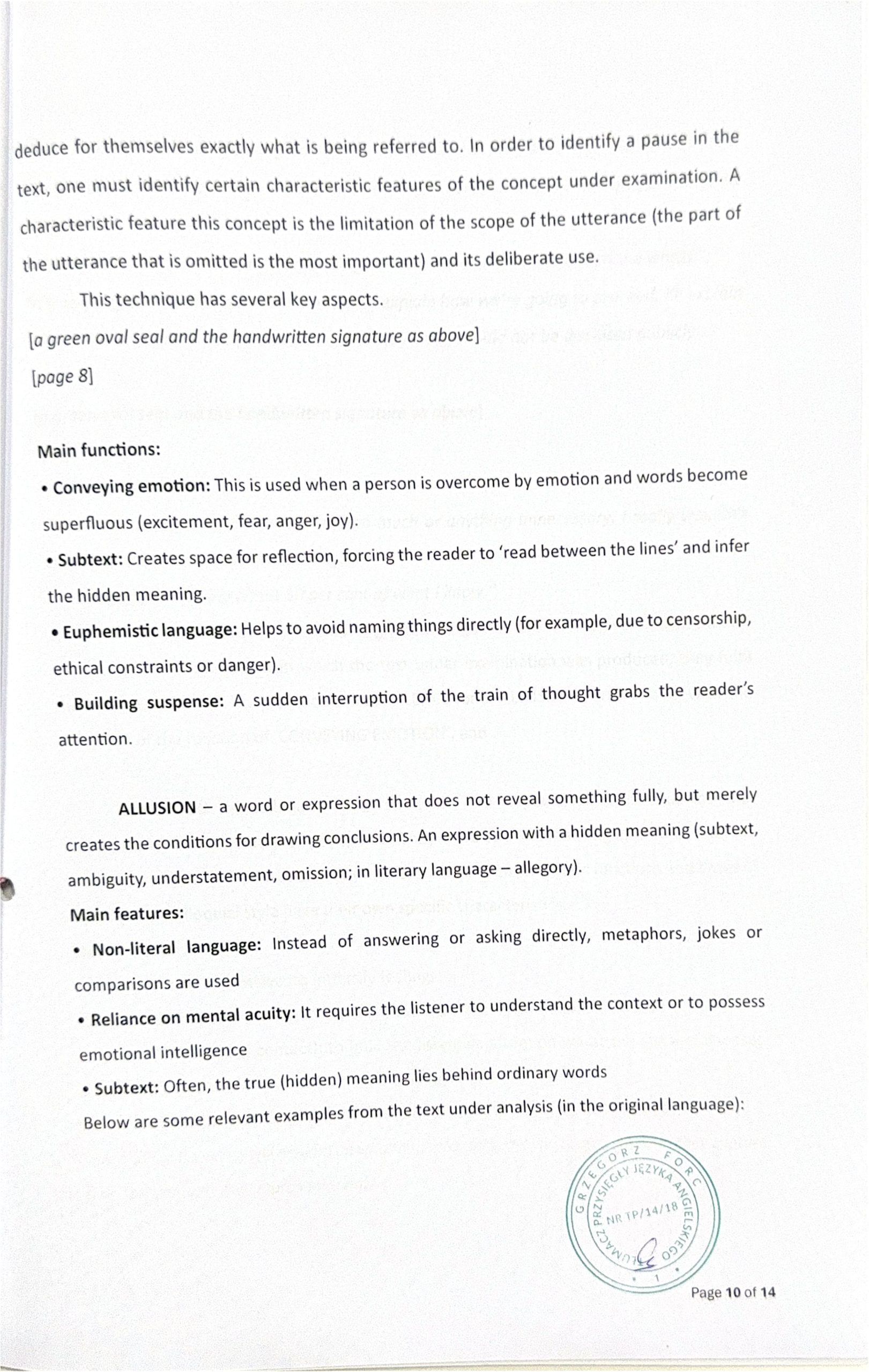
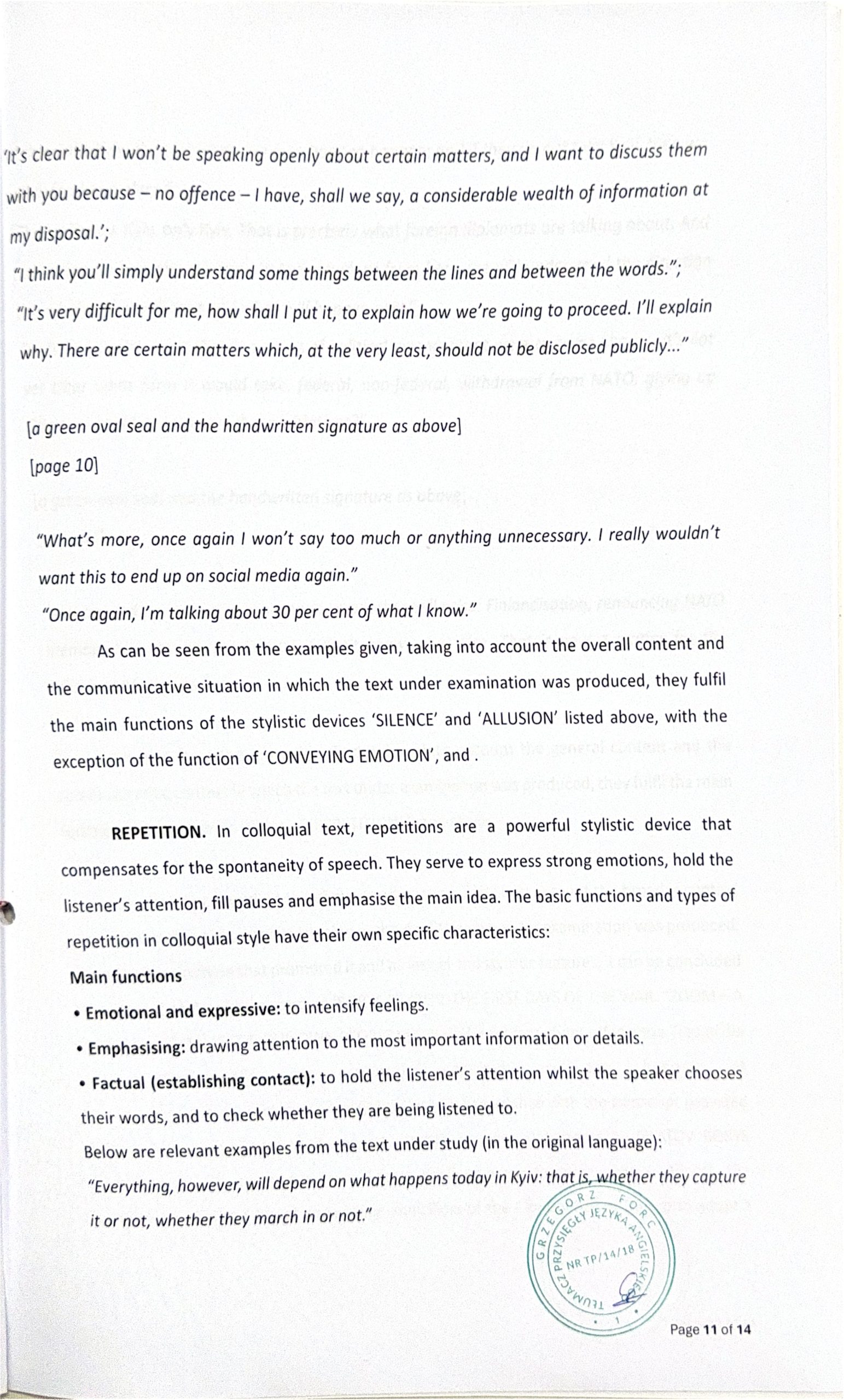
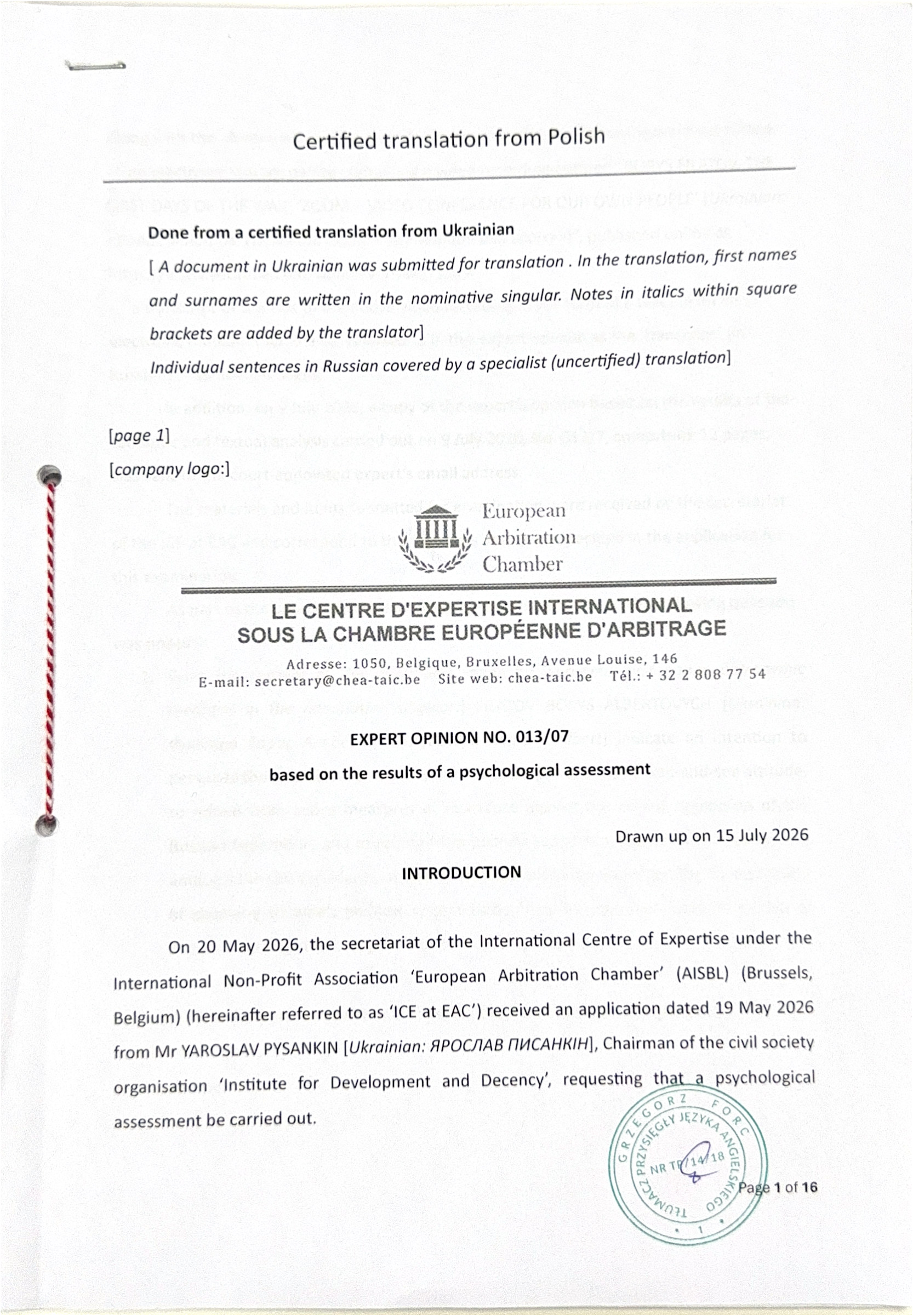
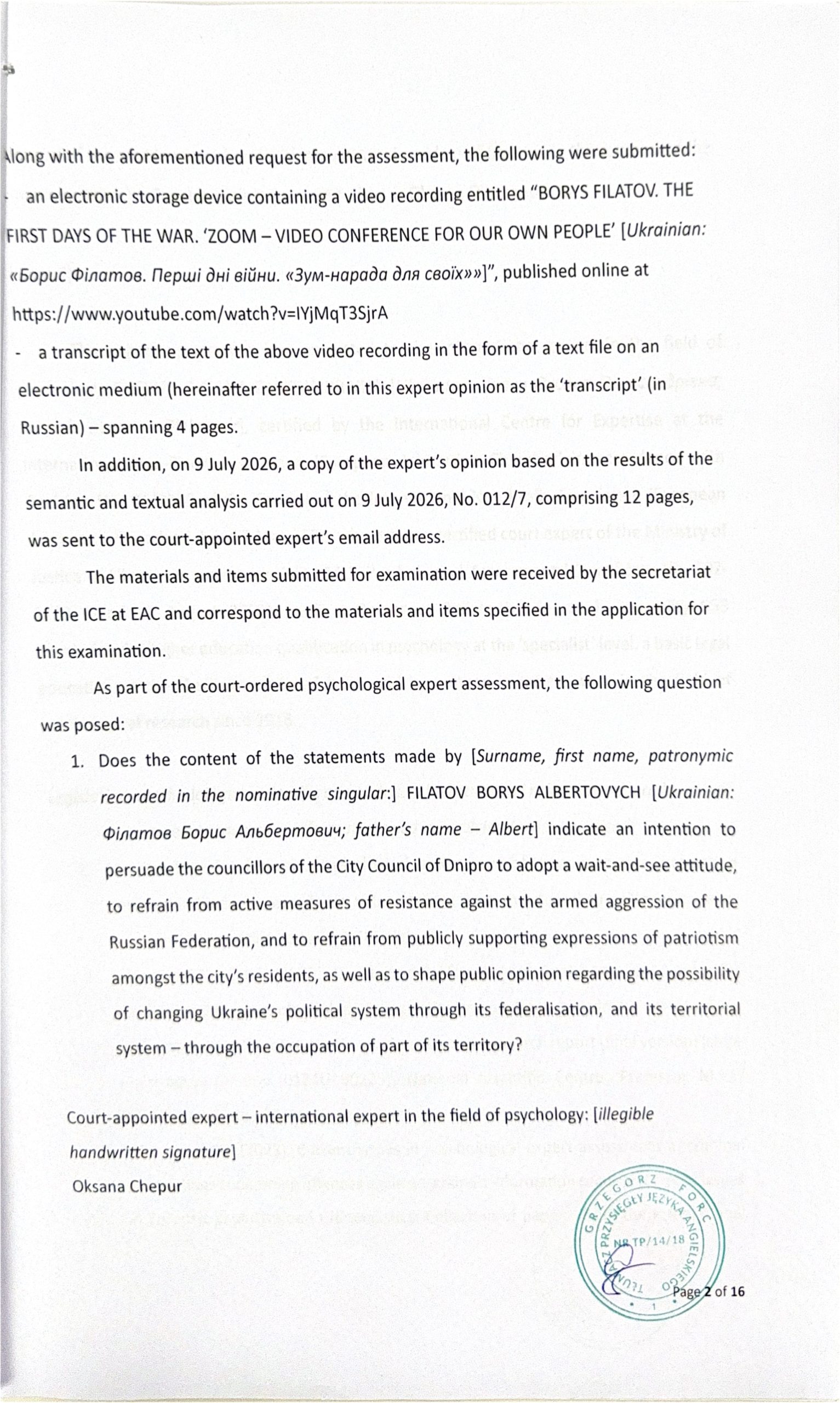
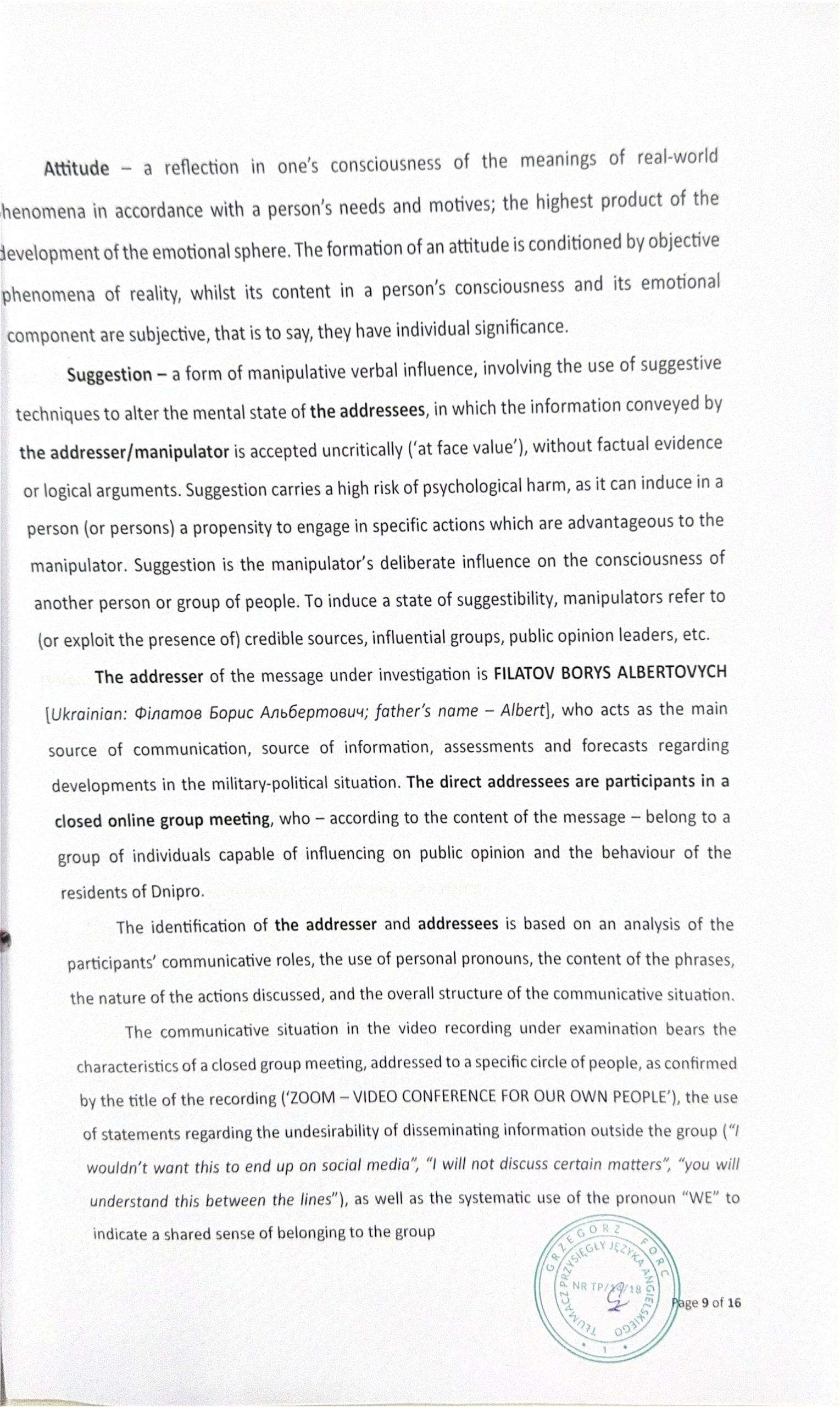
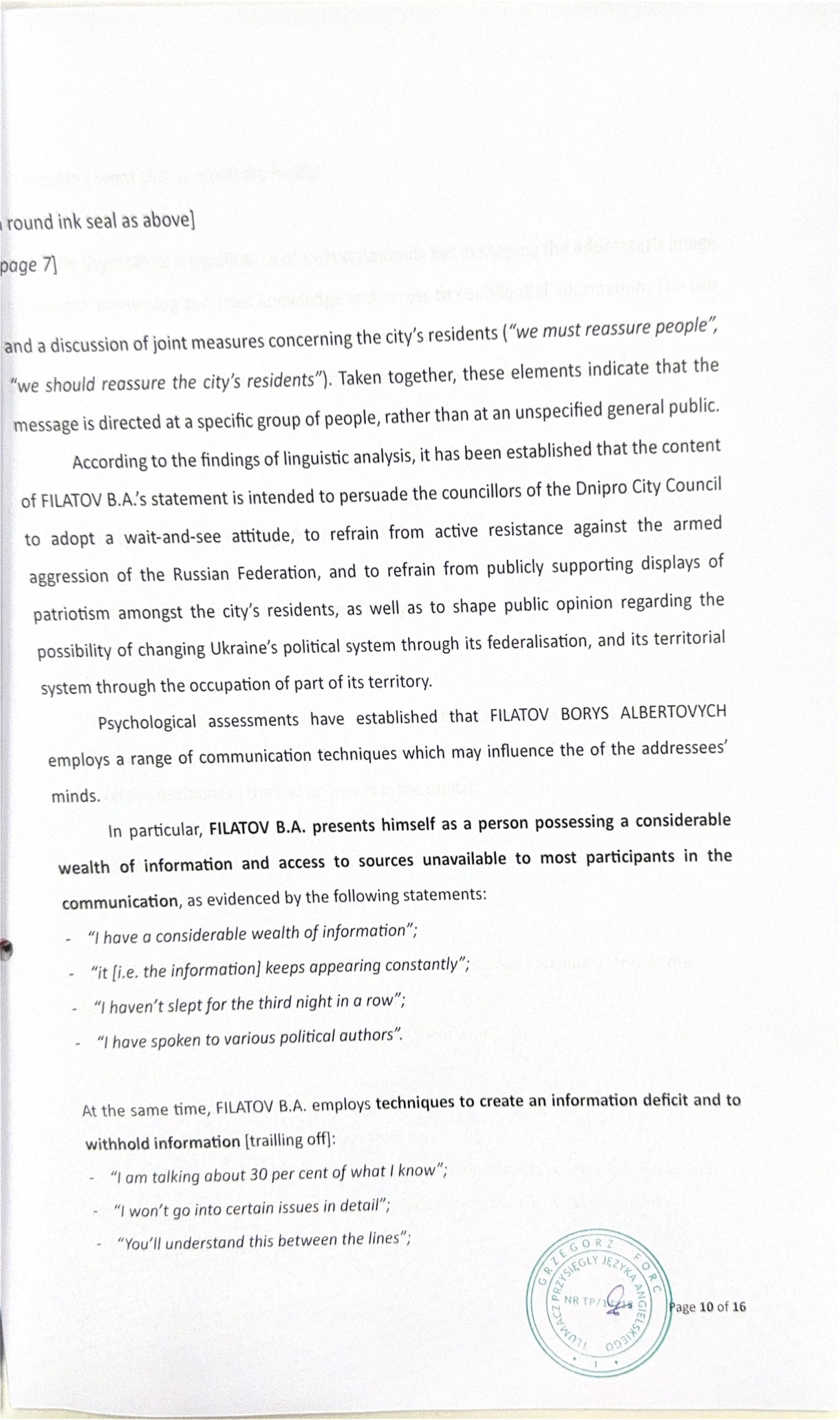
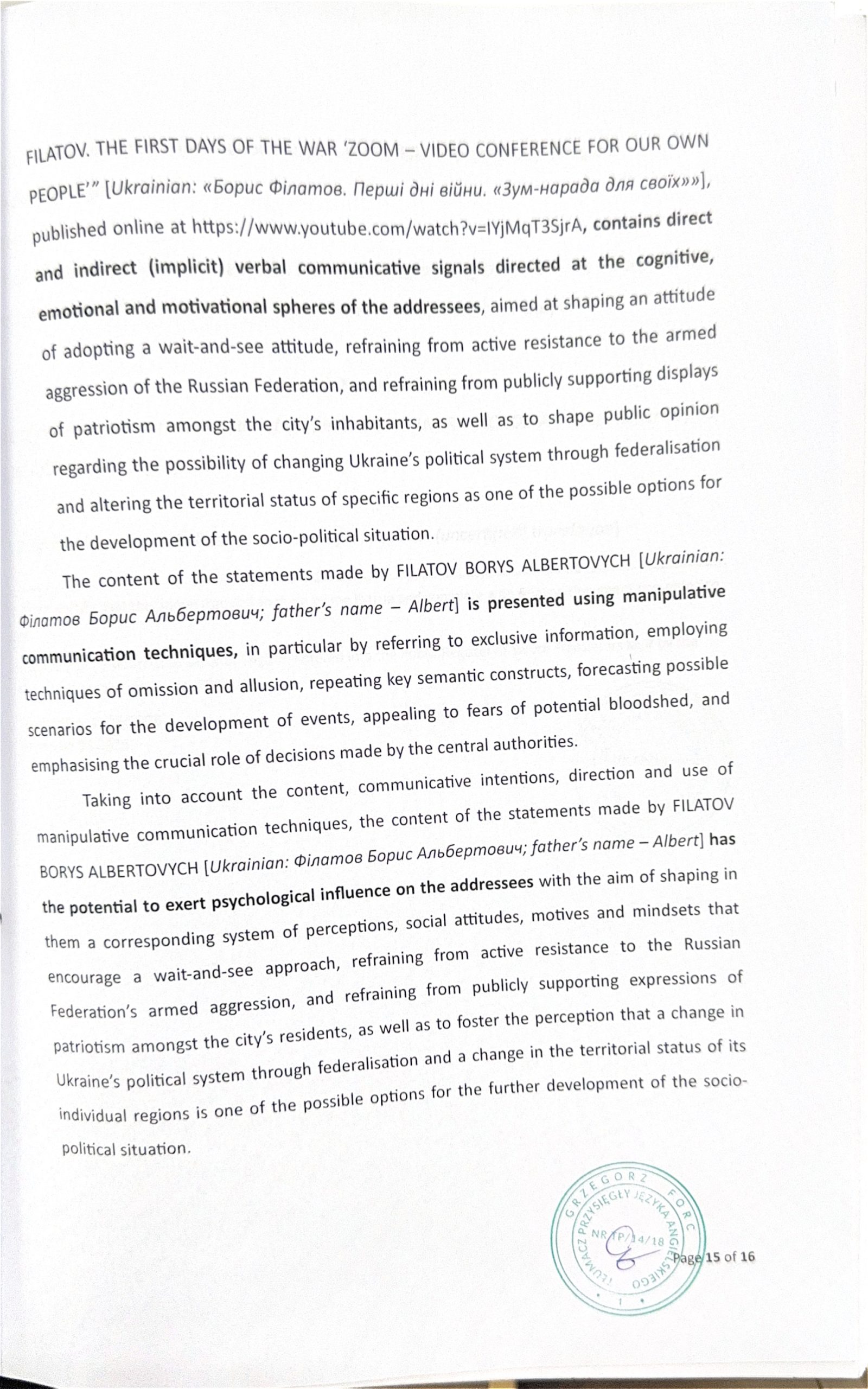
Psychological Report No. 013/07, dated July 15, 2026, draws on the linguist’s findings but goes a step further: the expert analyzed not only the text but also the mayor’s behavior in the video—his facial expressions, gestures, and manner of delivery. The expert emphasizes that this was a closed-door meeting for a select group—people capable of influencing public opinion and the behavior of Dnipro residents. In her assessment, Filatov positions himself as possessing exclusive information and sources inaccessible to others, while simultaneously creating an information deficit by leaving things unsaid. According to the psychologist, this increases trust in his words and reduces critical thinking. The repeatedly stated claim that everything will be decided in Kyiv imposes a framework on listeners in which nothing depends on them. Reassuring messages (“we won’t be bombed,” “we won’t be occupied”) are combined with alarming ones—about the enemy’s superiority, a shortage of ammunition, and possible bloodshed.
The psychologist’s conclusion: Filatov’s statements contain direct and subtle verbal cues designed to instill a wait-and-see attitude in his listeners. These statements are delivered using manipulative communication techniques and, according to the expert’s assessment, have the potential to exert a psychological influence on the listeners.
Psychological Report No. 013/07, dated July 15, 2026
What the Law Says
The Criminal Code of Ukraine defines treason (Article 111) as an act intentionally committed by a citizen of Ukraine to the detriment of Ukraine’s sovereignty, territorial integrity, and security. The law identifies three forms of treason: defecting to the enemy, espionage, and aiding in subversive activities against Ukraine. Under martial law, which has been in effect in Ukraine since February 24, 2022, the penalty is 15 years’ imprisonment or life imprisonment, in both cases with confiscation of property.
Article 110—“Encroachment on the Territorial Integrity and Inviolability of Ukraine”—may also be relevant to the circumstances of the meeting. It pertains to intentional acts committed with the aim of altering the territorial boundaries or state border of Ukraine in violation of the procedure established by the Constitution, as well as public calls for such acts. If such actions are committed by a government official, the punishment is 5 to 10 years of imprisonment; if they result in loss of life or other serious consequences, the punishment is 10 to 15 years or life imprisonment.
Sentences handed down to ordinary citizens demonstrate just how strict these provisions are in practice. For example, in May 2025, the Boryspil City and District Court in Kyiv Oblast sentenced a woman to 15 years in prison for photographing and videotaping strategically important military facilities: the court classified this as aiding representatives of the aggressor state in subversive activities against Ukraine.
Whether Filatov’s actions constitute treason or something else can only be determined by the investigators and the court. To do so, they must answer a number of questions. Did the mayor intend to act in a manner detrimental to Ukraine’s defense capabilities? Who exactly conveyed proposals to the mayors of cities under attack to support a “political configuration” involving federalization and the relinquishment of Crimea? What were the “sources from the other side” to which he referred? How did the meeting influence the actions of city council members and municipal services during the first days of the invasion?
However, the presumption of innocence does not relieve Ukraine of its obligation to investigate the circumstances, which are now documented by a video recording and two expert reports. Our editorial team was unable to find any public statements indicating that law enforcement agencies have assessed these circumstances. Meanwhile, the mayor continues to lead the city, which remains one of the main pillars of defense in the east of the country.