

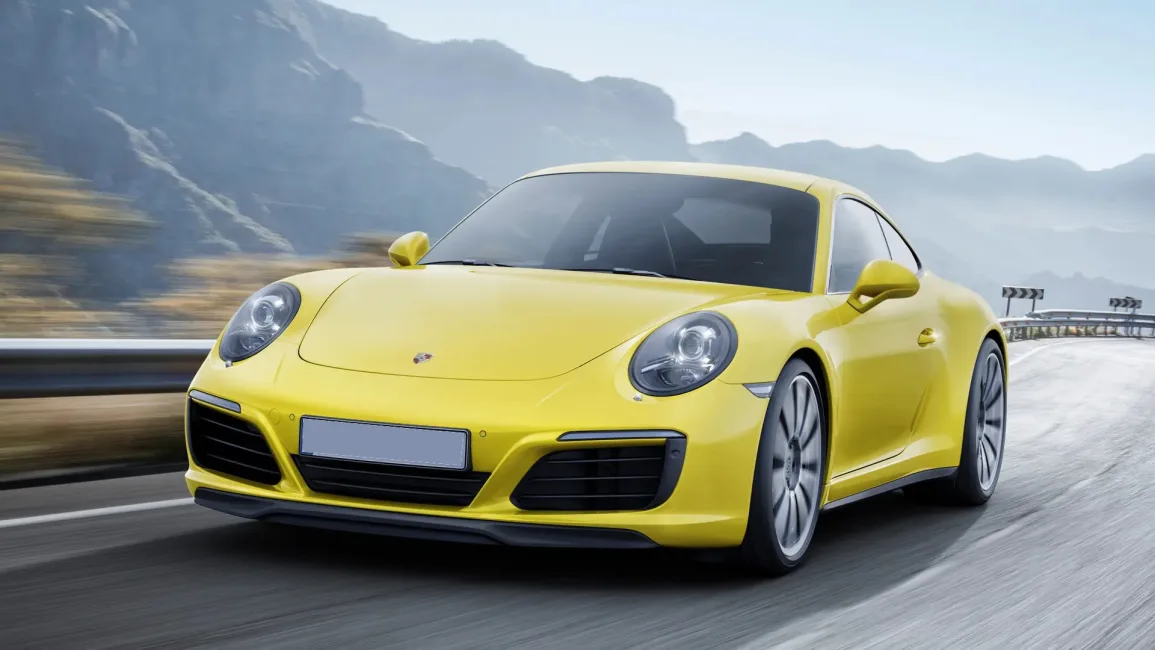
German sports car maker Porsche reported a sharp decline in annual vehicle deliveries, reflecting mounting pressure across key markets as competition intensified and regulatory changes disrupted model availability.
The company said it delivered 279,449 vehicles worldwide during the year, representing a 10% drop compared with 2024 and marking a notable reversal from the brand’s recent growth trajectory.
The decline places Porsche alongside other German manufacturers facing headwinds, with both Audi and Mercedes also reporting weaker results amid shifting demand patterns and rising competitive intensity.
Strategic Shift Away From Electric Timelines
Porsche’s performance was influenced by a strategic pivot back toward combustion engine models, as demand for fully electric vehicles softened more than anticipated in several major regions.
The automaker delayed the launch of certain electric models and adjusted production priorities, a move that management said weighed on earnings by roughly 1.8 billion euros.
Despite the shift, Porsche continued to expand its electrified lineup, reporting that more than a fifth of global deliveries were fully electric vehicles during the year.
“This puts the global share of fully electric vehicles at the upper end of the stated target range of 20% to 22% for 2025,” the company said.
China Market Proves Particularly Challenging
China emerged as the most difficult market for Porsche, with deliveries falling 26% amid a slowdown in the luxury segment and fierce competition from domestic and international electric vehicle brands.
The company said it is scaling back its dealer network in the country as it adapts to changing consumer preferences and pricing pressure across the premium automotive landscape.
Porsche’s decline in China was steeper than rivals BMW and Mercedes, whose sales fell by 12.5% and 19% respectively during the same period.
Europe Hit By Regulation And Supply Gaps
In Germany, Porsche reported a 16% drop in sales, while deliveries across the wider European market declined by 13%, highlighting the regional impact of regulatory disruption.
The company attributed much of the European weakness to supply gaps affecting the 718 and Macan combustion engine models following new EU cybersecurity regulations.
These rules, which came into force in July 2024, require carmakers to adapt vehicle software systems, temporarily limiting the availability of certain models.
“The new regulations meant the ICE model of the best-selling Macan was no longer available in 2025, creating a higher baseline in 2024,” said Matthias Schmidt, European autos market analyst at Schmidt Automotive.
North America Holds Steady Despite Risks
In contrast to other regions, Porsche’s sales in North America remained flat, outperforming both Mercedes and Audi, which recorded double-digit declines in the market.
Schmidt suggested Porsche benefited from earlier inventory registrations as dealers sought to manage potential tariff impacts across the United States.
“Porsche likely benefited from a pull-forward of inventory registrations across the US to mitigate against tariffs,” he said.
Like Audi, Porsche lacks a U.S. production base, leaving it exposed to tariffs expected to cost the company roughly 700 million euros during the year.