

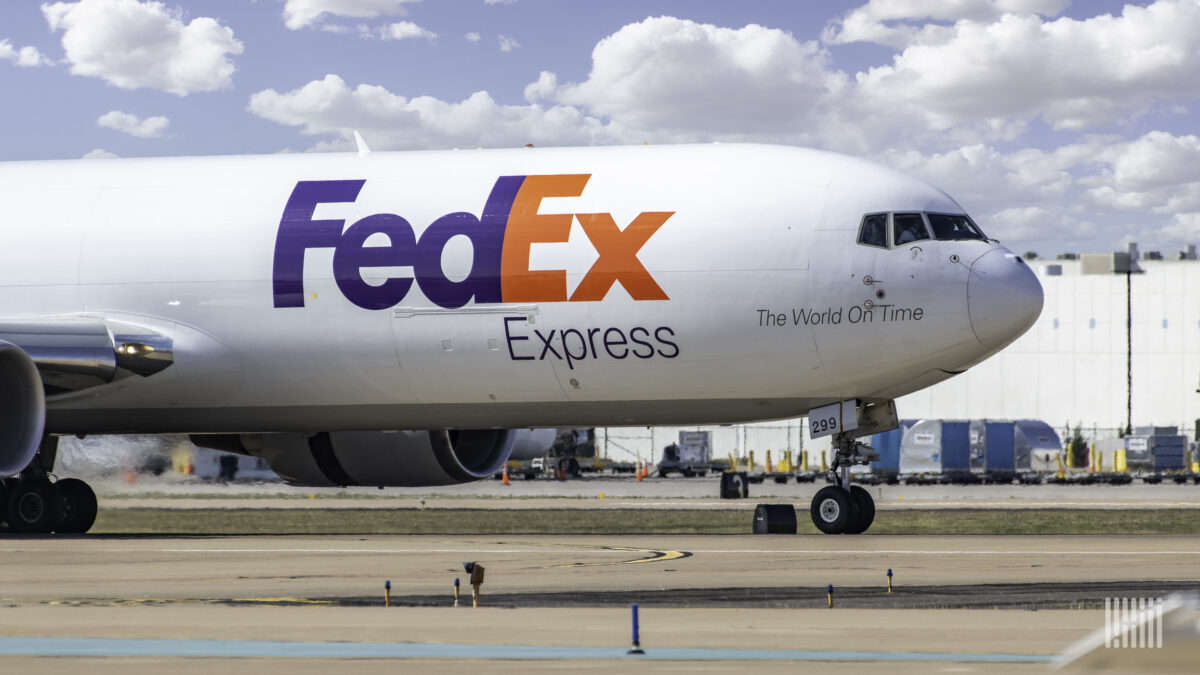
FedEx reported fiscal third-quarter earnings after the bell on Thursday that beat analyst estimates by a significant margin, and the market’s response on Friday underscored just how far expectations had drifted from the company’s actual performance. The logistics giant posted adjusted earnings per share of $5.25 against a consensus forecast of around $4.14, a gap that is not routine for a company of this size.
Revenue for the quarter ending February 2026 reached $24 billion, up 8.1% year over year and ahead of the $23.49 billion analysts had projected. The Federal Express segment, which now integrates the formerly separate Express and Ground operations, drove the majority of the improvement, with operating margins expanding to 7.9%.
“Team FedEx delivered another quarter of strong financial results and excellent service for our customers, powered by disciplined operational execution, the resilience of our global network, and the accelerating impact of our advanced digital solutions,” CEO Raj Subramaniam said in a statement after the results were published.
The company also raised its full-year guidance considerably. Adjusted earnings per share are now projected in a range of $19.30 to $20.10, compared with a prior forecast of $17.80 to $19.00 and well ahead of the Wall Street consensus of $18.70.
The Network 2.0 initiative, which has involved closing over 200 delivery stations to consolidate package flow through more efficient facilities, is delivering ahead of schedule. FedEx now expects structural cost reductions from transformation efforts to exceed $1 billion for the fiscal year, up from its previous target of exactly $1 billion.
Revenue guidance was also raised, with the company now expecting growth of 6% to 6.5%, above its prior range of 5% to 6%. Capital spending was cut to $4.1 billion from $4.5 billion, freeing up additional cash flow.
The one weak spot in the quarter was the Freight segment, which saw revenue fall 5% and operating income drop sharply due to spin-off separation costs, lower shipment volumes and higher wage rates. FedEx confirmed the spin-off of FedEx Freight into a standalone publicly traded company remains on track for June 1.
Shares rose sharply in pre-market trading on Friday, reaching around $388 before settling in at a gain of more than 6% during the session. The stock had been down roughly 10% since the onset of the Iran war, making the recovery over the past two days notable.
FedEx is viewed by many market participants as an economic barometer, given the sheer volume of goods it moves globally. A quarter like this one, delivered in the middle of a geopolitical conflict that has driven fuel prices sharply higher, carries extra weight as a signal.
The question heading into the Freight spin-off is whether the core business can sustain these margins once separation costs disappear. The early evidence suggests it can.