

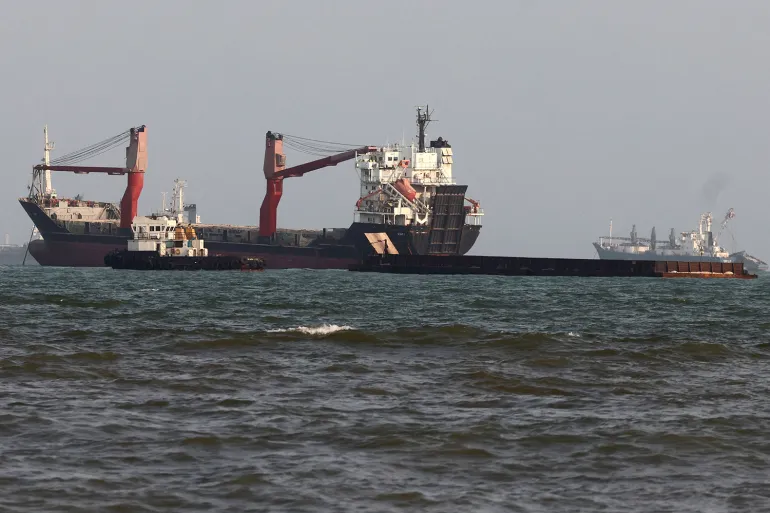
More vessels are using the Omani route through the Strait of Hormuz this week according to reports, as the standoff between the United States and Iran leaves normal transits deeply reduced.
Traffic through the waterway has stayed near three-month lows even as President Trump insists the US holds “total control” over the strait. Iran disputes that claim and says the passage remains under its own management.
Dimitris Ampatzidis, Maritime Risk and Compliance Manager at Kpler, told London Insider News that the rise in Omani-route crossings likely has “tacit acceptance” from Tehran.
“I’d say it is likely happening with at least some level of Iranian awareness or tacit acceptance, although not necessarily formal approval,” Ampatzidis said.
He added that shipping operators are also actively looking elsewhere. “At the same time, some operators are clearly exploring alternative routing as uncertainty grows over when normal Strait transits will resume.”
That assessment lines up with the picture emerging from the wider standoff; Iran effectively shut the strait to most traffic in late February, when its war with the US and Israel began.
The IRGC has continued to enforce restrictions since then, at one point firing a warning shot at a vessel attempting an unauthorized crossing. Iran maintains the waterway is open to all countries except the US, Israel and their allies.
Washington has responded with a naval blockade in place since mid-April, which US officials say is costing Iran roughly $500 million a day. CENTCOM figures cited by Reuters put intercepted vessels at 85, with three ships seized outright.
Trump has continued to insist the strait is fully under US control, describing the naval blockade on Truth Social as a “wall of steel.” Iranian officials have dismissed the claim as false.
Hossein Taeb, commander of the IRGC-affiliated Basij Organisation, said this week that the strait remains “under Iran’s control and management.” Foreign Minister Abbas Araghchi has warned Washington against making a further “miscalculation” over the waterway.
Diplomatic efforts to resolve the impasse have stalled. A senior Iranian government source told Reuters this week that talks over reviving a June interim agreement have produced no breakthroughs.
Trump has signaled in recent days that he may lean more heavily on economic pressure rather than further strikes, as Tehran continues to link any reopening of the strait to US compliance with the earlier memorandum.
The uncertainty is already showing up in energy markets. The International Energy Agency has warned that global oil stockpiles are being drawn down quickly as transit volumes stay depressed.
For now, the rise in Omani-route crossings looks less like a coordinated reopening and more like operators quietly adapting. Some are testing what Iran will tolerate, while others are simply looking for a way around the standoff altogether.