

British stocks retreated on Friday as escalating Middle East tensions kept oil prices elevated above $100 a barrel for a sustained period.
The FTSE 100 (^FTSE) fell 0.18% as of 03:16 ET, a day after closing 1.08% higher in its strongest finish in more than six weeks.
European markets were mixed, with Germany’s DAX rising 0.61% while France’s CAC 40 slipped 0.08%, and sterling gained 0.33% to $1.3318 against the dollar.
Brent crude futures (LCO) fell 0.67% to $105.21 a barrel, while U.S. West Texas Intermediate (CL=F) dropped 0.76% to $97.24 per barrel.
Gold futures (GC=F) rose 0.86% to $4,205.95 an ounce, with spot gold gaining 0.34% to $4,184.72, as investors sought safe-haven assets amid the geopolitical uncertainty.
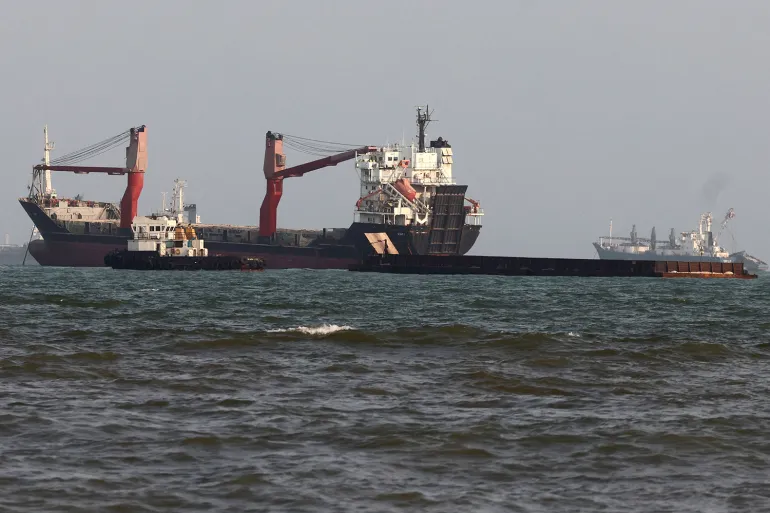
Iran’s army commander-in-chief Amir Hatami said the Strait of Hormuz “will remain closed until the enemy respects the rights of the Iranian people” and that traffic was “very, very limited,” according to Iran’s Mehr news agency.
U.S. Central Command pushed back, stating that the United States “and regional partners control the strait as commercial vessels continue to transit despite unwarranted IRGC aggression.”
ING analysts Warren Patterson and Ewa Manthey said oil “remains well-supported”, with the market pricing in a “significant risk premium” that would only fully clear with a U.S.-Iran agreement.
ING also noted that IEA members agreed to release the remaining 100 million barrels of a 400 million-barrel March pledge, with only 20 million barrels of diesel included, potentially prompting Washington to reconsider diesel export curbs.
U.S. President Donald Trump said in a Newsmax interview that he “would not use” nuclear weapons against Iran and did not see “putting US troops on the ground” there.
U.S. Treasury Secretary Scott Bessent said sanctions would continue until Iran’s “coffers are empty”, following the announcement of measures targeting 16 individuals and 10 entities.
Washington is separately weighing easing sanctions on some shadow-fleet tankers in an effort to reduce shipping costs, according to media reports.
On the domestic front, UK Chancellor John Healey is set to raise taxes on banks at his October 28 budget to fund cost-of-living support and shore up public finances, Bloomberg reported, citing unnamed people familiar with the matter.
The move would likely raise the 3% bank surcharge levied on top of corporation tax, with a full reversal of previous cuts potentially raising about £2 billion, according to the Bloomberg report.
Healey, speaking at IMF meetings in Bangkok, declined to rule out the move, telling reporters: “I’ve got decisions to take in the budget, and I’ll set those out in two weeks’ time,” having earlier called the City “part of the jewel” in Britain’s economic crown.
Prime Minister Andy Burnham has promised “breathing space” for households facing higher energy and mortgage costs in the wake of the conflict with Iran.
Bloomberg also noted that higher borrowing costs have roughly halved the £23.6 billion fiscal buffer Healey inherited from Rachel Reeves, adding pressure ahead of the budget.
Ofgem launched a consultation on activating its market stabilisation charge to protect energy suppliers from wholesale price volatility as winter approaches.
In corporate news, Ithaca Energy announced that CEO Luciano Vasques plans to retire by March 31, 2027, prompting its board to begin searching for a successor.
Man Group reported record assets under management of $270.9 billion at the end of September, up 6.8% quarter on quarter and above expectations, supported by $10.1 billion in investor inflows.