

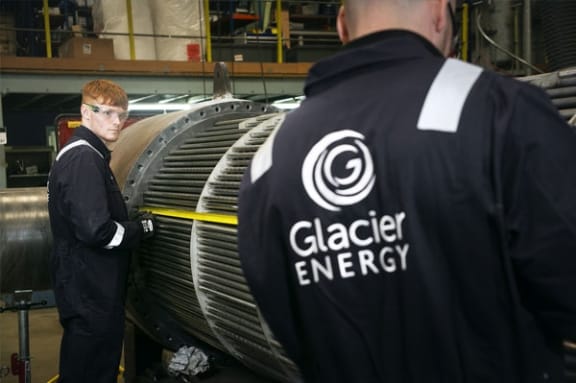
The Glacier Energy manufacturing administration has become one of the clearest signs yet of how deeply the downturn in North Sea oil and gas activity is affecting UK engineering firms.
Adele MacLeod and Clare Boardman of Teneo Financial Advisory were appointed joint administrators of Glacier Energy Manufacturing Limited in October 2025, bringing an end to manufacturing operations at the company’s Stockton-on-Tees site.
This article looks at what caused the Glacier Energy manufacturing administration, how staff were affected, and what it means for the wider Glacier Group.
The Path to the Glacier Energy Manufacturing Administration
Glacier Energy Manufacturing Limited was formed after Aberdeen-headquartered Glacier Group acquired the historic Francis Brown fabrication business out of a pre-pack administration deal in August 2024.
Francis Brown, established in 1903, was a well-regarded manufacturer of pressure vessels and structural fabrications, and its acquisition was intended to strengthen Glacier Energy’s manufacturing capability ahead of a planned expansion into hydrogen storage and distribution products.
At the time, the deal took Glacier Energy Group’s headcount above 300 employees, with all Francis Brown staff transferring across as part of a strategic plan to double the size of the group by 2028.
That ambition did not survive contact with deteriorating market conditions.
The company experienced losses from December 2024 onward, as weak investment in North Sea oil and gas activity significantly reduced demand for its manufacturing services.
Renewable and new energy opportunities, which the group had hoped would help offset the North Sea slowdown, failed to scale quickly enough to fill the gap.
As part of earlier cost-cutting measures, the company’s Rotherham site closed in July 2025, with all 53 employees there made redundant.
The Collapse of the Stockton-on-Tees Site
Despite that earlier restructuring, the Glacier Energy manufacturing administration ultimately extended to the company’s remaining Stockton-on-Tees facility.
Staff at the Hill Street East premises were called into a meeting and told the business had entered administration, with employees instructed to leave the site immediately.
One worker described scenes of shock and distress, noting that some staff had worked at the site for more than 30 years under Francis Brown before the Glacier takeover.
Administration officers on site explained that employees would be able to apply for statutory government redundancy payments, though the exact amount and timing remained unclear in the immediate aftermath.
A Glacier Energy spokesperson said the company had made the difficult decision to close its Stockton-on-Tees manufacturing facility, describing the losses within the division as having “sadly become unsustainable.”
The spokesperson added that activity levels in the North Sea oil and gas market had been significantly impacted by market challenges and the current fiscal regime, while new energy markets had been slow to materialise.
Impact on Staff and the Wider Glacier Group
The Glacier Energy manufacturing administration resulted in a total of 53 job losses at the Stockton-on-Tees site, in addition to the earlier Rotherham redundancies.
Administrators indicated that unsecured creditors were unlikely to receive any distribution from the company’s remaining funds, reflecting the scale of the financial difficulties involved.
Importantly, the wider Glacier Group confirmed it would continue trading through its other divisions, including mechanical solutions and inspection services, which the company described as continuing to thrive despite the manufacturing closure.
Those remaining divisions focus on engineering, repair and refurbishment of heat transfer equipment, specialist onsite machining services, and non-destructive testing and inspection services for energy and industrial markets.
What the Glacier Energy Manufacturing Administration Signals for the Sector
Industry observers have pointed to the Glacier Energy manufacturing administration as part of a broader pattern affecting engineering firms tied to North Sea oil and gas activity.
Rising costs, a challenging fiscal regime, and slower-than-expected growth in renewable energy markets have combined to squeeze manufacturers that had previously banked on a smoother transition between traditional and new energy sectors.
For a company that had only acquired its Stockton-on-Tees facility a little over a year earlier with plans to double in size, the reversal illustrates how quickly market conditions can undermine even well-funded expansion strategies.
Ultimately, the Glacier Energy manufacturing administration stands as a stark reminder of the pressures facing UK energy-sector manufacturers, even as the parent group works to reassure customers that its other engineering and inspection services will continue operating without interruption.