

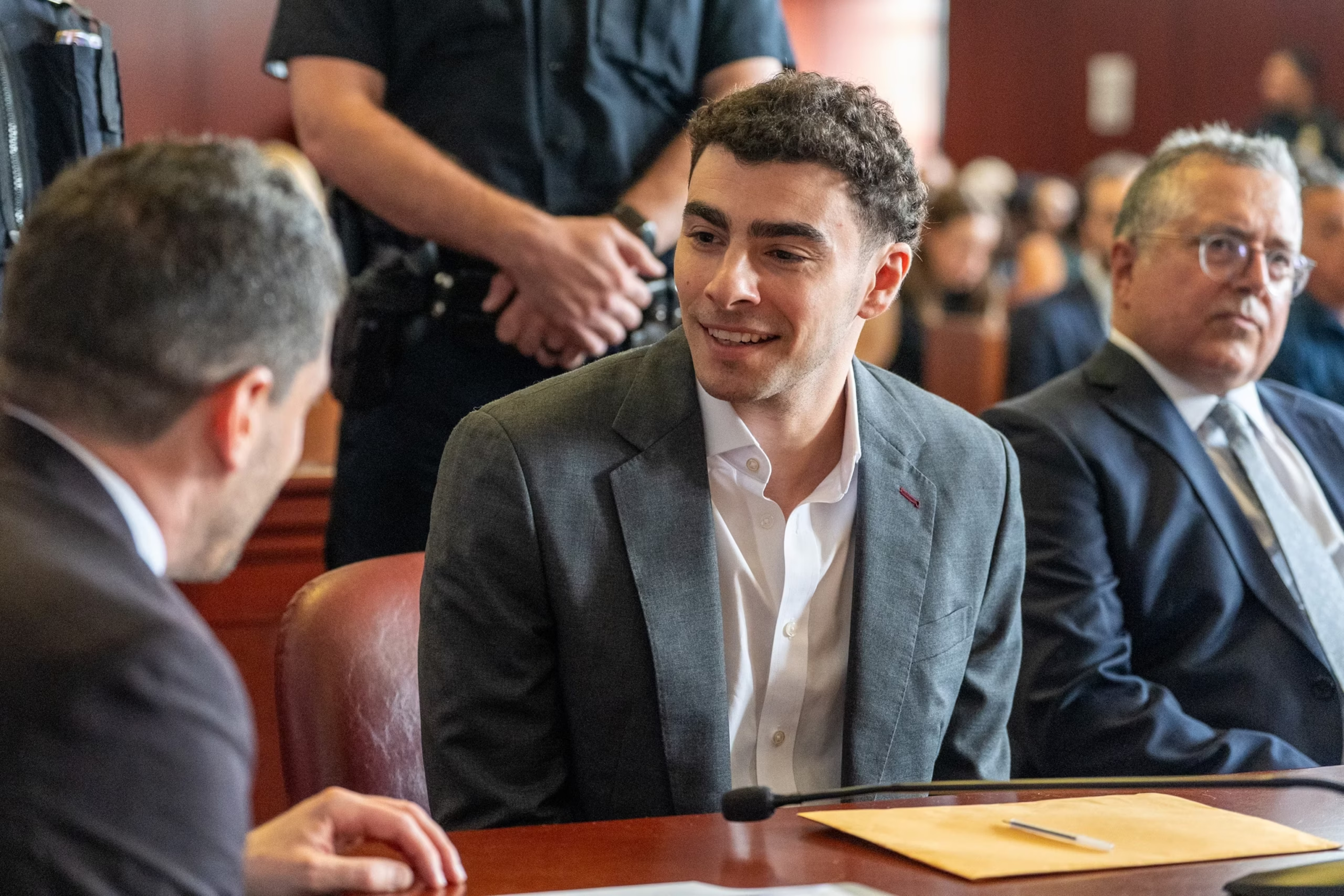
Lawyers representing Luigi Mangione are arguing their client cannot face murder charges in New York following his guilty plea to federal stalking offences.
At the heart of the legal argument is a voluntary admission that Mangione’s stalking conduct directly led to the death of UnitedHealthcare CEO Brian Thompson.
The admission was not required as an element of the stalking charge itself, but it can be applied as a sentencing enhancement under federal guidelines.
Mangione’s legal team is now betting that this admission is sufficient to trigger New York’s notably broad double jeopardy protections.
New York’s double jeopardy laws are considered among the most expansive in the United States, offering defendants stronger protections than federal constitutional standards typically provide.
The strategy represents a significant legal gamble, as the question of whether a sentencing enhancement can block a separate state murder prosecution remains legally contested.
Adding another layer of complexity to the case is the conduct of the Department of Justice, which appears to be going along with the legal framework Mangione’s team has constructed.
Critics are questioning why federal prosecutors would structure the plea in a way that potentially hands the defence a shield against the more serious state-level murder charges.
The case has drawn enormous public attention since Thompson was killed, with Mangione’s prosecution becoming one of the most closely watched criminal matters in recent American legal history.
Separately, major figures across the legal industry are watching a different but equally significant development, as Biglaw giants are reported to be taking meetings about accepting private equity investment.
The proposal would open the door to outside investors acquiring stakes in law firms, a move that would fundamentally alter the traditional partnership ownership model.
The structure being discussed centres on what is known as a management services organisation, a legal and financial arrangement that has already reshaped other professional services sectors.
This is precisely the same structure that allowed private equity firms to effectively take control of dental practices and other healthcare businesses across the country.
Supporters of the model argue it would give large law firms access to capital that partnerships struggle to generate internally through their existing ownership arrangements.
Opponents warn that outside investor influence could create conflicts of interest and pressure firms to prioritise financial returns over professional and ethical obligations to clients.
In a more personal dimension of the broader legal world’s ongoing fascination with power and connections, J.D. and Usha Vance’s Yale Law classmates are reported to maintain a private Signal group.
According to the source material, members of the group use it to compare notes on the couple, who sat alongside them in Contracts classes during their time at Yale Law School.
The existence of such a group reflects the unusually intense scrutiny that has followed J.D. Vance from his academic days into the highest levels of American political life.
Together, these three threads paint a picture of a legal landscape in significant flux, where criminal strategy, corporate finance, and political biography are colliding in remarkable ways.