

London has emerged as a global hub for hair restoration. From discreet clinics tucked away in Marylebone side streets to flagship practices on Harley Street, the city offers a dizzying range of options and price points.
Yet with so many choices, and so much at stake, both emotionally and financially, how can you be sure you’ll end up with more confidence and fuller coverage, not buyer’s remorse?
Understanding Your Options
At the simplest level, hair-transplant procedures in London fall into two main categories. While both aim to redistribute healthy, permanent hair follicles from donor areas (typically the back and sides of the scalp) to thinning zones, they differ markedly in technique, recovery, and cost.
1. FUT (Follicular Unit Transplantation)
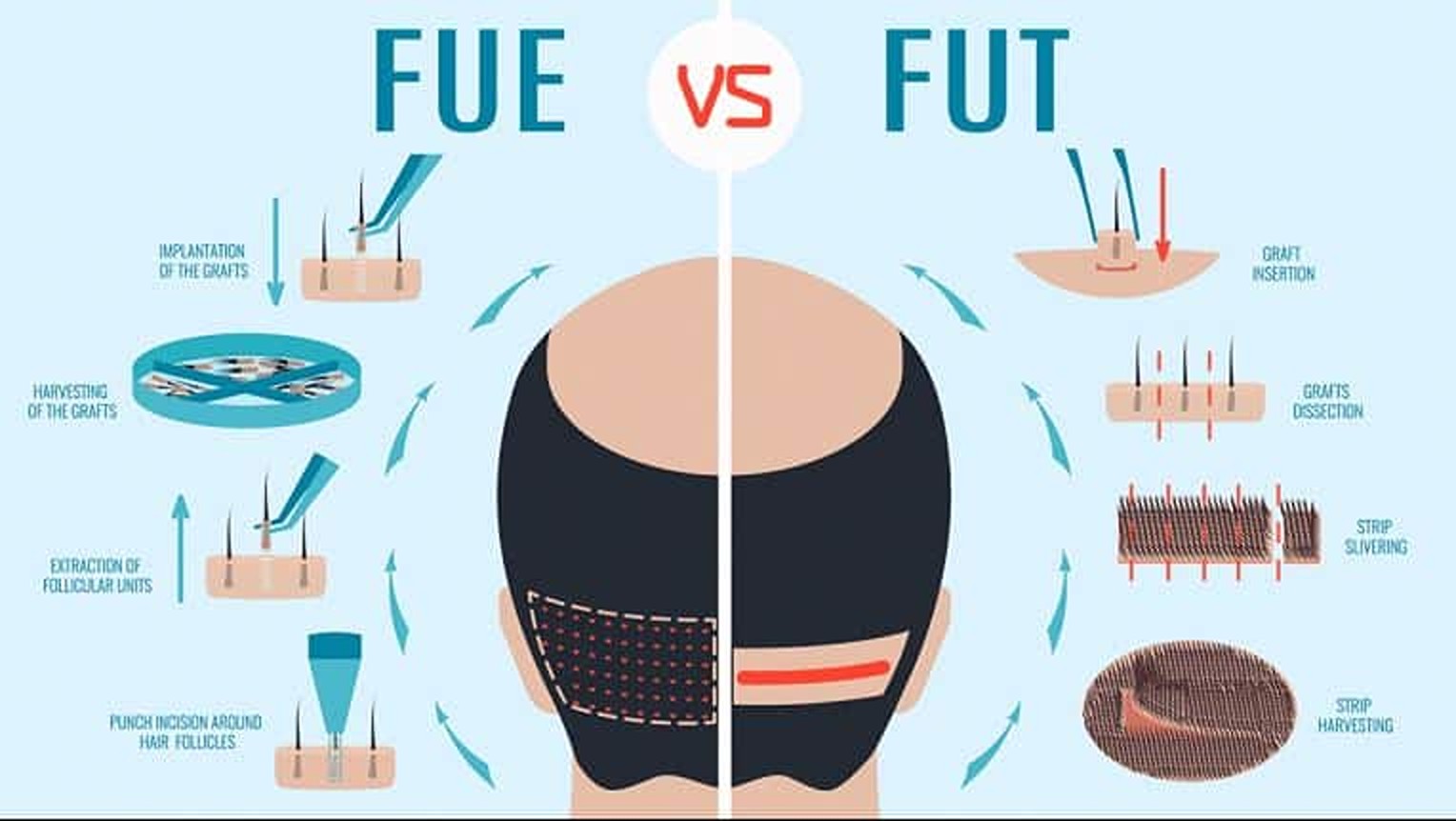
Under local anaesthesia, a surgeon removes a narrow strip of scalp—typically from the mid-portion of the back of the head—and hands it off to a team of technicians. They meticulously dissect the strip into individual follicular units, each containing one to four hairs, ensuring maximum survival of each graft.
Back in the operating theatre, the surgeon creates tiny incisions in the thinning areas, carefully placing each unit by hand to mimic the patient’s natural growth pattern. This methodical, step-by-step process—harvesting, graft preparation, and precise implantation—forms the backbone of the FUT technique.
FUT’s greatest advantages lie in its cost efficiency and volume capacity. By processing large batches of grafts at once, clinics can offer entry-level packages for as little as £1.50–£2.50 per graft, and sessions can deliver 3,000–4,000+ follicles in a single sitting.
However, patients should weigh these benefits against the drawbacks: a thin, horizontal scar that may be visible with very short hair, a 7–10-day healing period for sutures or staples, and potential discomfort if the scalp is tight. Following surgery, mild swelling subsides within days, sutures come out by day ten, and “shock loss” yields regrowth beginning around month four, with final density maturing by 12–18 months.
2. FUE (Follicular Unit Extraction)
Using a micro-punch tool (0.7–1.0 mm diameter), your surgeon or technician extracts individual follicular units one by one from donor zones under local anaesthesia. Each unit is then meticulously inspected, trimmed, and stored in a chilled solution to maximise viability. In the operating theatre, the surgeon creates tiny recipient-site incisions and implants each follicle by hand, following a precise angle and density plan to mimic natural growth.
This FUE approach delivers minimal scarring—tiny circular wounds heal into almost invisible pinpoints—along with a faster recovery (patients often return to work within 2–4 days) and greater flexibility in donor harvesting, including nape follicles.
However, FUE carries a higher cost per graft (typically £2.50–£4.50) due to its time-intensive nature, and most clinics cap sessions at 2,500–3,000 grafts to prevent donor-site trauma. Success hinges on the practitioner’s skill with micro-punch devices and microscope workstations. The procedure cost about the same in south of England with London on the upper side. FUE Hair Transplant Bristol costs a bit less but the price will be far lower when compared to North of England.
Post-op, small scabs form around each site on day 0–1 with minimal pain; most scabs fall away by days 3–5, and redness subsides. By week 1 you can resume most normal activities (avoiding vigorous exercise for another few days). Transplanted hairs typically shed during months 2–4 before steady regrowth appears, reaching full results by month 12–15.
What Drives Quality—and Cost
hair transplant in london UK prices start at around £2,500 for basic FUT packages and can exceed £10,000 for top-tier, surgeon-led FUE procedures. Much of the variation hinges on surgeon expertise: a GMC-registered doctor with advanced training and years of hands-on transplant experience will command a higher fee, reflecting their skill in graft placement and complication management.
Team involvement further influences cost—some clinics entrust much of the work to technicians under indirect supervision, while others guarantee that the lead surgeon remains “hands-on” throughout the procedure. More direct surgeon time typically means smoother outcomes and, consequently, a premium price.
Beyond the operating theatre, comprehensive aftercare packages add to your investment. Clinics that include follow-up consultations, PRP boosters, and medical-grade wound-care kits help ensure optimal graft survival, but these services aren’t complimentary extras—they can add several hundred pounds to your total bill.
Finally, genuine accreditation is non-negotiable: always verify HTA licensing for tissue handling and check your surgeon’s GMC registration on the official websites. These credentials guard against unqualified practitioners and give you legal recourse should standards fall short.
Understanding Risks and Managing Complications
No medical procedure is without potential downsides, and hair transplants carry their own set of risks—both minor and, in rare cases, serious. In this section, you could:
- Infection and Inflammation: Explain how inadequate sterilization or poor aftercare can lead to folliculitis, abscesses, or prolonged redness—and what antibiotic or topical treatments clinics should offer.
- Shock Loss and Poor Graft Survival: Describe the phenomenon of “shock loss,” why some transplanted hairs fail to take, and how things like graft hydration and gentle handling reduce the odds of disappointing regrowth.
- Scarring and Cosmetic Deformities: Contrast FUT’s linear scar risks with FUE’s dot scars, then delve into causes of hypertrophic scarring, keloids, and how scar revision procedures or SMP (scalp micropigmentation) can help.
- Sensory Changes: Discuss why numbness or hypersensitivity may occur around donor and recipient sites, how long it typically lasts, and what patients can do to alleviate discomfort.
- Mitigation Strategies: Offer a checklist of red flags—unlicensed practitioners, lack of written aftercare, unrealistic guarantees—and advice on choosing clinics that proactively manage complications (e.g., built-in antibiotic protocols, 24/7 support lines).
By arming readers with a clear understanding of potential pitfalls and practical mitigation measures, you’ll help them weigh risks alongside benefits—and choose a clinic that prioritizes patient safety as much as aesthetics.
Choosing Wisely: Your Checklist
- Verify Credentials: Ask for the surgeon’s GMC number and check the clinic’s HTA license.
- Meet the Team: Insist on a face-to-face consultation. Who will perform your extraction and implantation?
- Read the Fine Print: Look for transparent pricing, clear refund policies, and written information on potential risks.
- Set Realistic Expectations: No surgeon can promise a cartoon-perfect hairline overnight. Expect gradual regrowth over 9–18 months.
Looking Ahead
As technology advances, including AI-guided graft placement and stem-cell research—the potential for even more natural, efficient outcomes grows. But in 2025, quality still boils down to fundamentals: a qualified surgeon’s skill, an honest price structure, and a commitment to thorough aftercare. Do your homework, ask the right questions, and you’ll be in the best position to join the ranks of Londoners who walk away with fuller heads—and brighter futures.