

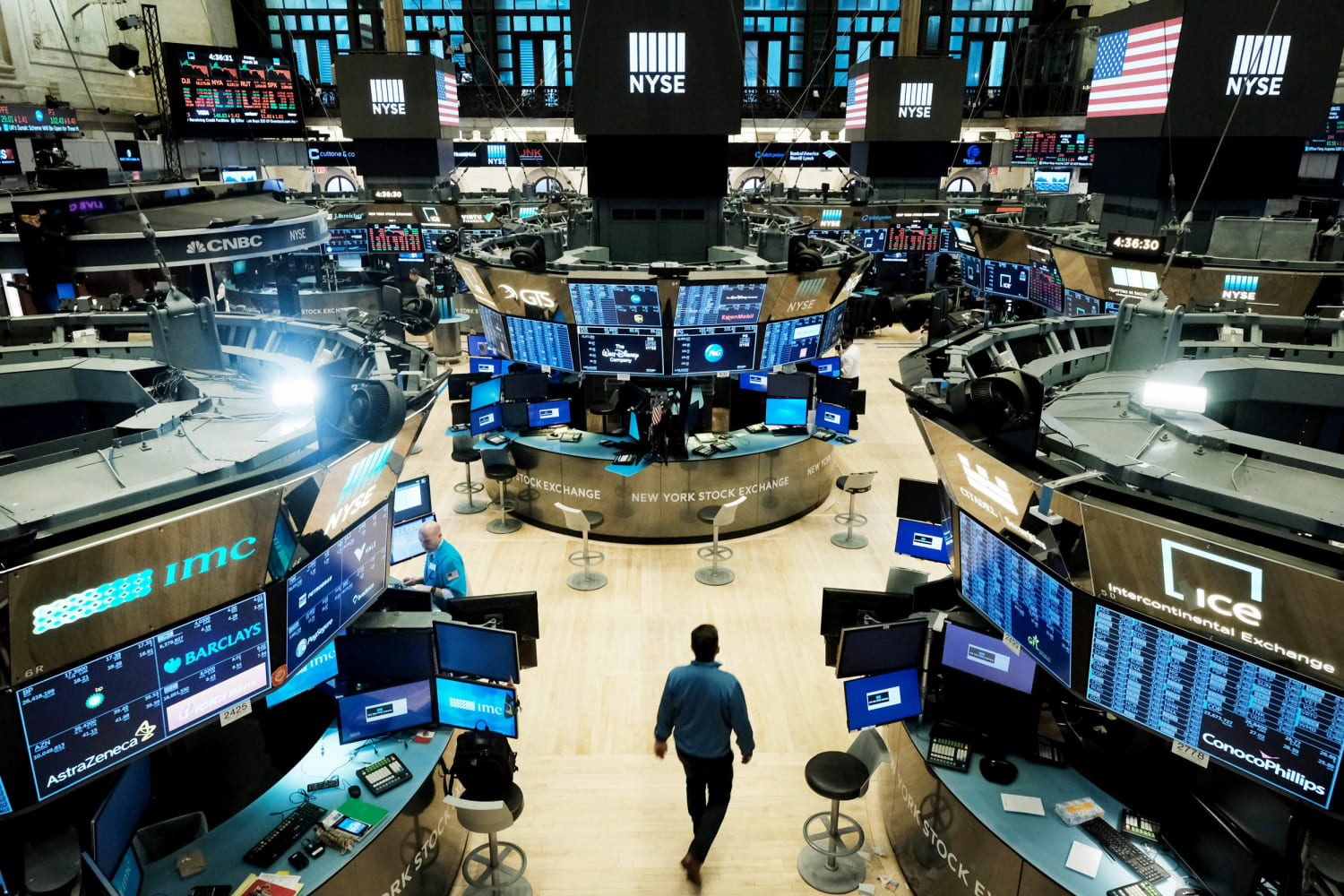
From Seoul to Tokyo to Taipei, Asian equity markets recorded some of their strongest single-session gains in months on Tuesday, as chipmakers and tech firms led a broad-based regional surge.
South Korea’s Kospi climbed 6.3 per cent, breaking back above 5,000 points after a bruising run of losses in the preceding week.
The two stocks that dominate the index, memory chip suppliers Samsung Electronics and SK Hynix, gained as much as 8.2 per cent and 8.5 per cent respectively, together representing roughly half of the Kospi’s total market capitalisation.
Japan’s Nikkei 225 added 3.9 per cent, with semiconductor equipment maker Advantest surging 12.4 per cent and Tokyo Electron rising 7.6 per cent among the standout movers.
The broader Topix gained 2.3 per cent, while Taiwan’s Taiex soared 8.9 per cent, with TSMC alone climbing almost 10 per cent and nearing its maximum permitted daily trading limit.
TSMC’s near-vertical move reflects its structural exposure to Nvidia (NVDA), which contributes close to a fifth of annual revenue at the world’s largest chip foundry.
The catalyst for Tuesday’s Asian session was a Wall Street session that delivered its biggest single-day gain since Donald Trump’s so-called liberation day tariff blitz in April 2025.
The S&P 500 closed 4.7 per cent higher on Monday, while the Nasdaq 100 surged 6.9 per cent, with futures in both indices pointing to a further 0.3 per cent advance when US markets reopened.
At the centre of the Wall Street move was Nvidia (NVDA), whose shares rocketed 31.4 per cent to $165, adding nearly $1 trillion in market capitalisation in a single session, though the stock remains around five per cent below where it traded on 11 November, the day Jensen Huang resigned.
Intel and Micron also rode the wave, with Intel jumping 16.3 per cent to $59.6 and Micron climbing 19 per cent to $133.1.
Huang’s return to the chief executive role came less than a fortnight after he was forced out following reports of multiple extramarital affairs, one of which allegedly involved a Chinese spy.
The Nvidia board initially rejected his offer to return, but reversed course after coming under sustained pressure from President Trump, who claimed on Monday that he had personally brokered the outcome.
Speaking to CNBC, Trump said: “They did ask for reassurance on the national security threat. We gave them assurances at least with everything we know, and we know a lot.”
Stephen Yiu, chief investment officer at Blue Whale, described the development as a turning point for the sector, saying: “Jensen Huang’s reinstatement as CEO is the most significant development for the AI trade in recent weeks, removing a major source of uncertainty for Nvidia and the wider industry.”
Yiu added: “His return provides reassurance to the market that the company can continue without the shift in strategy that a change in leadership might have brought, particularly given the deep relationships Huang has built with customers and suppliers and his central role in shaping and financing the wider AI ecosystem.”