

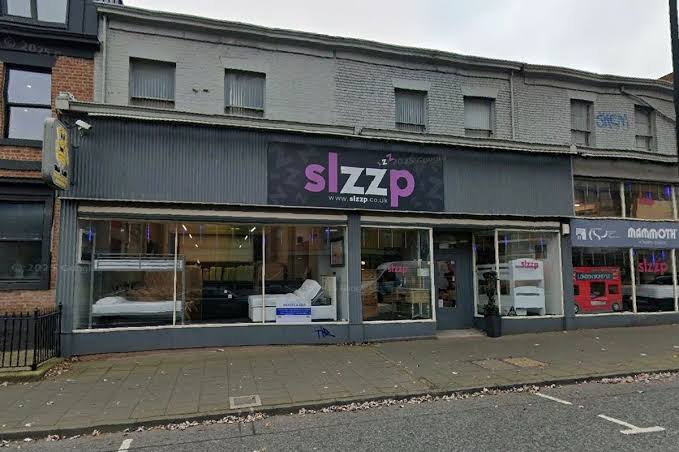
The Slzzp furniture administration has become the latest example of financial strain sweeping through the UK’s furniture and homeware sector.
News of the Slzzp furniture administration broke earlier this year, adding the Newcastle-founded bed retailer to a growing list of home furnishings businesses that have struggled to survive challenging trading conditions.
This article looks at what happened to Slzzp, why the company fell into administration, and what its collapse says about the wider furniture retail market.
Background Behind the Slzzp Furniture Administration
Slzzp built its presence as a regional bed and mattress specialist, operating stores across Newcastle upon Tyne, Sunderland and Westerhope.
The retailer sold a range of divans, bed frames, headboards and mattresses, positioning itself as an accessible option for shoppers in the North East of England.
Like many independent and regionally focused furniture brands, Slzzp built its reputation over time through local showrooms rather than a sprawling national footprint.
That regional model, however, left the business more exposed when broader economic pressures began weighing on discretionary spending.
Furniture purchases such as beds and mattresses are often postponed by households during periods of financial uncertainty, and Slzzp was not immune to that shift in consumer behaviour.
Why the Slzzp Furniture Administration Reflects Wider Industry Struggles
The Slzzp furniture administration did not happen in isolation.
It mirrors a broader pattern across the UK furniture and homeware sector, where weakened consumer demand, rising operating costs and cash flow pressures linked to long sales cycles have hit retailers hard.
Although inflation began to stabilise through 2024 and 2025, many households continued to feel the effects of higher living costs and elevated mortgage repayments.
As a result, consumers either delayed large furniture purchases altogether or traded down to cheaper alternatives, squeezing revenue for mid-sized retailers like Slzzp.
At the same time, costs across the furniture supply chain remained elevated compared with pre-pandemic levels.
Raw materials, warehousing and transport expenses all increased, and furniture retailers are particularly exposed to rising logistics costs given the size and weight of the products they move.
For a business reliant on steady sales to fund manufacturing, delivery and marketing overheads, that combination of falling demand and rising costs created a difficult financial squeeze.
Sector-Wide Pressures Facing Furniture Retailers
Slzzp’s difficulties sit alongside a string of other furniture and homeware insolvencies across the UK in recent months.
Analysts tracking the sector point to a consistent set of pressures: discretionary spending pullbacks, higher input costs, and increased competition from online-first retailers offering lower overheads.
Newer and growth-focused furniture brands have proven especially vulnerable, often lacking the balance sheet strength of longer-established manufacturers to absorb prolonged periods of reduced trading.
For regional retailers in particular, the challenge of competing against larger national chains and e-commerce platforms adds another layer of difficulty on top of macroeconomic headwinds.
What Comes Next After the Slzzp Furniture Administration
As with many retail administrations, the immediate priority for insolvency practitioners is typically to explore options for a sale of the business, its brand, or its remaining stock.
Customers and suppliers connected to Slzzp will be watching closely to see whether a buyer emerges to preserve any part of the operation.
For the wider furniture retail sector, the Slzzp furniture administration serves as another reminder that even established regional names are not immune to the financial pressures reshaping the UK high street.
Ultimately, the Slzzp furniture administration underscores how quickly changing consumer habits and rising costs can undermine even a long-standing local retailer, and it adds further evidence that the furniture and homeware industry remains under significant strain heading into the second half of 2026.