

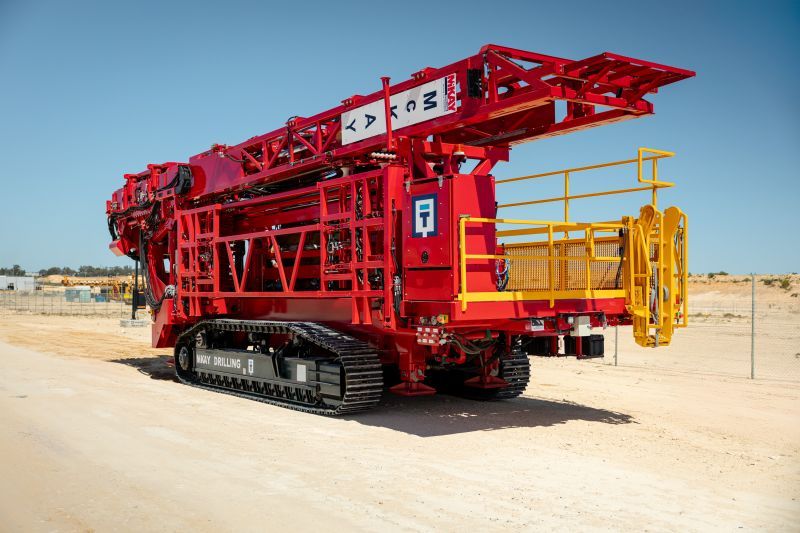
Tribe Technology’s £7m losses proved to be the tipping point for a Northern Ireland manufacturing operation that had once been hailed as a breakthrough player in autonomous mining equipment.
The company behind the Tribe Technology £7m losses, Mallusk-based Tribe Tech Group Ltd, entered administration in January 2026 after years of cost overruns and delayed product delivery caught up with its finances.
This article explains how the Tribe Technology £7m losses developed, what led to the company’s collapse, and what happened to the business afterward.
How the Tribe Technology £7m Losses Developed
Tribe Technology Group was founded in Western Australia in late 2019 by Crossgar-born entrepreneur Charlie King.
The company expanded into a manufacturing operation in Mallusk, Northern Ireland, in September 2021, with ambitions to build the world’s first completely unmanned reverse circulation drill rig for the mining industry.
That expansion was backed by close to £1.9 million in financial assistance from Invest NI, tied to a promise of 120 new jobs in the area.
Despite that support and genuine technological ambition, the company struggled to translate its innovation into sustainable financial performance.
According to accounts filed at Companies House, Tribe Technology posted losses of more than £7 million over a two-year period, a burden that ultimately proved unsustainable.
By February 2025, the business was costing around £900,000 per month to operate, a run rate that far outpaced its ability to generate revenue.
From AIM Listing to Administration
Tribe Technology had previously been admitted to trading on London’s Alternative Investment Market, giving it public market visibility as a disruptive mining technology developer.
However, shareholders voted the following year in favour of delisting from AIM and re-registering as a private company, a move aimed at cutting non-essential costs and preserving remaining financial resources.
That restructuring effort was not enough to offset the mounting losses.
KPMG administrators, who were brought in to manage the collapse, said that while Tribe Tech Group had achieved revenue growth between 2022 and 2025, delays and cost overruns in developing its complex rig systems left the business unsustainable.
At the time of collapse, the company had a deficit of around £9 million on its books, including £6.6 million owed to its funding partner.
The Aftermath of the Tribe Technology £7m Losses
Following administration, Tribe Technology was sold in a pre-pack deal to Wilxpro, a company controlled by Australian mining consultant Mike Wilkes.
The deal saw Wilxpro pay £160,000 in cash while assuming a £2 million debt liability, a structure typical of pre-pack administrations designed to preserve some operational continuity.
Administrators estimated that around £5.9 million was owed to unsecured creditors, with the majority of that sum owed to Tribe Technology’s loss-making parent holding company, which also entered administration.
While preferential and secondary preferential creditors were expected to be repaid in full, it remained unclear how much, if anything, would be left for unsecured creditors further down the priority chain.
Lessons From the Tribe Technology £7m Losses
The Tribe Technology £7m losses illustrate the financial risks facing advanced manufacturing companies operating at the intersection of heavy research and development spending and constrained funding markets.
Businesses combining proprietary technology with specialised manufacturing capabilities rarely reach formal insolvency without attracting acquisition interest, and Tribe Technology’s intellectual property is expected to remain of interest to competitors in the sector.
Ultimately, the Tribe Technology £7m losses serve as a cautionary tale about the gap that can emerge between innovative engineering ambition and the financial discipline needed to sustain it through a prolonged development cycle.