

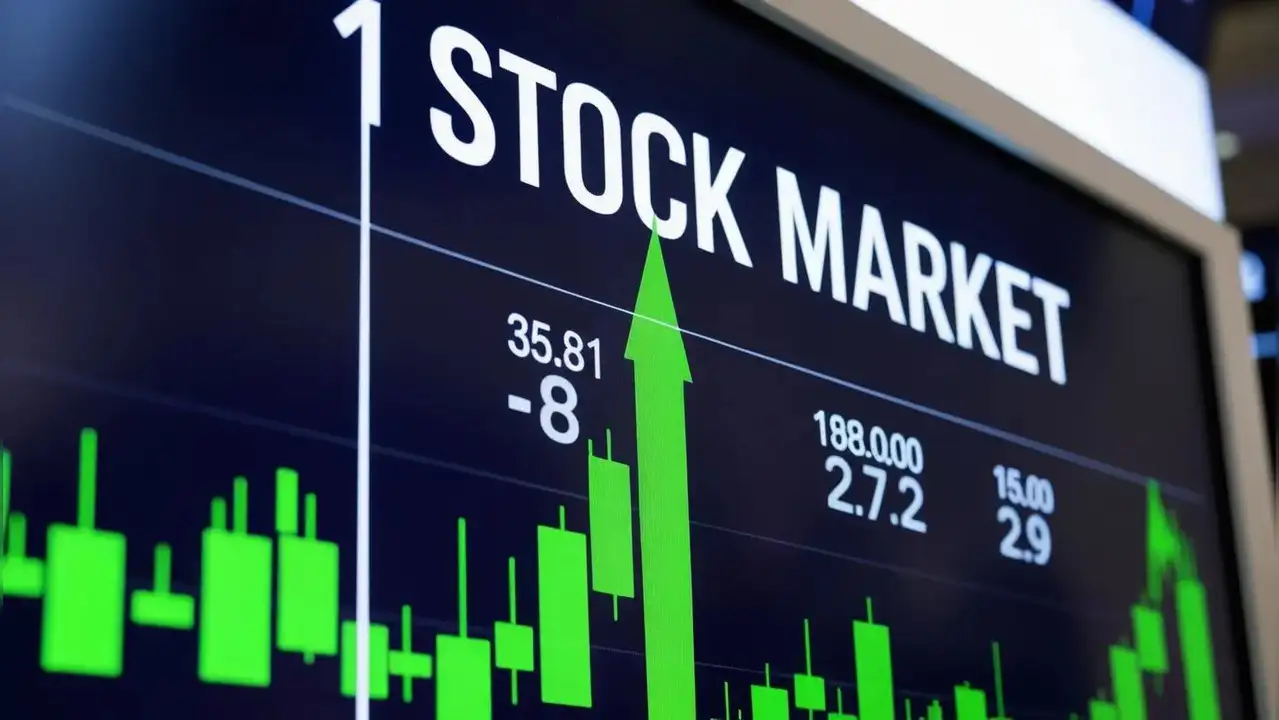
The US stock market has staged a notable recovery in recent weeks, with major indices climbing steadily after a period of prolonged volatility and investor uncertainty.
Equity valuations, which had stretched to historically elevated levels during the previous bull run, are now beginning to compress, offering potential entry points for long-term investors.
The combination of rising prices and falling valuations is somewhat unusual and typically signals a shift in market composition or a repricing of future earnings expectations.
Analysts have pointed to stronger-than-expected corporate earnings as one of the key drivers pushing indices higher across multiple sectors in recent sessions.
At the same time, moderating inflation data has helped ease pressure on the Federal Reserve, reducing fears of further aggressive interest rate increases that had weighed on sentiment.
Lower interest rate expectations tend to support higher equity valuations by reducing the discount rate applied to future corporate cash flows, a fundamental dynamic in stock pricing models.
Technology stocks, which are particularly sensitive to interest rate movements, have featured prominently in the recent rally as borrowing cost expectations have softened.
Investor sentiment indicators have also improved markedly, with retail and institutional participants alike returning to equities after rotating into cash and fixed income during the earlier downturn.
Market breadth has widened considerably, meaning gains are no longer confined to a narrow group of mega-cap names but are spreading across mid-cap and small-cap stocks as well.
A broader rally with improving valuations tends to be viewed by strategists as a more sustainable advance than one driven purely by momentum in a handful of large technology companies.
Bond yields, which move inversely to price, have also stabilised at levels that make equities comparatively more attractive on a risk-adjusted basis for many portfolio managers.
While risks remain, including geopolitical uncertainty and the pace of global economic growth, the current market environment is presenting a more balanced picture for investors entering 2026.