

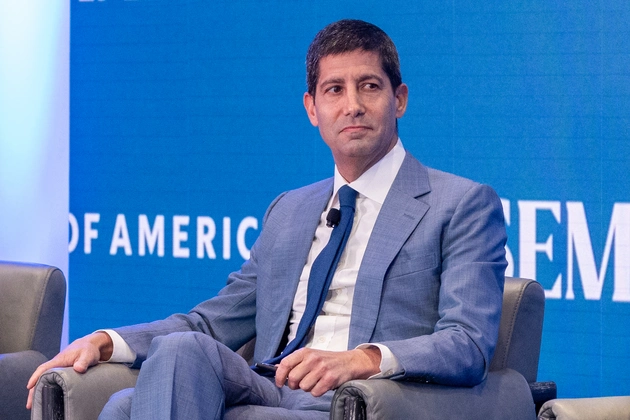
Warsh has established a distinct rhetorical style since taking the helm of the Federal Reserve, built around three phrases that keep reappearing across his public statements.
In five public appearances since his nomination hearing in April, Warsh has used the phrase “family fight” 13 times, returned to “first principles” 11 times, and deployed “inflation is a choice” six times.
The repetition has drawn close attention from Fed watchers, who are working to decode what each phrase actually signals for the direction of monetary policy.
Unlike former Fed Chairman Alan Greenspan, whose opacity was legendary, Warsh has chosen deliberate simplicity, making his exact word choices all the more significant to analysts.
On the “family fight” phrase, Dan Greenhaus, strategist at Solus Alternative Asset Management, said Warsh appears to be pushing for more open internal debate, which “should ultimately lead to better policymaking.”
Former Cleveland Fed president Loretta Mester noted that open debate was already common during her time on the Federal Open Market Committee, warning that with 19 people around the table, some structure is essential.
Claudia Sahm, chief economist at New Century Advisors, described FOMC meetings as “highly scripted affairs” and said Warsh wants “a livelier back-and-forth — a style he is more comfortable with.”
Mark Spindel, Fed author and chief investment officer at Potomac River Capital, argued the phrase is partly “a way of deflecting his responsibility from external pressure” from the president, Congress, and markets.
Michael Feroli, chief US economist at JPMorgan, offered a more straightforward reading, saying the “family fight” language is Warsh “trying to be folksy” without fundamentally departing from the traditions set under Ben Bernanke.
On “first principles,” Sahm described it plainly as “code for question everything,” reflecting Warsh’s stated desire for “regime change” at the Fed, though she remains sceptical he will deliver a full overhaul.
Spindel linked the phrase to Warsh’s broader criticism of his predecessors, arguing that low interest rates, the balance sheet expansion, the failure to tighten sooner, and the Fed’s flexible average inflation targeting framework were all, in Warsh’s view, departures from first principles.
Feroli noted that the “first principles” line shares the same spirit as Warsh’s remarks about PhDs from elite institutions, suggesting the institution has allowed academically driven thinking to distract the Fed from basic economic fundamentals.
On the third phrase, “inflation is a choice,” Mester drew a direct line to Milton Friedman’s dictum that “inflation is always and everywhere a monetary phenomenon, in the sense that it is and can be produced only by a more rapid increase in the quantity of money than in output.”
Sahm agreed the phrase nods to Friedman, but warned that Warsh omits a crucial timeframe, noting that in the short run, supply shocks from energy disruptions or tariffs can move inflation regardless of what the Fed does.
Greenhaus concluded that the phrase signals a Fed less willing to blame prolonged inflation on exogenous factors, with Warsh’s message essentially being “the buck stops with us” on any persistent inflation overshoot.