

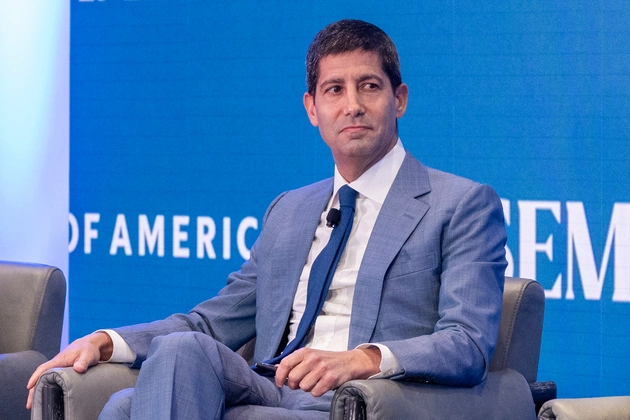
Federal Reserve Chairman Kevin Warsh used Wednesday’s post-meeting press conference to quietly announce institutional changes that will reduce future rate-setting opportunities to as few as six per year.
Starting in 2027, one of the FOMC’s eight scheduled annual meetings will function as a dedicated strategy session, with no interest-rate vote and no post-meeting statement issued to markets.
By 2028, that number of strategy meetings doubles to two, meaning the committee will have just six regular occasions each year to formally adjust borrowing costs, outside of any emergency action.
The procedural overhaul was just one layer of change Warsh has introduced, having also shifted press conference length down to roughly 30 minutes and restricted reporters to a single question each.
Even the seating arrangement in the briefing room has become a moving target, with October’s session conducted in reverse alphabetical order after September introduced a straight alphabetical layout.
While Warsh’s procedural moves drew attention from Fed observers, the rate decision itself landed exactly where markets anticipated, with the benchmark interest rate held steady following the October 28 meeting.
The FOMC’s statement framed the pause in familiar terms, noting that “the accumulation of more information will help the Committee determine the policy stance appropriate to ensure a timely return of inflation to the Committee’s 2 percent goal.”
The more startling development on the policy front was a dissenting vote from Governor Lisa Cook, who has not broken with the committee on a rate decision since joining the board in 2022.
Cleveland Fed President Beth Hammack also opposed the hold, and both officials are expected to release formal statements explaining their positions before the week is out.
Analysts interpreted the two dissents as a meaningful signal, with Principal Asset Management’s chief global strategist Seema Shah arguing that “the direction of travel remains clear,” adding that her firm expects “a hike in December and another in early 2027.”
JPMorgan Wealth Management’s chief investment strategist Phil Camporeale offered a more cautious read, saying “the Fed is leaning into patience” as “uncertainty reigns supreme in light of recent geopolitical developments.”
Warsh also addressed the role of artificial intelligence in the economy during the briefing, describing it as one of several forces contributing to what he characterised as a strong and broadly supported expansion.
Jefferies chief U.S. economist Thomas Simons cautioned against reading too much into the chairman’s tone, saying the Fed’s policy reaction “is not a black-and-white, binary thing” and that markets may still have further to go in fully decoding Warsh’s communication style.